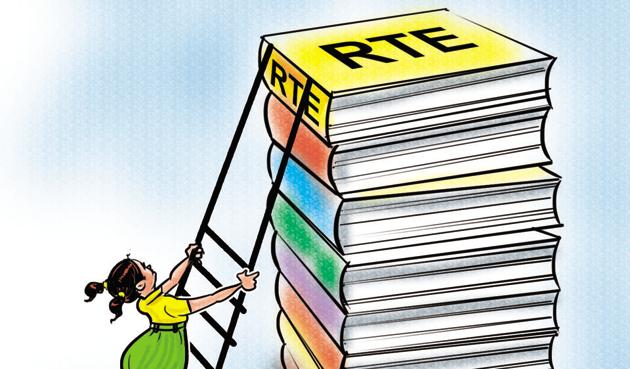
Image Source: hindustantimes.com
Introduction
Education is the cornerstone of human development and a key driver of social and economic progress. In India, it has been recognized not only as a fundamental right but also as a means to foster equality, empowerment, and national integration. The Right to Education (RTE) Act, 2009, gave constitutional force to Article 21A by mandating free and compulsory education for children aged 6–14 years. It sought to transform the vision of universal elementary education into a reality, emphasizing inclusivity, quality, and access for all sections of society.Despite its promise, the Act has faced multiple challenges in implementation, particularly in balancing institutional autonomy with the larger goal of social inclusion. Recent debates have centered on the exemption of minority institutions from the ambit of the RTE Act. A two-judge Bench of the Supreme Court has now referred this question to a larger Bench, observing that the earlier 2014 judgment in the Pramati Educational and Cultural Trust case may have inadvertently weakened the foundation of universal elementary education. The Court highlighted concerns of misuse of minority status and its impact on the common schooling vision, making the issue a matter of constitutional importance and ongoing public discourse.
Evolution of Education in India
Ancient Period
-
The earliest forms of organized education in India can be traced back to the Gurukul system, where students lived with their teachers and received holistic training.
-
The curriculum covered not only scriptures, philosophy, and moral values but also practical skills such as mathematics, astronomy, medicine, and warfare.
-
However, access was restricted primarily to the upper castes, leading to exclusion of women and marginalized communities.
-
Parallel traditions like Buddhist monasteries (Mahaviharas) at Nalanda, Takshashila, and Vikramashila also flourished, offering liberal education and attracting international students.
Medieval Period
-
With the advent of Islamic rule, madrasas and maktabs emerged as centers of learning, focusing on religious instruction, Arabic, Persian, and later subjects such as mathematics and astronomy.
-
Simultaneously, pathshalas, tols, and gurukuls continued to provide community-based education rooted in local traditions.
-
Education during this period was largely localized, often dependent on patronage by rulers or religious endowments, and was not universally accessible.
Colonial Period
-
The British introduced a more formal, centralized system of education. Key milestones include:
-
Macaulay’s Minute (1835): Advocated for English-language education and Western knowledge, sidelining indigenous systems.
-
Wood’s Dispatch (1854): Laid the foundation of a structured education system, recommending universities, vernacular schools, and teacher training.
-
Hunter Commission (1882): Focused on primary and secondary education.
-
Sadler Commission (1917–19): Examined university reforms and advocated expansion of secondary education.
-
-
While the colonial system created a class of English-educated elites, it also widened social and regional inequalities. Indigenous and vocational education declined under this model.
Post-Independence Developments
-
At independence in 1947, literacy levels were dismally low (around 12%). The new nation recognized education as vital for development and social justice.
-
University Education Commission (1948–49) chaired by Dr. S. Radhakrishnan, emphasized higher education reform.
-
Secondary Education Commission (1952–53) focused on access and curriculum development at the school level.
-
Kothari Commission (1964–66): Provided a comprehensive framework, calling for a common school system and linking education to national development goals.
-
National Policy on Education (NPE):
-
1968: First NPE, stressed universal access and the “three-language formula.”
-
1986 (revised in 1992): Addressed equity, women’s education, and quality improvements.
-
-
These initiatives laid the foundation for expanding educational access but faced hurdles in implementation, especially in rural areas.
Towards the Right to Education
-
In 2002, the 86th Constitutional Amendment inserted Article 21A, making education a fundamental right for children aged 6–14.
-
In 2009, the Right to Education Act (RTE) was enacted, operationalizing Article 21A. It mandated free and compulsory education, 25% reservation for weaker sections in private schools, and norms for infrastructure, pupil–teacher ratio, and teacher qualifications.
Post-2009 Reforms
-
The enactment of the RTE Act marked a turning point, embedding inclusivity and enforceability into the education system.
-
The National Education Policy (NEP) 2020 further sought to restructure and modernize the system, emphasizing holistic development, flexibility, and digital learning.
Current Status
-
Enrollment: 24.8 crore students in 14.7 lakh schools with 98 lakh teachers (2023–24).
-
GER: Primary – 93%, Secondary – 77.4%, Higher Secondary – 56.2% (target: 100% by 2030 under NEP 2020).
-
Dropouts: Primary – 1.9%, Upper Primary – 5.2%, Secondary – 14.1%.
-
Gender: GPI ≥ 1 at all levels; girls’ participation slightly higher. Dropouts – Upper Primary: girls 3.3% vs. boys 2.7%; Secondary: boys 13% vs. girls 12.3%.
-
Urban–Rural Literacy: Urban 90% vs. Rural 77%; Male 88% vs. Female 81%.
-
Expenditure: Urban private school families spend ~9× more than rural government school families.
-
Shadow Education: ~33% of students rely on private coaching, higher in urban areas.
-
Infrastructure: Drinking water (98%), girls’ toilets (97.5%), electricity (89%); digital facilities uneven across states.
Significance of Education
Education is a multidimensional tool that influences every aspect of human and societal development. Its significance can be understood through the following dimensions:
-
Social Empowerment
-
Breaks down barriers of caste, class, gender, and geography.
-
Promotes inclusivity and social justice, enabling marginalized communities to access opportunities.
-
Acts as an equalizer by reducing social disparities.
-
-
Economic Growth
-
Enhances human capital by building skills, knowledge, and innovation capacity.
-
Each additional year of schooling is linked to higher individual income and national productivity.
-
Reduces poverty and income inequality by improving employability and entrepreneurship.
-
-
Political and Democratic Strengthening
-
Encourages informed decision-making, civic participation, and voter awareness.
-
Promotes values of liberty, equality, and fraternity that sustain democracy.
-
Creates a responsible citizenry that can hold institutions accountable.
-
-
Cultural Preservation and Exchange
-
Transmits cultural values, traditions, and heritage across generations.
-
Encourages respect for diversity and pluralism, while fostering intercultural dialogue.
-
-
Global Competitiveness
-
Provides critical thinking, problem-solving, and digital literacy skills necessary in a knowledge economy.
-
Prepares the workforce for challenges of globalization, AI, and the Fourth Industrial Revolution.
-
-
Gender Equality
-
Empowers women and girls by improving health, delaying child marriage, and enhancing workforce participation.
-
Creates intergenerational benefits, as educated mothers are more likely to send children to school.
-
-
Health and Well-being
-
Increases awareness of nutrition, hygiene, and preventive healthcare.
-
Contributes to reduced maternal and infant mortality rates.
-
Encourages adoption of healthier lifestyles.
-
-
Sustainability and Environment
-
Builds awareness about climate change, resource conservation, and sustainable practices.
-
Equips future generations to tackle global environmental challenges.
-
-
Global Commitments
-
Aligns with Sustainable Development Goal 4 (Quality Education), while indirectly advancing other goals like poverty reduction (SDG 1), gender equality (SDG 5), and climate action (SDG 13).
-
-
Nation-building
-
Strengthens unity, national identity, and resilience.
-
Acts as a long-term investment in building a just, prosperous, and self-reliant society.
Constitution and Legal Framework
The framework of education in India has evolved through constitutional provisions, judicial interpretations, and legislative enactments. It reflects a balance between fundamental rights and directive principles.
-
Constitutional Provisions
-
Article 21A (2002, 86th Amendment): Guarantees the fundamental right to free and compulsory education for children aged 6–14 years.
-
Article 41 & 45 (Directive Principles of State Policy): Direct the State to provide education and opportunities for all citizens.
-
Article 46: Emphasizes promotion of educational and economic interests of Scheduled Castes, Scheduled Tribes, and other weaker sections.
-
Article 30: Grants minorities the right to establish and administer educational institutions.
-
Article 15 & 29: Prohibit discrimination in educational access and protect cultural and educational rights.
-
-
Fundamental Duties (Article 51A)
-
Makes it a duty of every citizen to provide educational opportunities to children between 6 and 14 years.
-
-
Legislative Measures
-
Right of Children to Free and Compulsory Education Act (2009): Operationalizes Article 21A by laying down norms for access, infrastructure, pupil-teacher ratios, and reservations for disadvantaged groups.
-
National Commission for Protection of Child Rights (NCPCR): Oversight body to monitor RTE implementation.
-
University Grants Commission (UGC) Act, 1956: Regulates higher education.
-
AICTE Act, 1987 and NCTE Act, 1993: Provide frameworks for technical and teacher education respectively.
-
-
Judicial Pronouncements (Selective Landmark Cases)
-
Mohini Jain v. State of Karnataka (1992): Declared right to education as a part of the right to life under Article 21.
-
Unnikrishnan J.P. v. State of Andhra Pradesh (1993): Limited right to education to children up to age 14, influencing later constitutional amendment.
-
Society for Unaided Private Schools v. Union of India (2012): Upheld the constitutionality of RTE Act provisions mandating 25% reservation in private schools.
-
-
Federal Structure and Education
-
Education was a State Subject till 1976.
-
The 42nd Constitutional Amendment moved education to the Concurrent List, enabling both Union and State governments to legislate.
Related Judicial Cases
Judicial interpretation has played a decisive role in shaping the right to education in India. Courts have progressively expanded its scope, ensuring accessibility, equity, and accountability.
-
Mohini Jain v. State of Karnataka (1992)
-
The Supreme Court held that the right to education is a fundamental right under Article 21 (Right to Life).
-
It struck down capitation fees in private medical colleges as unconstitutional, emphasizing education cannot be a commodity.
-
-
Unnikrishnan J.P. v. State of Andhra Pradesh (1993)
-
Built upon Mohini Jain, clarifying that the right to free education is available to children up to 14 years.
-
Formed the basis for the 86th Constitutional Amendment (2002), which introduced Article 21A.
-
-
T.M.A. Pai Foundation v. State of Karnataka (2002)
-
A landmark judgment on the rights of minorities and private institutions.
-
Recognized the autonomy of private and minority-run institutions while allowing reasonable regulation by the State.
-
-
P.A. Inamdar v. State of Maharashtra (2005)
-
Reinforced institutional autonomy in admissions and fee structures.
-
Declared that the State cannot impose its reservation policy on unaided private professional institutions.
-
-
Society for Unaided Private Schools of Rajasthan v. Union of India (2012)
-
Upheld the constitutionality of the Right to Education Act, 2009.
-
Validated the 25% reservation for children from economically weaker sections in private schools, except minority institutions.
-
-
Pramati Educational and Cultural Trust v. Union of India (2014)
-
Exempted minority educational institutions (both aided and unaided) from the obligation to reserve 25% seats under RTE.
-
Reaffirmed minority rights under Article 30 of the Constitution.
-
-
Recent Developments (2025)
-
A two-judge Bench (Justices Dipankar Datta and Manmohan) referred the question of minority institutions’ exemption from RTE to a larger Bench.
-
Justice Datta observed that the 2014 verdict had “unknowingly jeopardised the foundation of universal elementary education.”
-
The court emphasized that exempting minority institutions fragments the common schooling vision, undermines inclusivity under Article 21A, and noted the misuse of minority status to evade RTE obligations.
Government Initiatives
The Government of India has launched a series of initiatives to strengthen access, equity, quality, and governance in the education sector. These measures aim to align with the constitutional mandate of Article 21A and global goals such as SDG 4 (Quality Education).
-
Samagra Shiksha Abhiyan (2018–present)
-
An integrated scheme for school education extending from pre-school to Class XII.
-
Focuses on universal access, infrastructure strengthening, digital initiatives, and teacher training.
-
Supported by Performance Grading Index (PGI) to assess states’ educational performance.
-
-
Mid-Day Meal Scheme / PM POSHAN (2021 onwards)
-
Provides nutritious meals to 11.8 crore children across 11.2 lakh schools.
-
Renamed as PM POSHAN Shakti Nirman in 2021 with an extended scope including nutritional gardens, social audit, and encouragement of local produce.
-
-
Digital Initiatives
-
DIKSHA platform for e-content, used by over 60 crore learners and teachers.
-
PM e-Vidya under Atma Nirbhar Bharat Abhiyan ensures multi-mode access to digital education (TV, radio, apps, online).
-
SWAYAM & SWAYAM Prabha channels provide online courses and satellite-based education.
-
-
Beti Bachao Beti Padhao (Education component)
-
Focuses on improving the female Gross Enrollment Ratio (GER).
-
Contributed to reducing gender gaps in elementary and secondary education.
-
-
NEP 2020 (National Education Policy)
-
First education policy of the 21st century, replacing the 1986 policy.
-
Key highlights:
-
Shift from 10+2 to 5+3+3+4 curricular structure.
-
Early Childhood Care and Education (ECCE) made integral to schooling.
-
Emphasis on mother tongue/local language as the medium of instruction till at least Grade 5.
-
Target to achieve 100% GER in school education by 2030.
-
Integration of vocational education from Class 6.
-
Strong focus on teacher training through the National Mission for Mentoring.
-
-
-
PM SHRI Schools (2022)
-
Plan to develop over 14,500 schools as model institutions showcasing best practices aligned with NEP 2020.
-
Emphasizes green infrastructure, experiential learning, and ICT integration.
-
-
NIPUN Bharat (2021)
-
National Initiative for Proficiency in Reading with Understanding and Numeracy.
-
Targets ensuring foundational literacy and numeracy by Grade 3 by 2026–27.
-
-
ECCE & Anganwadi Integration
-
Strengthened under Samagra Shiksha and NEP 2020.
-
2 crore+ children aged 3–6 years enrolled in pre-primary/anganwadi-linked schooling.
Key Challenges in Implementing the RTE
Despite strong constitutional backing and judicial reinforcement, the implementation of the Right to Education continues to face structural, administrative, and social hurdles.
1. Infrastructure Gaps
-
Shortage of classrooms, toilets (especially for girls), electricity, clean drinking water, libraries, and digital connectivity.
-
Many schools, particularly in rural, tribal, and hilly areas, do not fully comply with RTE norms on pupil–teacher ratio (PTR) and infrastructure.
2. Teacher Shortage and Training Gaps
-
Persistent shortage of qualified teachers; many sanctioned posts remain vacant.
-
Uneven deployment, particularly in rural and remote areas.
-
Inadequate professional training (TET, in-service development) and burden of non-teaching administrative work reduce classroom effectiveness.
3. Quality of Learning
-
ASER surveys show that many children in Grade 5 cannot read Grade 2 texts or perform basic arithmetic.
-
Emphasis has often been on enrolment and infrastructure rather than learning outcomes and accountability.
4. Inclusivity Issues
-
Persistent gender disparities in enrolment and retention, especially beyond primary grades.
-
Rural–urban and regional divides create unequal access.
-
Concerns remain over equitable inclusion of minorities, children with disabilities, and disadvantaged groups.
5. Gross Enrollment vs. Retention
-
High enrolment rates (GER > 95% at elementary level), but dropouts increase sharply at upper primary and secondary levels.
-
Contributing factors include child labour, early marriage (especially for girls), migration, and socio-economic constraints.
6. Private School Resistance
-
Many private schools resist the 25% reservation for EWS students, citing financial burden and autonomy.
-
Delays in government fee reimbursement exacerbate the problem.
7. Exclusion of Minority Institutions
-
Judicial exemptions (e.g., Pramati case, 2014) allow minority institutions to opt out of RTE obligations.
-
This creates fragmentation in the schooling system, undermining the goal of universal education.
8. Financial and Governance Constraints
-
Funding gaps and delayed allocations hinder infrastructure development, teacher recruitment, and quality improvement.
-
Weak monitoring, accountability, and grievance redressal mechanisms.
-
Limited community participation in School Management Committees (SMCs).
9. Forward Linkages
-
Weak transition from elementary schooling to higher education and employability pathways.
-
Limited integration of vocational education and skill development reduces long-term impact.
10. Digital Divide
-
Post-COVID digital education has excluded large sections of rural and low-income households.
-
Technology-driven education risks widening inequalities unless accompanied by infrastructure support and teacher training.
Global Best Practices in Education
Countries worldwide have implemented innovative and scalable education models that emphasize inclusivity, quality, and equity—values central to India’s RTE Act and Sustainable Development Goal 4 (SDG 4). Below are some notable examples:
1. Finland: Equity and Teacher Autonomy
-
Teacher Empowerment: Teachers in Finland are highly trained professionals with significant autonomy in curriculum design and classroom management.
-
Student-Centered Learning: Emphasis on student well-being, minimal standardized testing, and a focus on formative assessments.
-
Equity Focus: All schools, regardless of location, are funded equally, ensuring high-quality education for all students.
2. Canada: Inclusivity and Integration
-
Equity in Education: Canada’s education system is renowned for its inclusivity, effectively integrating students from diverse backgrounds, including immigrants and Indigenous communities.
-
High Performance: Consistently ranks among the top countries in international assessments like PISA, with a strong emphasis on literacy and numeracy.
3. Japan: Collaborative Professional Development
-
Lesson Study: Teachers engage in collaborative lesson planning and peer observations to refine teaching practices.
-
Continuous Improvement: This model fosters a culture of continuous professional development and collective responsibility for student outcomes.
4. Bahrain: Inclusive Education
-
Integration of Special Education: Bahrain has successfully integrated special education programs into mainstream schools, promoting inclusivity.
-
Awareness and Training: Teachers and students receive training to support diverse learning needs, ensuring that all children have access to quality education.
5. Argentina: Gender Equality and Human Rights Education
-
Comprehensive Education Policies: Argentina has updated its education policies to include comprehensive sexuality education, promoting gender equality and human rights.
-
Nationwide Implementation: These policies are implemented across all levels of education, ensuring that all students receive education on these critical issues.
6. Singapore: Data-Driven Decision Making
-
Performance Monitoring: Singapore employs robust data systems to monitor student performance and inform educational strategies.
-
Targeted Interventions: Data-driven insights allow for targeted interventions to address learning gaps and improve educational outcomes.
7. New Orleans, USA: Systemic Reform Post-Crisis
-
Charter School Model: Following Hurricane Katrina, New Orleans transformed its education system by converting public schools into charter schools with increased autonomy and accountability.
-
Improved Outcomes: This bold reform led to significant improvements in graduation rates, test scores, and college access.
Way Forward
To strengthen the implementation of the Right to Education (RTE) and achieve the vision of inclusive, equitable, and quality education, several measures can be considered:
1. Strengthening Infrastructure
-
Ensure all schools comply with RTE infrastructure norms, including classrooms, toilets (girls’ and disabled-friendly), drinking water, libraries, and digital access.
-
Prioritize rural, tribal, and conflict-affected areas to bridge the urban–rural gap.
2. Teacher Recruitment and Capacity Building
-
Fill all sanctioned teacher positions to improve the pupil–teacher ratio (PTR).
-
Expand professional development programs, including pre-service and in-service training with a focus on child-centric pedagogy.
-
Reduce administrative burdens on teachers to allow more time for classroom instruction.
3. Enhancing Learning Outcomes
-
Shift the focus from enrolment-centric measures to learning outcome-based assessments, using data from ASER, NISHTHA, and other national surveys.
-
Introduce remedial programs for students lagging behind in foundational literacy and numeracy.
4. Inclusive Education
-
Strengthen integration of children with disabilities and marginalized groups.
-
Ensure gender parity in retention and reduce dropout rates, particularly among girls and economically weaker students.
-
Encourage community participation in School Management Committees (SMCs) to foster local accountability.
5. Digital Inclusion
-
Expand access to digital devices, internet connectivity, and EdTech resources in underprivileged regions.
-
Provide teacher training for blended and online teaching methods to reduce learning gaps.
6. Policy and Governance Reforms
-
Streamline fund allocation and improve monitoring for RTE implementation.
-
Ensure timely reimbursement for private schools implementing EWS reservations.
-
Consider revisiting judicial exemptions and creating mechanisms to balance minority rights with inclusivity objectives.
7. Forward Linkages and Skill Integration
-
Strengthen pathways from elementary education to higher education and vocational training.
-
Integrate skills-based and experiential learning from upper primary grades to enhance employability.
8. Leveraging Global Best Practices
-
Learn from successful models like Finland, Singapore, and Bahrain in teacher training, inclusive education, and data-driven interventions.
-
Promote evidence-based reforms tailored to India’s diverse socio-economic and cultural contexts.
9. Focus on Monitoring and Accountability
-
Develop robust monitoring frameworks at central, state, and district levels.
-
Implement performance grading indices and regular audits of schools to ensure transparency and accountability.
Conclusion
Education is central to India’s social, economic, and human development. While respecting minority rights is important, it should not come at the cost of children’s access to quality education. Exempting minority institutions from RTE obligations weakens the vision of common schooling and inclusivity under Article 21A, fostering divides instead of uniting children across caste, class, creed, and community, and diluting shared learning spaces.
To uphold inclusivity while respecting minority rights, targeted reforms are needed. Evidence from ASER reports, the Education Development Index (EDI), and committee recommendations suggest strengthening monitoring and accountability to ensure all schools adhere to RTE provisions, including reserved seats for disadvantaged children. Bridging rural–urban and gender gaps, improving teacher training, and promoting community participation through School Management Committees can ensure that minority and non-minority institutions alike provide equitable learning opportunities. By adopting data-driven, evidence-based pedagogical practices, India can create shared, high-quality learning environments, ensuring that minority rights do not come at the expense of the broader goal of universal, inclusive education.
Comments
Post a Comment