Image Source : incodocs.com
UPSC Mains GS III (2025)
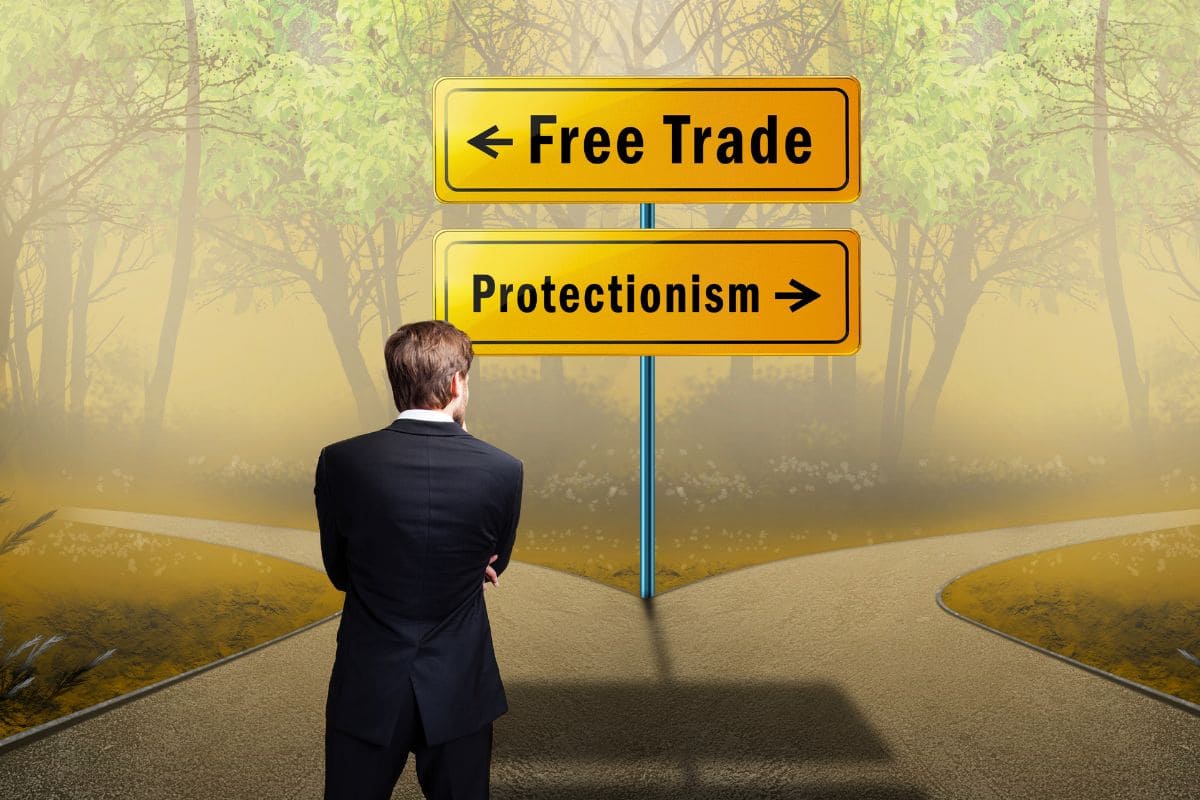
Q. What are the challenges before the Indian economy when the world is moving away from free trade and multilateralism to protectionism and bilateralism? How can these challenges be met?
(Answer in 150 words) 10M
Introduction
Free trade and multilateralism allow countries to trade freely under common rules. Protectionism and bilateralism rely on tariffs, quotas, and selective agreements. This shift creates challenges for India’s economy.
Challenges
-
Falling demand for Indian exports due to tariffs and trade barriers.
-
Disruption of global supply chains affecting small and medium businesses.
-
Pressure to accept unequal terms in bilateral deals.
-
Restrictions on visas affecting IT and service outsourcing.
-
Less access to advanced technology and foreign investment.
-
Increased uncertainty reducing private investment.
-
Risk of job losses in labour-intensive export sectors.
-
Weakening of WTO and India’s influence in global trade rules.
Way Forward
-
Diversify exports to Africa, Latin America, and other emerging markets.
-
Strengthen domestic manufacturing and supply chains.
-
Negotiate fair FTAs and join strong regional trade groups.
-
Promote innovation, R&D, and digital trade.
-
Simplify business rules to attract more foreign investment.
Conclusion
India should focus on diversification, self-reliance, and smart diplomacy to protect its global trade competitiveness.
Additional Information
Free Trade:
-
Exchange of goods and services across borders with minimal restrictions.
-
Promotes efficiency, consumer choice, and comparative advantage.
Multilateralism:
-
Trade conducted under rules set by global institutions (mainly WTO).
-
Ensures fairness, transparency, and collective bargaining among many nations.
-
Examples: WTO agreements like GATT, GATS, TRIPS.
Protectionism:
-
Use of tariffs, quotas, subsidies, and non-tariff barriers to shield domestic industries.
-
Aims to reduce imports but can harm export competitiveness.
Bilateralism:
-
Trade deals between two countries, often preferential and unequal.
-
Bypasses WTO principles of Most Favoured Nation (MFN).
World Trade Organization (WTO)
Origin and Role
-
Established in 1995 as the successor to GATT (1947).
-
Headquartered in Geneva, Switzerland.
-
It is the only global body that sets and enforces rules of international trade.
-
Currently has 164 members (India is a founding member).
Objectives
-
Promote free and fair trade.
-
Ensure predictability and transparency in global commerce.
-
Reduce barriers (tariffs, quotas, subsidies).
-
Provide a dispute resolution forum.
Core Principles
-
Most Favoured Nation (MFN): Any trade advantage given to one member must be extended to all.
-
National Treatment: Imported goods must be treated no less favourably than domestic goods once they enter the market.
-
Transparency: Members must publish their trade regulations and notify changes.
-
Reciprocity & Non-Discrimination: Balance of concessions among members.
Major Agreements
-
GATT (General Agreement on Tariffs and Trade): Trade in goods.
-
GATS (General Agreement on Trade in Services): Covers IT, banking, tourism, etc.
-
TRIPS (Trade-Related Aspects of Intellectual Property Rights): Standards for patents, copyrights, trademarks.
-
Agreement on Agriculture (AoA): Limits subsidies and tariffs in farm trade.
-
SPS & TBT Agreements: Food safety, health, and technical standards.
Dispute Settlement Mechanism (DSM)
-
WTO provides a quasi-judicial system for resolving trade disputes.
-
Criticism: Since 2019, the Appellate Body has been dysfunctional because the US blocked appointments of judges.
India and WTO
-
India uses WTO to defend its subsidies in agriculture and fisheries.
-
Challenges: Pressure to reduce farm subsidies, high tariffs on industrial goods, and resistance to public stockholding of food grains.
-
India supports strengthening the WTO but resists developed countries’ attempts to dilute special and differential treatment (S&DT) for developing nations.
Current Relevance
-
WTO faces crisis due to rise of protectionism, trade wars, and members preferring bilateral/regional agreements.
-
Weakening of multilateralism reduces India’s bargaining power, as bilateral deals often favour stronger economies.
India’s Current Status
-
Trade Performance (FY 2024–25):
-
Total exports (merchandise + services): US$ 824.9 billion, up 6.01% from the previous year.
-
Merchandise exports: US$ 437.42 billion.
-
Services exports: US$ 387.5 billion, reflecting 13.6% growth.
-
-
Trade Deficit:
-
Merchandise trade deficit widened to US$ 282.83 billion, up from US$ 241.14 billion in FY 2023–24.
-
Driven mainly by higher imports of electronics, petroleum, and gold.
-
-
Currency Depreciation:
-
Indian rupee fell to a record low of 88.7975 per US dollar (September 2025).
-
Contributing factors: increased US tariffs on Indian goods and higher H-1B visa fees, impacting IT sector and remittance inflows.
-
-
Sectoral Performance:
-
Resilient sectors: electronics, pharmaceuticals, engineering goods.
-
Struggling sectors: petroleum products, chemicals, gems & jewellery.
-
-
Foreign Direct Investment (FDI):
-
Total FDI inflows: US$ 81.04 billion, up 14% from previous year.
-
Manufacturing FDI: US$ 19.04 billion, showing strong investor confidence.
Impact of Protectionism and Trade Wars on Global Trade
-
Shift Towards Protectionism:
-
Countries are increasingly adopting tariffs, quotas, and bilateral trade deals, reducing the role of multilateral trade.
-
This increases costs for exporters, disrupts supply chains, and creates uncertainty in global commerce.
-
-
Challenges for Developing Economies:
-
Developing nations like India face restricted market access due to high tariffs and non-tariff barriers.
-
Trade wars make it harder to integrate into global value chains, limiting growth and export diversification.
-
-
Global Trade Wars:
-
The Trump-era US-China tariff war forced regional supply chain realignment, increased costs, and slowed global trade growth.
-
Export-dependent sectors in developing nations are particularly vulnerable to retaliatory tariffs.
-
-
Economic & Social Ripple Effects:
-
Rising trade barriers contribute to inflation, higher import costs, and challenges in energy and food security.
-
Labour-intensive sectors in developing countries may see job losses, affecting socio-economic stability.
-
-
Sectoral & Strategic Implications:
-
Strategic exports like electronics, IT services, and pharmaceuticals face both market access restrictions and increased competition.
-
Countries may be forced to reassess trade policies and prioritize domestic value addition to mitigate risks.
Committees / Bodies and Their Recommendations
-
Parliamentary Standing Committee on Commerce (2025)
-
Suggested rationalizing tariffs and correcting inverted duty structures.
-
Recommended reviewing Free Trade Agreements (FTAs) to ensure they do not harm domestic industries.
-
Advocated measures to boost MSMEs’ competitiveness in global markets.
-
-
High-Level Advisory Group (HLAG) on Trade (2019)
-
Recommended diversifying export markets to reduce dependence on a few countries.
-
Suggested strengthening value addition in manufacturing and services exports.
-
Advocated enhancing trade facilitation and reducing logistical costs.
-
-
NITI Aayog Reports
-
Emphasized entry into mega trade blocs like CPTPP and careful participation in RCEP.
-
Highlighted the need for technology upgradation and boosting domestic manufacturing.
-
-
Economic Survey (Various Years)
-
Advocated for export competitiveness through digital trade, innovation, and skill development.
-
Suggested strengthening supply chains to withstand global trade disruptions.
-
-
Department of Commerce / Ministry of Commerce Recommendations
-
Promoted Make in India and PLI schemes to enhance manufacturing exports.
-
Encouraged bilateral negotiations to secure fair trade terms while safeguarding India’s WTO interests.
Strategies and Solutions to Strengthen International Trade
-
Diversification of Trade Partners:
Countries should expand exports and imports beyond traditional markets to reduce vulnerability to trade tensions. -
Strengthening Domestic Capabilities:
Enhancing manufacturing, technology adoption, and value addition helps nations compete globally and reduces import dependence. -
Balanced Trade Agreements:
Multilateral and regional trade agreements should ensure equitable market access while protecting domestic interests. -
Policy and Regulatory Reforms:
Simplifying export-import procedures and supporting MSMEs strengthens global trade participation. -
Global Cooperation on Challenges:
Nations should coordinate on climate change, energy security, and food supply to mitigate trade disruptions caused by global shocks or conflicts. -
Supply Chain Resilience:
Diversifying sourcing, building strategic reserves, and improving logistics can help withstand trade wars and protectionist policies.
Comments
Post a Comment