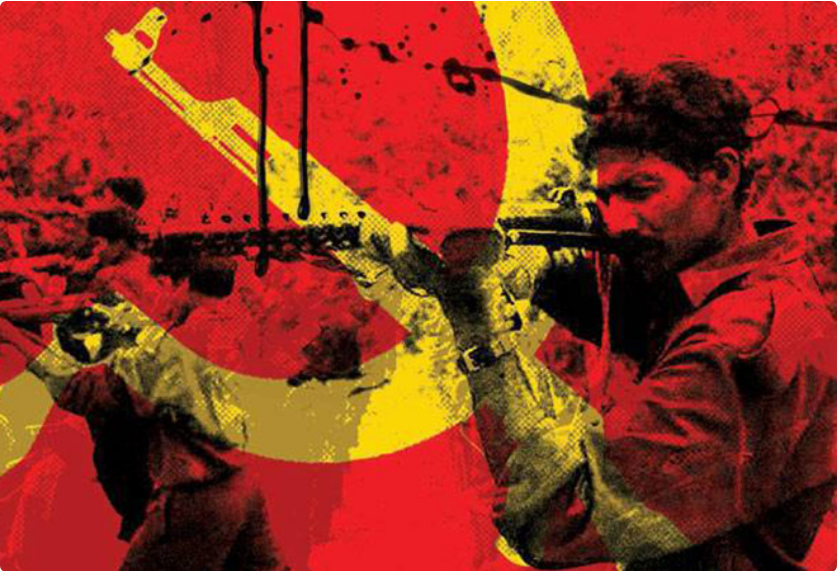
Image Source : chintan.indiafoundation.in
Case Study on Ethical Dilemmas in Counter-Naxalite Operations
Q. With the multi-pronged strategy of the Central and State Governments especially in the last few years, the naxalite problem has been resolved to a large extent in the affected states of the country. However, there are a few pockets in certain states where the naxalite problem still persists, mainly due to involvement of foreign countries. Rohit is posted as SP (Special Operations) for the last one year, in one of the districts which is still affected by the naxalite problem. The district administration has taken a lot of developmental works in the recent past in the naxalite affected areas to win the hearts and minds of the people. Over a period of time, Rohit has established an excellent intelligence network to get the real time information regarding the movement of naxalite cadres. To instil confidence in the public and have moral ascendancy over the naxalites, a number of cordons and search operations are being conducted by the police. Rohit, who himself was leading one of the contingents, got a message through his intelligence source that about ten hard core naxalites were hiding in a particular village with sophisticated weapons. Without wasting any time, Rohit reached the target village with his team and laid out a foolproof cordon and started carrying out a systematic search. During the search, his team managed to overpower all the naxalites along with their automatic weapons. However, in the meantime, more than five hundred tribal women surrounded the village and started marching towards the target house, as they are their protectors and saviours. The situation on the ground was becoming very critical as the tribal women were extremely agitated and aggressive. Rohit tried to contact his superior officer, IG (Special Operations) of the state on the radio set and on mobile phone, but failed to do so due to poor connectivity. Rohit was in great dilemma since out of the naxalites apprehended two were not only hard core top insurgents with prize money of ten lakhs on their heads, but were also involved in a recent ambush on the security forces. However, if he did not release the naxalites, the situation could get out of control since the tribal women were aggressively charging towards them. In that case, to control the situation Rohit might have to resort to firing which may lead to valuable loss of lives of civilians and would further complicate the situation.
(a) What are the options available with Rohit to cope with the situation.
(b) What are the ethical dilemmas being faced by Rohit?
(c) Which of the options, do you think, would be more appropriate for Rohit to adopt and why?
(d) In the present situation, what are the extra precautionary measures to be taken by the police in dealing with women protesters?
Introduction
The Naxalite challenge is not only about security but also about ethics in governance. As SP, Rohit faces a conflict between rule of law, compassion, justice, and public trust. Ethical theories like utilitarianism (greatest good for greatest number) and deontology (duty-based ethics) help in decision-making.
(a) Options available with Rohit
-
Release the naxalites under crowd pressure to avoid immediate violence.
-
Use force to disperse the women, retaining custody but risking casualties.
-
Persuade and negotiate with community leaders and women police.
-
Adopt delay tactics – contain situation calmly till communication improves.
-
Keep naxalites in custody while ensuring safety of civilians.
(b) Ethical dilemmas faced by Rohit
-
Rule of law vs. Humanitarian concern – upholding justice vs. saving lives.
-
Justice vs. Compassion – punishing insurgents vs. respecting tribal emotions.
-
Short-term peace vs. Long-term security – temporary calm vs. future safety.
-
Deontology vs. Consequentialism – duty to law vs. consequences of action.
(c) Most appropriate option
The best option is dialogue and persuasion through community leaders and women constables, while keeping naxalites in custody. This aligns with utilitarianism by minimizing harm, and with deontology by respecting duty to law.
(d) Extra precautionary measures with women protesters
-
Deploy women police officers.
-
Use only non-lethal methods if required.
-
Show patience and respect for dignity of women.
-
Maintain communication and transparency through documentation.
Conclusion
Rohit must practice ethical policing that balances firmness with compassion. By following rule of law, minimum harm, and humane values, he can ensure justice, peace, and trust of the community.
Additional Information
Background on Naxalism – Historical Perspective
-
Naxalism originated in 1967 in the village of Naxalbari, West Bengal, as a peasant uprising against exploitative landlords.
-
The movement was inspired by Maoist ideology, advocating armed struggle to overthrow the state and establish a classless society.
-
Early leaders like Charu Majumdar and Kanu Sanyal became prominent for organizing rural peasants against landlords and government authorities.
-
The movement quickly spread to Bihar, Andhra Pradesh, Odisha, and other regions with widespread rural poverty and social injustice.
-
The 1970s and 1980s saw sporadic armed uprisings, but lack of coordination and strong police action limited its spread.
-
In the 1980s and 1990s, Naxalism became more organized with the formation of groups like the People’s War Group (PWG) and later the Communist Party of India (Maoist) in 2004 through mergers.
-
These groups adopted guerrilla warfare tactics, targeting security forces and government infrastructure, often in forested tribal regions.
-
Over decades, Naxalism evolved from local peasant revolts to a nationwide insurgency, affecting over 90 districts across India at its peak.
-
Government counter-insurgency measures, including development programs, police action, and intelligence networks, have reduced its spread but pockets of resistance remain.
Challenges Faced Due to Naxalism
-
Internal Security Threat: Naxalism poses a significant threat to law and order, leading to frequent attacks on police, paramilitary forces, and government officials.
-
Loss of Human Lives: Civilians, security personnel, and Naxal cadres themselves are often killed in ambushes, encounters, or retaliatory actions.
-
Hindrance to Development: Infrastructure projects, schools, hospitals, and roads are often targeted, slowing socio-economic development in affected regions.
-
Displacement of Communities: Local populations, especially tribals, face forced displacement due to violence or militarized operations.
-
Economic Impact: Mining, agriculture, and local businesses are disrupted, discouraging investment and economic growth in affected areas.
-
Psychological Impact: Fear and trauma affect both local communities and security forces, creating a climate of uncertainty and insecurity.
-
Governance Challenges: Naxal-affected regions often have weak state presence, making law enforcement, welfare delivery, and public administration difficult.
-
Ethical and Legal Dilemmas: Security forces face moral and ethical challenges in balancing law enforcement, civilian protection, and human rights.
-
Recruitment and Radicalization: Naxal groups exploit local grievances, poverty, and unemployment to recruit youth, sustaining the insurgency.
-
Intelligence and Communication Gaps: Dense forests, difficult terrain, and poor connectivity hinder effective surveillance and quick response.
Government Measures to Counter Naxalism
The Government of India has adopted a comprehensive and multi-pronged strategy to address Left-Wing Extremism (LWE), commonly known as Naxalism. This approach combines security operations, socio-economic development, and community engagement, aiming to eliminate Naxalism effectively.
1. Security-Related Measures
-
Enhanced Deployment of Forces: Increased presence of Central Armed Police Forces in Naxal-affected areas with over 320 camps and 68 night-landing helipads established in recent years.
-
Fortification of Police Stations: The number of fortified police stations has increased significantly to strengthen security infrastructure.
-
Neutralization of Key Leaders: Successful operations have led to the neutralization of top Maoist leaders, weakening the organizational structure of Naxal groups.
2. Development Initiatives
-
Infrastructure Development: Thousands of kilometers of roads and hundreds of telecom towers have been constructed to improve connectivity in remote regions.
-
Educational Facilities: Eklavya Model Residential Schools (EMRSs) have been established to provide quality education to tribal children.
-
Skill Development: Industrial Training Institutes (ITIs) and Skill Development Centres (SDCs) have been set up to enhance youth employability.
-
Housing and Welfare: Thousands of houses have been constructed to provide shelter for displaced families in affected areas.
3. Community Engagement and Rights Protection
-
Surrender and Rehabilitation Policy: Policies encourage Naxalites to surrender and reintegrate into society with rehabilitation support.
-
Rights and Entitlements: Efforts are made to ensure government welfare schemes reach every village, prioritizing families affected by Naxal violence.
4. Policy and Strategic Framework
-
National Policy and Action Plan (NPAP): Provides a holistic approach to LWE by integrating security, development, and protection of community rights.
-
Inter-State Coordination: Regular meetings among affected states for intelligence sharing, joint operations, and effective policy implementation.
These measures reflect the government’s balanced strategy of security, development, and community engagement to address Naxalism effectively.
Way Forward to Address Naxalism
1. Strengthening Security Measures
-
Continue enhancing intelligence networks to track Naxal movements effectively.
-
Improve training and capacity-building of local police and paramilitary forces.
-
Use technology such as drones, satellite surveillance, and secure communication systems to operate in difficult terrain.
2. Development-Oriented Measures
-
Accelerate infrastructure development in remote and tribal areas (roads, schools, healthcare facilities).
-
Promote livelihood and skill development programs to reduce socio-economic grievances.
-
Ensure universal access to government welfare schemes for affected populations.
3. Community Engagement
-
Involve tribal leaders, local councils, and civil society in conflict resolution and development planning.
-
Encourage participatory governance and grievance redressal mechanisms.
-
Promote awareness campaigns to build trust between the government and local communities.
4. Ethical Ways in Counter-Naxal Operations
-
Non-Lethal Approaches: Prioritize dialogue, negotiation, and persuasion over the use of force.
-
Humanitarian Consideration: Protect civilians’ lives and dignity while carrying out operations.
-
Rule of Law and Due Process: Ensure that all actions against Naxalites adhere strictly to legal frameworks.
-
Transparent Communication: Maintain clarity and honesty with local communities to build long-term trust.
-
Balancing Justice and Compassion: Address insurgency firmly while respecting the rights and cultural sensitivities of tribal populations.
5. Policy and Coordination
-
Strengthen inter-state and center-state coordination for seamless intelligence sharing and joint operations.
-
Regularly review policies like the National Policy and Action Plan (NPAP) to integrate lessons learned and ethical practices.
By combining security, development, and ethical engagement, India can address Naxalism effectively while upholding justice, human rights, and public trust.
Comments
Post a Comment