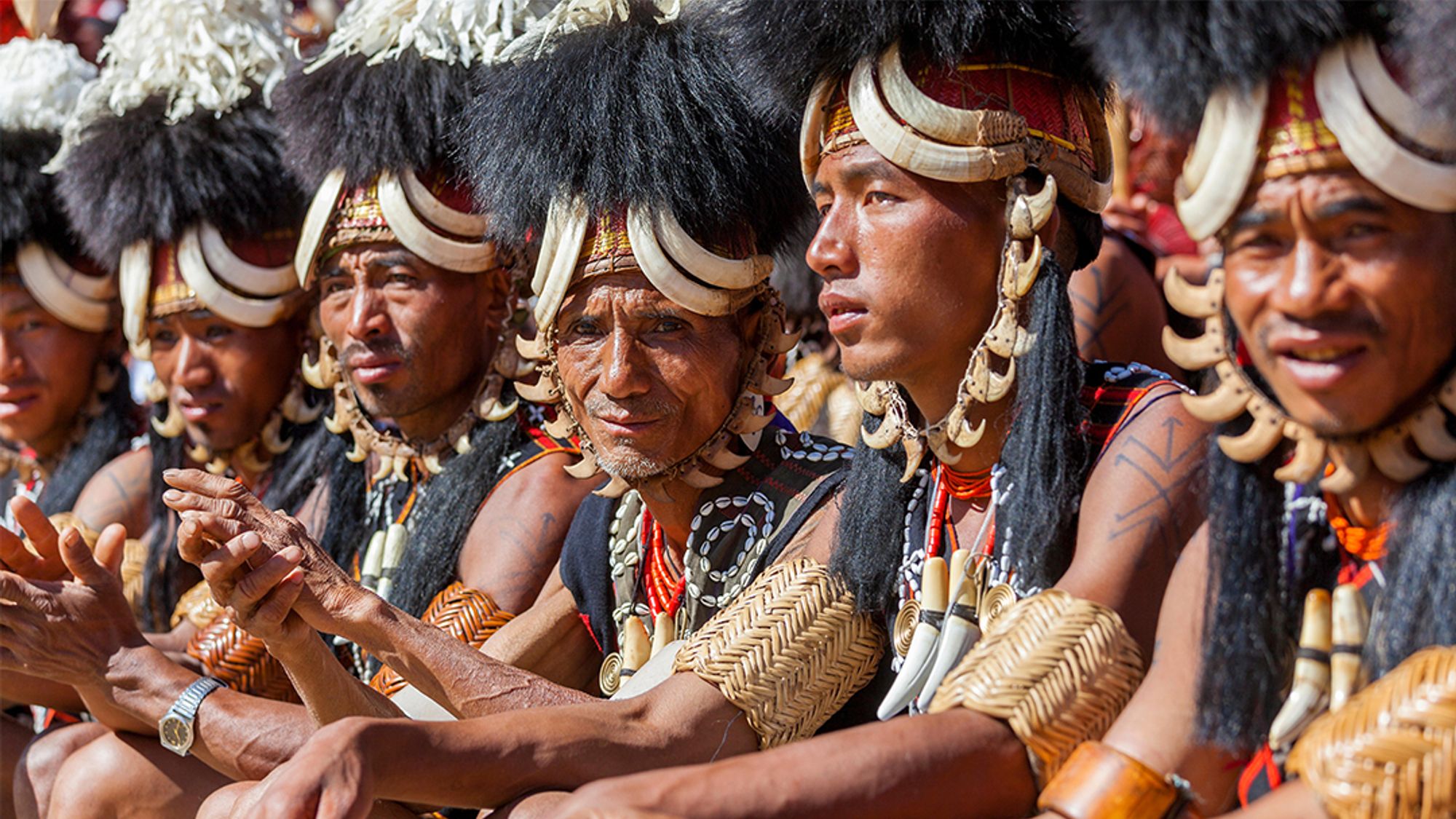
Image Source : bbc.com
Introduction
Tribal communities in India represent some of the most marginalized and vulnerable sections of society, with distinctive cultures, traditions, and a close relationship with forests and land. Their welfare has long been considered an essential part of the country’s development vision, and efforts have been made to improve their social and economic conditions while also recognizing their unique identity. At the same time, the question of how to integrate these communities into the mainstream without disrupting their way of life continues to pose important challenges.Recent developments, such as the Great Nicobar Island project, bring these issues into sharp focus. The plan involves a transshipment port, an airport, a power plant, and a township, requiring the diversion of nearly 13,000 hectares of forest land. While the administration maintains that due procedures were followed, local tribal councils have contested this claim, stating that their consent was never sought and that their rights were misrepresented in official records. This difference in perception illustrates the ongoing complexities involved in addressing tribal welfare in the context of ambitious national projects.
History of Tribes in India
-
Ancient and Early Times
-
Tribal communities have inhabited India since ancient times, often living in forests, hilly areas, and other remote regions.
-
They developed distinct languages, customs, and livelihood systems such as hunting, shifting cultivation, and pastoralism.
-
References to tribal groups appear in ancient texts and inscriptions, showing their longstanding presence as part of the subcontinent’s diverse society.
-
-
Medieval Period
-
Many tribes retained autonomy by residing in less accessible areas, away from mainstream agrarian settlements.
-
Some tribes organized themselves into chiefdoms or small kingdoms with their own governance systems.
-
While they had limited interaction with larger empires, they continued to maintain their own social and cultural practices.
-
-
Colonial Era
-
British rule marked a turning point in tribal history, as new land revenue systems and forest laws altered their traditional way of life.
-
Restrictions were placed on shifting cultivation and forest use, leading to changes in their economic patterns.
-
The Criminal Tribes Act of 1871 classified many tribal groups as “criminal tribes,” stigmatizing entire communities.
-
Several tribal uprisings emerged in response to these changes, including:
-
Kol Rebellion (1831–32) in Chotanagpur.
-
Santhal Rebellion (1855–56) in present-day Jharkhand and Bihar.
-
Bhil Uprisings in central and western India.
-
Munda Uprising (1899–1900) led by Birsa Munda in Chotanagpur.
-
Other localized revolts in Odisha, Madhya Pradesh, and the Northeast.
-
-
-
Post-Independence Era
-
In 1947, the Indian Constitution granted formal recognition to tribal communities as Scheduled Tribes.
-
Special provisions were introduced for political representation, access to education, and opportunities in public employment.
-
Dedicated welfare programs and development agencies were established to support social and economic progress.
-
The Government also identified Particularly Vulnerable Tribal Groups (PVTGs) requiring focused attention.
-
Communities earlier labeled under the Criminal Tribes Act were officially denotified in 1952, later categorized as Denotified, Nomadic, and Semi-Nomadic Tribes (DNTs) for policy purposes.
-
-
Contemporary Period
-
Tribal communities today are recognized as important stakeholders in India’s democratic framework.
-
Many participate in governance through Panchayati Raj Institutions and other representative bodies.
-
Their cultural heritage continues to be preserved and promoted, alongside initiatives aimed at improving their social and economic well-being.
Tribal Distribution, Demography, and Classification in India
Geographical Distribution
Tribal communities in India are primarily concentrated in three broad regions:
-
Central India: Jharkhand, Chhattisgarh, Odisha, Madhya Pradesh – forest-dependent communities relying on agriculture, forest produce, and traditional crafts.
-
North-East India: Nagaland, Mizoram, Meghalaya, Arunachal Pradesh, Manipur – tribes practicing shifting cultivation (jhum), maintaining strong clan-based social structures, and speaking distinct languages.
-
Andaman & Nicobar Islands: Small and vulnerable tribes such as Great Andamanese, Nicobarese, Onge, Shompens, and Sentinelese – primarily coastal and subsistence-based lifestyles, relying on fishing, hunting, and gathering.
Other tribal populations are scattered across Himalayan and desert regions, practicing pastoralism and nomadic herding.
Cultural and Livelihood Practices
-
Central Indian tribes: Agriculture, forest produce, and traditional crafts.
-
North-Eastern tribes: Shifting cultivation, weaving, bamboo crafts, and community-led resource management.
-
Himalayan and desert tribes: Pastoralism and seasonal migration for livelihood.
-
Island tribes: Fishing, hunting, gathering, and marine resource dependence.
Population and Demographics
-
As per Census 2011, Scheduled Tribes (STs) constitute 8.6% of India’s population, around 10.45 crore people.
-
Tribes are spread across 30 States and Union Territories, except Punjab, Haryana, Delhi, and some smaller UTs.
-
Central India has the largest absolute tribal population, while the North-East has the highest proportion relative to the state population.
Over 730 distinct ST communities are officially recognized across the country.
STs are 11.3% of the rural population but only 2.8% of urban population.
Special Categories of Tribes
-
Scheduled Tribes (STs): Recognized under the Constitution for political representation and welfare schemes.
-
Particularly Vulnerable Tribal Groups (PVTGs): Subset of STs with stagnant or declining population, low literacy, and pre-agricultural economy; receive targeted welfare support.
-
Denotified Tribes (DNTs): Historically classified under the Criminal Tribes Act, many continue to face social stigma and economic marginalization.
-
Nomadic and Semi-Nomadic Tribes: Communities dependent on seasonal migration, engaged in herding, crafts, or forest-based livelihoods.
-
Island Tribes: Small, often isolated tribes living on islands, relying on subsistence fishing and gathering.
-
Forest and Hill Tribes: Tribes residing in forested or hilly areas, dependent on minor forest produce, hunting, and shifting cultivation.
Denotified, Nomadic, and Semi-Nomadic Tribes (DNTs)
-
Spread across India with an estimated population of around 10 crore.
-
Many remain marginalized, often falling outside the benefits of ST/SC/OBC classifications.
-
Special commissions and welfare boards have been established to address their distinct social and economic challenges.
Major Tribes in India
-
Central India: Gond, Santhal, Munda, Bhil, Oraon
-
North-East India: Naga tribes, Mizo, Khasis, Garos, Mikir
-
Andaman & Nicobar Islands: Nicobarese, Great Andamanese, Onge, Shompens, Sentinelese
-
Western India (Rajasthan, Gujarat, Maharashtra): Bhils, Meenas, Warli
-
Eastern India (Odisha, Jharkhand): Khonds, Santhals, Ho, Mundas
-
Northern India (Himalayan regions): Gaddi, Bhotia, Tharu, Jaunsari
Evolution in Tribal Welfare in India
-
Early Post-Independence Phase (1950s–1970s): Protection-Oriented Approach
-
Policies aimed mainly at protecting tribes from exploitation by moneylenders, traders, and outsiders.
-
Establishment of Scheduled Areas and Tribal Advisory Councils to safeguard their interests.
-
Launch of Community Development Programmes and Multi-Purpose Tribal Blocks as early experiments in tribal development.
-
-
Integrated Development Phase (1970s–1980s): Area-Based Interventions
-
Creation of Integrated Tribal Development Projects (ITDPs) to focus on specific tribal-dominated regions.
-
Greater emphasis on education, health, and basic infrastructure in tribal belts.
-
Recognition of the need to integrate tribes with mainstream development while preserving their distinct identity.
-
-
Development-Focused Phase (1980s–2000s): Expanding Socio-Economic Opportunities
-
Establishment of the Tribal Sub-Plan (TSP) approach, earmarking a proportion of plan funds for tribal areas.
-
Focus on poverty alleviation, employment generation, and literacy expansion among tribal groups.
-
Special schemes for Denotified Tribes (DNTs) and Nomadic Tribes, recognizing their distinct vulnerabilities.
-
Strengthening of tribal research institutes and cultural preservation programs.
-
-
Rights-Based Approach (Post-2000s): Legal and Empowerment Measures
-
Recognition of collective rights, especially through the Forest Rights Act (2006), granting individual and community forest rights.
-
Strengthening of Panchayati Raj (Extension to Scheduled Areas) Act (PESA), 1996, in implementation during this phase, giving local communities greater control over resources and governance.
-
Welfare policies became more participatory, aiming at empowerment rather than just protection.
-
Introduction of targeted support for Particularly Vulnerable Tribal Groups (PVTGs), focusing on livelihood, health, and education.
-
-
Contemporary Phase (2010s–Present): Inclusive Development and Identity Preservation
-
Launch of umbrella programs such as Vanbandhu Kalyan Yojana (2014) for holistic tribal development.
-
Increasing focus on skill development, digital literacy, and entrepreneurship among tribal youth.
-
Schemes for denotified, nomadic, and semi-nomadic tribes under separate action plans (e.g., SEED scheme).
-
Recognition of tribes not just as beneficiaries of welfare but as key stakeholders in environmental conservation, cultural heritage, and sustainable development.
Significance of Tribal Welfare
-
Preservation of Cultural Diversity:
-
Tribes represent some of the oldest living traditions in the subcontinent, contributing to India’s pluralistic identity.
-
Their languages, art forms, music, dance, and oral histories enrich the nation’s intangible heritage.
-
-
Custodians of Ecological Knowledge:
-
Indigenous communities have developed sustainable practices in agriculture, forestry, and water conservation.
-
Their symbiotic relationship with forests and biodiversity makes them crucial partners in conservation and climate resilience.
-
-
Ensuring Inclusive Development:
-
Addressing tribal welfare is central to achieving equitable growth and reducing socio-economic disparities.
-
Empowering marginalized communities enhances social cohesion and nation-building.
-
-
Guarding Against Exploitation and Displacement:
-
Welfare measures protect vulnerable groups from land alienation, bonded labor, and resource exploitation.
-
Secure rights reduce risks arising from industrialization, mining, and infrastructure projects.
-
-
Strengthening Grassroots Democracy:
-
Ensuring tribal participation in local governance reinforces self-rule and decentralized decision-making.
-
Their involvement in village-level institutions promotes accountability and community-driven development.
-
-
Contribution to National Economy:
-
Tribes are key contributors through minor forest produce, handicrafts, eco-tourism, and traditional agriculture.
-
Welfare initiatives help harness their economic potential while safeguarding livelihoods.
-
-
Strategic Importance:
-
Many tribal communities inhabit border and resource-rich regions, making their well-being essential for security and stability.
Constitutional and Legal Framework for Tribal Welfare
🔹 Constitutional Provisions
-
Article 244: Provides for administration of Scheduled Areas under the Fifth Schedule and Tribal Areas under the Sixth Schedule.
-
Article 46: Directs the State to promote the educational and economic interests of Scheduled Tribes and protect them from social injustice and exploitation.
-
Fifth Schedule: Governs the administration and control of Scheduled Areas in states (except the Northeast).
-
Sixth Schedule: Provides for autonomous district councils in Assam, Meghalaya, Tripura, and Mizoram, enabling self-governance in tribal areas.
-
Reservation Provisions:
-
Articles 15(4), 16(4), and 335 enable reservations in education, employment, and legislatures for Scheduled Tribes.
-
Articles 330 & 332 reserve seats for STs in Parliament and State Assemblies.
-
🔹 Statutory Safeguards
-
Panchayats (Extension to Scheduled Areas) Act (PESA), 1996: Empowers Gram Sabhas in Scheduled Areas with decision-making on local resources and cultural matters.
-
Forest Rights Act (FRA), 2006: Recognizes individual and community rights of forest dwellers over forest land and produce.
-
Protection of Aboriginal Tribes Regulation, 1956 (PAT56): Provides special protection to particularly vulnerable tribal groups (PVTGs) in the Andaman & Nicobar Islands by restricting outsider access to notified tribal reserves.
-
Bonded Labour System (Abolition) Act, 1976: Protects tribal workers from exploitative practices like bonded labor.
-
SC/ST (Prevention of Atrocities) Act, 1989: Safeguards against social discrimination and atrocities.
🔹 Institutional Mechanisms
-
National Commission for Scheduled Tribes (NCST): Established under the 89th Constitutional Amendment Act (2003) to oversee safeguards and address grievances.
-
Ministry of Tribal Affairs (1999): Dedicated nodal ministry for policy planning and implementation of tribal development programs.
-
Tribal Research Institutes (TRIs): Function across states to conduct research and provide policy support on tribal issues.
🔹 Special Provisions for Certain Regions
-
Andaman & Nicobar Islands: PAT56 ensures restricted access to tribal reserves, protecting PVTGs such as the Sentinelese, Jarwas, Onge, and Great Andamanese.
-
North-Eastern States: Sixth Schedule and special constitutional provisions safeguard customary laws, land ownership, and cultural identity.
Important Judicial Cases Related to Tribal Rights
🔹 Samatha vs State of Andhra Pradesh (1997)
-
Landmark Supreme Court judgment prohibiting the transfer of tribal land to non-tribals, including private companies, in Scheduled Areas.
-
Recognized that land is central to tribal identity and livelihood, emphasizing constitutional protections under the Fifth Schedule.
🔹 Orissa Mining Corporation vs Ministry of Environment & Forests (2013) – Niyamgiri Case
-
Supreme Court upheld the authority of Gram Sabhas under the Forest Rights Act, 2006, to decide on matters concerning their sacred groves and cultural rights.
-
This judgment reinforced community consent as a prerequisite for projects affecting tribal lands.
🔹 Banwasi Seva Ashram vs State of Uttar Pradesh (1986)
-
The Court emphasized the need to balance development projects with tribal rehabilitation and welfare.
-
Directed the State to ensure that displaced tribals are given alternative land and livelihood opportunities.
🔹 State of Kerala vs Peoples’ Union for Civil Liberties (PUCL) (2009)
-
Focused on the rehabilitation and human rights of tribal people affected by displacement in large development projects.
-
Highlighted the importance of sustainable development and tribal rights protection.
🔹 T.N. Godavarman Thirumulpad vs Union of India (Ongoing from 1996)
-
Though primarily an environmental case, it had significant implications for tribal forest dwellers.
-
Led to judicial scrutiny of forest conservation vis-à-vis tribal habitation and was one of the precursors for legislative safeguards like the FRA, 2006.
🔹 Union of India vs Rakesh Kumar (2010)
-
Supreme Court emphasized the strict implementation of laws preventing the exploitation of Scheduled Tribes, particularly regarding bonded and exploitative labor practices.
🔹 Andhra Pradesh vs Nallamilli Rami Reddy (2001)
-
Reaffirmed restrictions on the transfer of tribal lands to non-tribals under state laws and constitutional provisions.
Government Initiatives for Tribal Welfare
1. Education
-
Eklavya Model Residential Schools (EMRS): Provide quality education for ST students in remote areas, with focus on culture, sports, and skills.
-
Scholarships: Pre-Matric, Post-Matric, National Overseas Scholarship, National Fellowship, and Top-Class Scholarship.
-
Adivasi Shiksha Rinn Yojana (ASRY): Education loans with subsidized interest.
2. Livelihood & Economic Empowerment
-
Van Dhan Vikas Kendras (VDVKs): Promote value addition and marketing of Minor Forest Produce (MFP).
-
Pradhan Mantri Janjatiya Vikas Mission (PMJVM): Consolidates livelihood schemes and ensures MSP for MFP.
-
NSTFDC: Provides concessional loans for income generation.
-
Financial Support Schemes: Term Loan, Micro Credit, and AMSY for SHGs and tribal women.
-
TRIFED & TRIBES India: Market linkages through outlets, exhibitions, and e-commerce.
3. Infrastructure & Development
-
Dharti Aaba Janjatiya Gram Utkarsh Abhiyan (2024): Multi-ministry convergence program.
-
Pradhan Mantri Janjati Adivasi Nyaya Maha Abhiyan (PM-JANMAN, 2023): Saturation of PVTG households with essential services.
-
Pradhan Mantri Adi Adarsh Gram Yojana (PMAAGY): Infrastructure development in tribal-dominated villages.
-
Development Action Plan for Scheduled Tribes (DAPST): Ensures ministries allocate part of their budgets to tribal welfare.
-
Grants under Article 275(1): Central grants for Scheduled Areas.
4. Health & Nutrition
-
Sickle Cell Anaemia Elimination Mission (2023): Screening, awareness, and treatment.
-
Mission Indradhanush: Immunization with tribal focus.
-
Nikshay Mitra Initiative: Support for TB patients.
-
PM-JANMAN (Health): Mobile medical units and health infrastructure.
5. Social Security & Welfare
-
National Social Assistance Programme (NSAP – IGNOAPS): Pension support for elderly tribals.
-
Grant-in-Aid to Voluntary Organizations: Support for NGOs in tribal education, health, and livelihood.
6. Culture & Heritage
-
Aadi Mahotsav & Cultural Festivals: Promotion of tribal art and traditions.
-
Tribal Freedom Fighters’ Museums: Set up across tribal regions.
-
Mangarh Dham (Rajasthan): National memorial for Bhil martyrs.
-
Support to TRIs: Research and preservation of tribal heritage.
Impact of Government Initiatives
-
Budgetary Support:
-
DAPST allocation increased to ₹1.2 lakh crore (2023–24) from ₹25,000 crore annually earlier.
-
Ministry of Tribal Affairs received ₹13,000 crore in 2024–25, a 73.6% rise over the previous year.
-
Dharti Aaba Abhiyan allocated ₹79,156 crore (Central ₹56,333 crore; State ₹22,823 crore).
-
PM-JANMAN allocated ₹24,000 crore for 3 years.
-
-
Education:
-
Target of 728 EMRS schools; about 3.5 lakh students to benefit.
-
40 new EMRS inaugurated, 25 foundations laid (₹2,800 crore investment).
-
Scholarship coverage expanded across pre-matric, post-matric, and higher education levels.
-
-
Livelihood:
-
250 Van Dhan Vikas Kendras set up under PM-JANMAN.
-
Loans provided through NSTFDC and AMSY to SHGs and women entrepreneurs.
-
-
Infrastructure & Development:
-
Dharti Aaba Abhiyan covers 63,843 villages, 549 districts, 2,911 blocks, benefitting 5 crore tribals.
-
PMAAGY targets 36,428 tribal villages (≥50% ST population & ≥500 STs).
-
-
Health:
-
PM-JANMAN operationalized 275 mobile medical units and 500 Anganwadis.
-
75,800 PVTG households electrified.
-
5,550 PVTG villages connected with clean drinking water.
-
-
Culture & Heritage:
-
10 Tribal Freedom Fighters’ Museums sanctioned.
-
Aadi Mahotsav scaled up as a national cultural platform.
Challenges in Providing Welfare
-
Implementation Gaps
-
Despite strong legal and constitutional safeguards, there is often a disconnect between policy and ground-level execution.
-
Slow recognition of rights, lack of awareness among communities, and weak monitoring mechanisms reduce the impact of welfare measures.
-
-
Conflict Between Development and Tribal Rights
-
Large-scale projects such as mining, dams, and infrastructure often come into conflict with tribal land and forest rights.
-
While laws require Gram Sabha consent and settlement of rights, compliance is frequently reduced to paperwork, with genuine participation ignored.
-
-
Displacement and Livelihood Insecurity
-
Industrialization and resource extraction lead to displacement from traditional lands.
-
Rehabilitation and compensation packages are often inadequate, leaving communities with weakened access to land, forests, and livelihoods.
-
-
Administrative and Political Barriers
-
Multiple authorities—forest departments, district administrations, and Tribal Affairs agencies—create overlapping jurisdictions and delays.
-
Development priorities of states sometimes override community welfare, marginalizing tribal concerns.
-
-
Lack of Effective Representation
-
Though laws like PESA and FRA empower Gram Sabhas, in practice their role is often undermined or bypassed.
-
Tribal voices remain weak in decision-making processes related to land, forests, and development planning.
-
-
Social Vulnerabilities
-
Particularly Vulnerable Tribal Groups (PVTGs), Denotified Tribes (DNTs), and nomadic groups face additional barriers due to remoteness, lack of documentation, and historical stigma.
-
Persistent gaps in health, nutrition, and education continue to widen inequality despite welfare schemes.
Case Study: The Great Nicobar Project and Tribal Rights
-
Project Overview
-
The proposed Great Nicobar Island project, with an estimated cost of ₹72,000 crore, involves the construction of a transshipment port, airport, power plant, and township.
-
Nearly 13,075 hectares of forest land are earmarked for diversion under the project.
-
-
Tribal Representation
-
The Nicobarese Tribal Council, representing the local community, submitted a complaint stating that their rights under the Forest Rights Act (FRA), 2006 had not been settled and that no formal consent was given for the diversion of land.
-
They pointed to a 2022 certificate issued by the Andaman & Nicobar administration which recorded that the rights were “identified and settled.”
-
-
Legal Context
-
The matter reflects the interaction of two legal frameworks:
-
Forest Rights Act (2006): Provides for settlement of rights and Gram Sabha consent before diversion of forest land.
-
Protection of Aboriginal Tribes Regulation (PAT), 1956: Grants the Administrator of Andaman & Nicobar Islands authority over land diversion.
-
-
-
Current Status
-
The Council’s letter was sent to the Union Ministry of Tribal Affairs in July 2024.
-
The Ministry has acknowledged receipt and stated that the issue is under examination.
-
-
Relevance
-
The case illustrates the procedural complexities involved in balancing infrastructure development, forest use, and the rights of tribal communities.
-
It also shows how documentation, administrative certification, and legal frameworks play a decisive role in shaping project approvals.
Way Forward
-
Strengthening Implementation Mechanisms
-
Ensure that constitutional and legal safeguards such as FRA and PESA are implemented uniformly across states.
-
Establish independent monitoring bodies to track compliance and reduce administrative delays.
-
-
Improved Representation and Participation
-
Empower Gram Sabhas and tribal councils with greater decision-making authority in land, forest, and resource governance.
-
Encourage inclusive consultation processes before initiating development projects in tribal areas.
-
-
Balancing Development and Rights
-
Adopt integrated planning models that combine infrastructure development with protection of tribal livelihoods.
-
Promote socio-cultural impact assessments alongside environmental clearances for projects in Scheduled Areas.
-
-
Focused Support for Vulnerable Groups
-
Prioritize the needs of Particularly Vulnerable Tribal Groups (PVTGs), nomadic tribes, and Denotified Tribes with tailored schemes.
-
Improve delivery of healthcare, nutrition, and education in remote tribal regions.
-
-
Capacity Building and Awareness
-
Strengthen Tribal Research Institutes (TRIs) for evidence-based policy inputs.
-
Conduct regular awareness drives in tribal languages on welfare schemes and rights.
-
-
Technology and Innovation
-
Use digital platforms for direct benefit transfers, mobile health services, and e-learning in tribal regions.
-
Leverage GIS mapping for better planning of land rights and resource management.
Global Best Practices for Tribal Welfare
-
Canada – Indigenous Self-Governance
-
First Nations communities have been given autonomy in governance, including control over education, healthcare, and local resources.
-
-
Australia – Land Rights and Cultural Heritage Protection
-
The Aboriginal Land Rights Act (1976) recognizes traditional ownership and provides mechanisms for restitution of land.
-
Strong frameworks exist for protecting sacred sites and cultural heritage.
-
-
New Zealand – Treaty-Based Partnership
-
The Treaty of Waitangi provides the basis for partnership between the government and the Māori, ensuring recognition of their rights and consultation in decision-making.
-
-
Latin America (Bolivia, Ecuador) – Constitutional Recognition
-
Indigenous peoples are recognized as plurinational communities with specific rights to land, language, and self-determination.
-
-
Nordic Countries – Sami Parliaments
-
The Sami people of Norway, Sweden, and Finland have elected parliaments that represent their interests in culture, land use, and governance.
Conclusion
Tribal welfare in India is central to inclusive development, requiring a balance between modernization and preservation of indigenous identity. Despite numerous initiatives, challenges such as implementation gaps, displacement, and limited participation in decision-making continue to affect tribal communities. Cases like the Great Nicobar Project highlight the importance of community consultation, transparent planning, and protection of livelihoods.
Recent recommendations by the High-Level Committee on Tribal Development (2014) emphasize empowering local governance institutions, improving delivery of education and healthcare, and focusing on Particularly Vulnerable Tribal Groups (PVTGs). Strengthening skill development, livelihood opportunities, and cultural preservation, alongside leveraging technology for better planning and monitoring, can ensure tribes are not only beneficiaries of development but also active stakeholders in nation-building and ecological conservation.
Comments
Post a Comment