
Introduction
In 2025, soon after his re-election, U.S. President Donald Trump once again expressed his aspiration to receive the Nobel Peace Prize. The very fact that a sitting world leader continues to seek this honour illustrates the extraordinary significance attached to the Nobel Prizes. They are seen not merely as awards but as symbols of recognition that can shape global reputation and legacy.
Such examples show how deeply the Nobel Prizes are embedded in the world’s imagination. Announced annually, they capture international attention and set the stage for discussions that go far beyond the prize ceremony itself. Whether it is the Peace Prize drawing focus to pressing social struggles or the science prizes highlighting transformative discoveries, the Nobel announcements serve as moments when the world pauses to reflect on contributions that have a lasting impact.
Origins of the Nobel Prizes
-
Alfred Nobel’s Life and Concerns
Alfred Nobel (1833–1896) was a Swedish chemist, engineer, and industrialist, best known as the inventor of dynamite. Though his invention brought him immense wealth, Nobel was deeply troubled by its destructive use in warfare. A turning point came in 1888, when a French newspaper mistakenly published his obituary under the headline “The Merchant of Death is Dead”, condemning him for profiting from explosives. This incident reportedly made Nobel reflect on how he would be remembered after his death. -
The Will of 1895
On 27 November 1895, a year before his death, Nobel signed his final will at the Swedish–Norwegian Club in Paris. In this will, he left the majority of his vast fortune (over 31 million Swedish kronor, equivalent to billions today) to establish annual prizes. His explicit instruction was that the prizes should be awarded “to those who, during the preceding year, have conferred the greatest benefit to humankind.” -
Fields Chosen by Nobel
Nobel directed that his fortune be used to create five prizes in the areas he considered most impactful for human progress:-
Physics – for discoveries in the natural sciences.
-
Chemistry – for advances in chemical knowledge.
-
Physiology or Medicine – for contributions to health and life sciences.
-
Literature – for outstanding literary work.
-
Peace – for individuals or groups who worked to promote peace and reduce conflict.
-
-
Establishment of the Nobel Foundation
After Nobel’s death in 1896, his will faced resistance from relatives and governments. It took several years of negotiations before the Nobel Foundation was established in 1900 to manage his estate and ensure the execution of his wishes. The first Nobel Prizes were awarded in 1901 in Stockholm (for Physics, Chemistry, Medicine, and Literature) and Oslo (for Peace), reflecting Nobel’s instruction that the Peace Prize be awarded by a Norwegian committee. -
Later Expansion
In 1968, on its 300th anniversary, Sweden’s central bank, the Sveriges Riksbank, endowed a sixth prize: the Sveriges Riksbank Prize in Economic Sciences in Memory of Alfred Nobel, often referred to as the Nobel Prize in Economics.
Categories of the Nobel Prizes
Nobel Prize in Physics
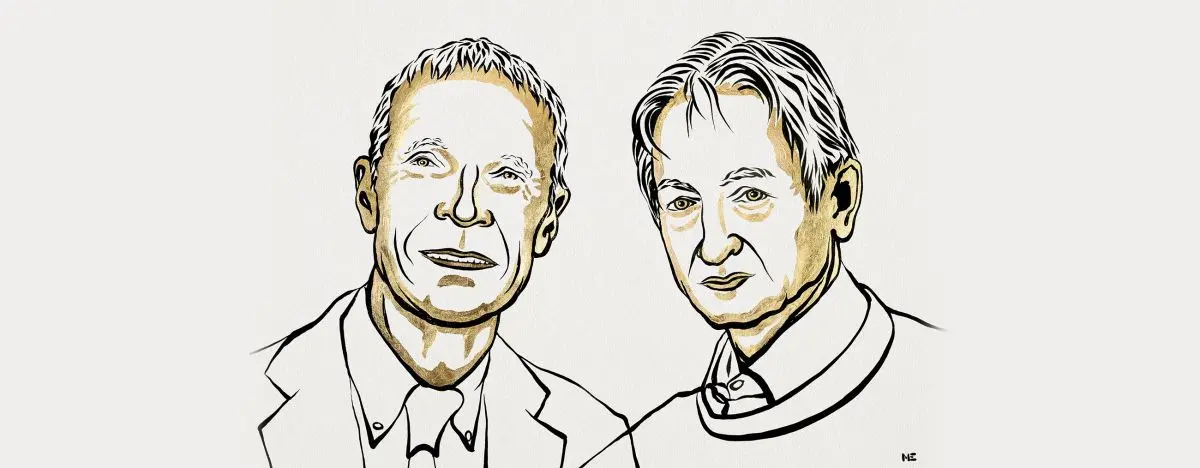
1. About the Award
-
Awarded annually by the Royal Swedish Academy of Sciences.
-
Laureates receive:
-
A gold medal with Alfred Nobel’s likeness.
-
A diploma crafted by Swedish artists.
-
A share of the cash prize (approximately 11 million SEK in 2024).
-
-
Recognizes groundbreaking theoretical insights and experimental discoveries that revolutionize our understanding of the universe.
2. The First Award (1901)
-
Wilhelm Conrad Röntgen received the inaugural prize in 1901 for discovering X-rays.
-
This discovery transformed medical diagnostics and opened new directions in physics, chemistry, and material sciences.
3. Milestones in Physics
A. Foundations of Modern Physics
-
Albert Einstein (1921) – Explained the photoelectric effect, laying the groundwork for quantum theory.
-
Niels Bohr (1922) – Developed the Bohr model of the atom, integrating quantum principles into atomic structure.
-
Werner Heisenberg, Erwin Schrödinger, Paul Dirac (1930s) – Built the mathematical framework of quantum mechanics.
B. Nuclear and Particle Physics
-
James Chadwick (1935) – Discovered the neutron, essential for nuclear science.
-
Hideki Yukawa (1949) – Predicted the meson, deepening understanding of particle interactions.
-
Carlo Rubbia & Simon van der Meer (1984) – Discovered the W and Z bosons, confirming electroweak theory.
-
Peter Higgs & François Englert (2013) – Predicted the Higgs mechanism, later confirmed at CERN.
C. Astrophysics and Cosmology
-
Arno Penzias & Robert Wilson (1978) – Discovered the cosmic microwave background radiation, supporting the Big Bang theory.
-
Subrahmanyan Chandrasekhar (1983) – Theorized stellar structure and black hole evolution.
-
Raymond Davis Jr. & Masatoshi Koshiba (2002) – Detected cosmic neutrinos, opening neutrino astronomy.
-
Roger Penrose, Reinhard Genzel & Andrea Ghez (2020) – Advanced black hole research, both theoretical and observational.
D. Condensed Matter and Applied Physics
-
Lev Landau (1962) – Theories on superfluidity and condensed matter systems.
-
John Bardeen, William Shockley & Walter Brattain (1956) – Invented the transistor, foundational to modern electronics.
-
Zhores Alferov & Herbert Kroemer (2000) – Advanced semiconductor heterostructures, critical for technology.
-
Gérard Mourou & Donna Strickland (2018) – Innovated laser physics, enhancing medicine and manufacturing.
E. Quantum Information Science
-
Alain Aspect, John Clauser & Anton Zeilinger (2022) – Pioneered experiments in quantum entanglement, underpinning quantum computing, cryptography, and communication.
4. The Latest Award (2024)
-
Awarded jointly to John J. Hopfield and Geoffrey E. Hinton.
-
John J. Hopfield:
-
Developed the Hopfield network (1982), an associative memory model inspired by statistical physics.
-
Demonstrated how neural networks can recall complete patterns from incomplete or noisy data.
-
-
Geoffrey E. Hinton:
-
Built upon Hopfield’s work to create the Boltzmann machine, a probabilistic learning model.
-
Pioneered advances in deep learning, enabling breakthroughs in image recognition, speech processing, and AI applications.
-
Together, their work bridged physics and computer science, laying the foundations for modern artificial intelligence.
Nobel Prize in Chemistry

1. About the Award
-
Awarded annually by the Royal Swedish Academy of Sciences.
-
Laureates receive:
-
A gold medal.
-
An official diploma.
-
A cash prize (currently about 11 million SEK, shared if multiple awardees).
-
-
The Nobel Prize in Chemistry honours discoveries that expand our understanding of matter and its transformations, with applications in medicine, industry, energy, environment, and daily life.
2. The First Award (1901)
-
Jacobus Henricus van ’t Hoff was the first Chemistry laureate.
-
Awarded for:
-
Discovering the laws of chemical dynamics.
-
Establishing the principle of osmotic pressure in solutions.
-
-
His work laid the foundations of physical chemistry, influencing chemical equilibrium, thermodynamics, and reaction kinetics.
3. Milestones
A. Foundations of Modern Chemistry
-
Marie Curie (1911) – Discovered radium and polonium, advancing the study of radioactivity.
-
Gilbert N. Lewis & Irving Langmuir (early 20th century, non-Nobel mentions in context) – Developed theories of chemical bonding and surface chemistry.
-
Linus Pauling (1954) – Awarded for work on the nature of the chemical bond, revolutionizing molecular structure studies.
B. Biochemistry and Life Sciences
-
Hans Krebs (1953) – Discovered the citric acid (Krebs) cycle, central to cellular respiration.
-
Frederick Sanger – Twice a laureate:
-
1958 – For protein sequencing (insulin).
-
1980 – For DNA sequencing methods, enabling genomics.
-
-
Kary Mullis (1993) – Invented the Polymerase Chain Reaction (PCR), a cornerstone of molecular biology.
-
Jennifer Doudna & Emmanuelle Charpentier (2020) – Developed CRISPR-Cas9 gene editing, a revolutionary tool in medicine, agriculture, and biotechnology.
C. Materials and Catalysis
-
Ernst Otto Fischer & Geoffrey Wilkinson (1973) – Advanced organometallic chemistry, crucial for industrial catalysis.
-
Ahmed Zewail (1999) – Founder of femtochemistry, capturing chemical reactions at the femtosecond scale.
-
Gerhard Ertl (2007) – Explored surface chemistry, key to fuel cells and catalytic converters.
-
Akira Yoshino, John B. Goodenough & M. Stanley Whittingham (2019) – Developed lithium-ion batteries, powering electronics and renewable energy systems.
D. Environmental and Applied Chemistry
-
Paul Crutzen, Mario Molina & Sherwood Rowland (1995) – Explained how CFCs deplete the ozone layer, influencing global environmental policy.
-
Yves Chauvin, Robert Grubbs & Richard Schrock (2005) – Developed metathesis reactions in organic chemistry, enabling greener synthesis and industrial applications.
4. The Latest Award (2024)
-
Awarded to:
-
David Baker – Pioneer in protein structure modelling.
-
Demis Hassabis – Co-founder of DeepMind, leader of AI-driven protein folding research.
-
John Jumper – Key developer of AlphaFold at DeepMind.
-
-
Recognized for:
-
Creating AI-based methods for protein structure prediction (AlphaFold).
-
Transforming drug discovery, molecular biology, and biotechnology.
-
Achieving near-perfect predictions of 3D protein structures, solving a decades-old challenge in biology.
Nobel Prize in Physiology or Medicine
1. About the Award
-
Awarded annually by the Nobel Assembly at the Karolinska Institute, Sweden.
-
Laureates receive:
-
A gold medal
-
An official diploma
-
A cash prize (about 11 million SEK, shared if multiple winners)
-
-
It honors discoveries that:
-
Advance understanding of life processes and human health
-
Lead to improved disease treatment, prevention, and public health outcomes
-
2. The First Award (1901)
-
Recipient: Emil von Behring
-
Contribution:
-
Developed serum therapy against diphtheria, a breakthrough treatment that saved countless lives.
-
Work laid the foundation of immunology and inspired the development of modern vaccines.
-
3. Milestones
A. Foundations of Modern Medicine
-
Robert Koch (1905): Discovered tuberculosis bacteria, strengthening the germ theory of disease.
-
Paul Ehrlich (1908): Introduced the idea of the “magic bullet” in drug targeting, pioneering immunotherapy.
-
Alexis Carrel (1912): Developed advanced surgical techniques, laying groundwork for organ transplantation.
B. Microbiology, Immunology, and Infectious Diseases
-
Alexander Fleming, Howard Florey & Ernst Boris Chain (1945): Discovery and development of penicillin, the first antibiotic.
-
Max Theiler (1951): Developed the yellow fever vaccine.
-
Françoise Barré-Sinoussi & Luc Montagnier (2008): Discovery of the HIV virus, crucial for AIDS research.
-
Tu Youyou (2015): Discovered artemisinin, revolutionizing treatment for malaria.
C. Genetics, Molecular Biology, and Biotechnology
-
James Watson, Francis Crick & Maurice Wilkins (1962): Discovery of the DNA double helix.
-
Barbara McClintock (1983): Discovery of mobile genetic elements (jumping genes).
-
Andrew Fire & Craig Mello (2006): Discovery of RNA interference (RNAi), a powerful mechanism of gene regulation.
-
Svante Pääbo (2022): Pioneered paleogenomics, sequencing Neanderthal DNA and tracing human evolution.
D. Neuroscience and Physiology
-
Ivan Pavlov (1904): Work on digestive physiology and the concept of conditioned reflexes.
-
Roger Sperry (1981): Research on the split brain, revealing hemispheric specialization.
-
John O’Keefe, May-Britt & Edvard Moser (2014): Discovered the brain’s internal positioning system (grid and place cells).
-
David Julius & Ardem Patapoutian (2021): Identified receptors for temperature and touch, advancing sensory biology.
4. The Latest Award (2024)
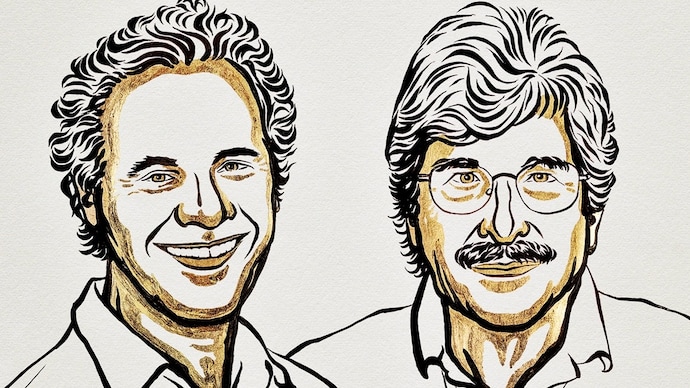
Recipients: Victor Ambros and Gary Ruvkun
Contributions:
-
Victor Ambros
-
Discovered the first microRNA (lin-4) in C. elegans (1993).
-
Showed that small noncoding RNAs can regulate developmental timing by blocking specific messenger RNAs.
-
-
Gary Ruvkun
-
Identified another microRNA (let-7).
-
Demonstrated that microRNAs are evolutionarily conserved across animals, including humans, proving their universal importance in biology.
-
Applications and Impact:
-
Revealed an entirely new layer of gene regulation—post-transcriptional control by microRNAs.
-
Transformed understanding of developmental biology and gene expression.
-
Opened research into cancer, metabolic disorders, immunity, and aging.
-
Inspired innovations in diagnostics and RNA-based therapeutics.
Nobel Prize in Literature

1. About the Award
-
Awarded annually by the Swedish Academy, Stockholm.
-
Laureates receive:
-
A gold medal.
-
An official diploma.
-
A cash prize (about 11 million SEK, shared if multiple winners).
-
-
The prize honours writers, poets, dramatists, and philosophers whose work demonstrates outstanding literary merit and universal human value.
-
Alfred Nobel’s will specifically stated that the Literature Prize should go to the writer who has produced “the most outstanding work in an ideal direction.”
2. The First Award (1901)
-
Recipient: Sully Prudhomme (France), poet and essayist.
-
Recognized for: Poetic compositions of lofty idealism, reflecting both artistic excellence and moral purpose.
-
Though controversial at the time (many expected Leo Tolstoy), it set the precedent for rewarding writers who balance artistic style with social or philosophical depth.
3. Milestones
A. Early 20th Century Classics
-
Rabindranath Tagore (1913): First non-European laureate, awarded for Gitanjali (Song Offerings), blending spirituality, humanism, and lyrical beauty.
-
Romain Rolland (1915): Honoured for Jean-Christophe, an epic biography embodying pacifism and universal brotherhood.
-
Thomas Mann (1929): Recognized for Buddenbrooks, exploring family decline and social change in Germany.
B. War, Peace, and Humanism
-
Hermann Hesse (1946): Awarded for works such as Siddhartha and Steppenwolf, exploring spirituality and self-discovery after WWII.
-
Albert Camus (1957): Honoured for his philosophy of the absurd in works like The Stranger and The Plague.
-
Aleksandr Solzhenitsyn (1970): Recognized for The Gulag Archipelago and other writings exposing Soviet labor camps.
C. Global and Post-Colonial Voices
-
Gabriel García Márquez (1982): Awarded for One Hundred Years of Solitude, establishing magical realism as a global literary movement.
-
Wole Soyinka (1986): First African laureate, blending Yoruba traditions with global themes of justice and freedom.
-
Toni Morrison (1993): Recognized for novels such as Beloved and Song of Solomon, addressing African-American identity and history.
-
Orhan Pamuk (2006): Awarded for works like My Name is Red, exploring cultural clashes between East and West.
D. Contemporary Expansions
-
Bob Dylan (2016): Honoured for creating new poetic expressions in the American song tradition.
-
Kazuo Ishiguro (2017): Recognized for novels like The Remains of the Day and Never Let Me Go, blending memory, identity, and moral responsibility.
-
Olga Tokarczuk (2018, awarded in 2019): Celebrated for her narrative imagination rooted in cross-cultural journeys.
-
Abdulrazak Gurnah (2021): Awarded for writings on colonialism, migration, and displacement in East Africa.
4. The Latest Award (2024)
-
Recipient: Han Kang (South Korea)
-
Recognized for: “intense poetic prose that confronts historical traumas and exposes the fragility of human life.”
-
Notes:
-
South Korea’s first Nobel laureate in Literature.
-
Notable works include The Vegetarian, Human Acts, and Greek Lessons.
-
Nobel Peace Prize

1. About the Award
-
Awarded annually by the Norwegian Nobel Committee, Oslo.
-
Laureates receive:
-
A gold medal.
-
An official diploma.
-
A cash prize (about 11 million SEK, shared if multiple winners).
-
-
The prize honors those who have made significant contributions to peace, diplomacy, human rights, and conflict resolution, as outlined in Alfred Nobel’s will.
2. The First Award (1901)
-
Recipients: Henry Dunant (Switzerland) and Frédéric Passy (France).
-
Recognized for:
-
Henry Dunant: Founding the International Committee of the Red Cross and initiating the Geneva Conventions.
-
Frédéric Passy: His leadership in the international peace movement, including co-founding the Inter-Parliamentary Union.
-
-
Their recognition established the Peace Prize’s dual focus on humanitarian action and diplomatic engagement.
3. Milestones
A. Humanitarian and War-time Aid
-
International Committee of the Red Cross (1917, 1944, 1963): Recognized for humanitarian efforts during major conflicts.
-
Mother Teresa (1979): Honored for her work among the impoverished and marginalized in India.
B. Civil Rights and Global Peace
-
Martin Luther King Jr. (1964): Awarded for leading the non-violent civil rights movement in the U.S.
-
Mikhail Gorbachev (1990): Awarded for his role in ending the Cold War and advancing policies of openness and reform.
C. Peacebuilding and Reconciliation
-
Nelson Mandela & F.W. de Klerk (1993): Honored for dismantling apartheid and fostering democratic transition in South Africa.
-
Yasser Arafat, Yitzhak Rabin & Shimon Peres (1994): Recognized for their efforts toward Middle East peace through the Oslo Accords.
D. Contemporary Advocacy and Human Rights
-
United Nations & Kofi Annan (2001): Awarded for building a more peaceful global order.
-
Malala Yousafzai & Kailash Satyarthi (2014): Honored for advocating children’s rights and universal education.
-
World Food Programme (2020): Honored for combating hunger and supporting peace in conflict zones.
4. The Latest Award (2024)
-
Recipient: Nihon Hidankyo, the Japan Confederation of A- and H-Bomb Sufferers Organizations.
-
Recognized for:
-
Their relentless efforts to promote a world free of nuclear weapons.
-
Showing, through survivor testimony, that nuclear weapons must never be used again.
-
-
Their recognition underscores how personal testimony from Hibakusha (atomic bomb survivors) continues to contribute to global peace and disarmament advocacy.
Nobel Prize in Economic Sciences (Economics)
1. About the Award
-
Awarded annually by the Royal Swedish Academy of Sciences, Stockholm.
-
Laureates receive:
-
A gold medal.
-
An official diploma.
-
A cash prize (about 11 million SEK, shared if multiple winners).
-
-
The prize (officially the Sveriges Riksbank Prize in Economic Sciences in Memory of Alfred Nobel) honours contributions that deepen our understanding of economic systems, development, inequality, and societal well-being.
2. The First Award (1969)
-
Recipients: Ragnar Frisch and Jan Tinbergen.
-
Recognized for: Foundational work in econometric modelling and the application of quantitative methods to economic analysis.
3. Milestones
A. Growth and Development Theory
-
Robert Solow (1987): Solow growth model — long-run growth from capital, labour, and technological progress.
-
Paul Romer (2018): Endogenous growth theory and the role of knowledge and ideas in growth.
B. Institutions, Inequality, and Political Economy
-
Daron Acemoglu, Simon Johnson & James A. Robinson (selected works): Research showing how institutions shape long-term prosperity and why some nations remain poor.
-
Elinor Ostrom (2009): Analysis of how communities self-govern common resources without central authority.
C. Experimental and Development Economics
-
Abhijit Banerjee, Esther Duflo & Michael Kremer (2019): Randomized controlled trials for evaluating anti-poverty interventions.
D. Behavioural and Welfare Economics
-
Daniel Kahneman (2002): Psychological insights into economic decision-making.
-
Angus Deaton (2015): Work on consumption, poverty, and welfare measurement.
4. The Latest Award (2024)
-
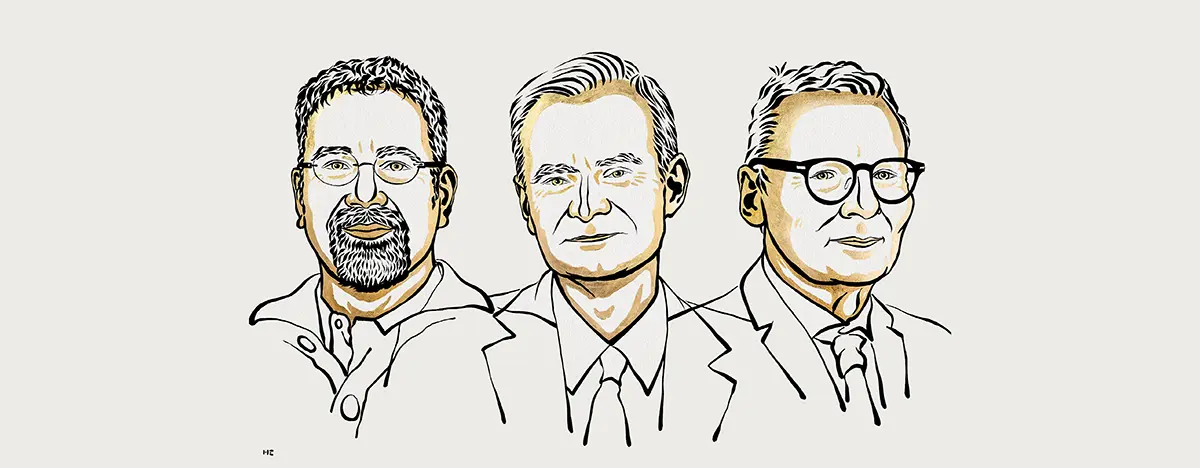
Recipients: Daron Acemoglu, Simon Johnson, and James A. Robinson.
-
Recognized for: Studies of how institutions are formed and affect prosperity. Their research explains why some countries prosper while others remain poor, emphasizing the long-run effects of political and economic institutions established during colonisation.
Distinct contributions:
-
Daron Acemoglu: Theoretical frameworks on inclusive vs extractive institutions, empirical work linking institutions to performance.
-
Simon Johnson: Empirical analyses on colonial environments, crises, and development.
-
James A. Robinson: Historical and political-science perspective on institutional persistence and economic outcomes.
-
Collective impact: Shifted economics toward institutions as central to prosperity, influencing economics, history, and political science.
Significance of the Nobel Prizes
-
The Nobel Prizes are regarded as the highest recognition of human achievement, celebrating ideas and actions that bring the greatest benefit to humanity.
-
They embody Alfred Nobel’s vision of honouring contributions that advance science, literature, peace, and human progress.
1. Scientific and Technological Progress
-
Stimulate discoveries in Physics, Chemistry, Medicine, and Economics, many of which have revolutionized industries and everyday life.
-
Highlight research that bridges theoretical knowledge and practical application, such as life-saving drugs, new materials, or digital technologies.
-
Inspire young researchers to pursue ambitious, curiosity-driven science.
2. Humanitarian and Social Value
-
The Peace Prize underlines the power of diplomacy, disarmament, and humanitarian work in shaping a more just world.
-
The Literature Prize fosters empathy, cultural dialogue, and the preservation of diverse human experiences through storytelling.
-
Serve as a reminder that human values and ethical responsibility are as important as scientific progress.
3. Global Recognition and Influence
-
Laureates become symbols of excellence, motivating future generations of scientists, writers, and activists.
-
Awards are presented in Stockholm and Oslo, reinforcing their global and cross-cultural significance.
-
Promote international collaboration by bringing attention to work that transcends national boundaries.
4. Economic, Educational, and Cultural Impact
-
Attract funding and policy attention to research areas recognized by the prize.
-
Laureates’ contributions often shape academic curricula, public debates, and government policies.
-
Influence cultural and intellectual history, as in the case of celebrated works of literature or peace movements.
5. Legacy and Continuity
-
Maintain continuity with Nobel’s 1895 will, ensuring that each year, his ideals are carried forward.
-
The Nobel Prize archives and lectures serve as an educational resource, preserving the intellectual heritage of humanity.
-
Create a sense of shared global heritage by celebrating diverse contributions across cultures and disciplines.
Case Study: The Invention of CCD Technology
A charge-coupled device (CCD) is a remarkable electronic component used to capture images by converting light into electrical signals. Its invention in 1969 marked a milestone in technology, influencing fields as diverse as photography, astronomy, and medicine.
-
What is a CCD?
A CCD consists of an integrated circuit with an array of pixels, each acting as a light sensor. Photons striking a pixel generate electrical charges, which are transferred sequentially across the device and processed into a digital image. -
Invention
Willard Boyle and George Smith at Bell Laboratories, USA, created the first CCD while experimenting with semiconductor memory devices. Their idea of “charge coupling” allowed controlled transfer of charges across capacitors, paving the way for image capture. For this work, they were awarded the 2009 Nobel Prize in Physics. -
How it works
The CCD uses the photoelectric effect. Light striking each pixel generates electrons, stored as charges. These charges are then moved across the chip in a bucket-brigade fashion until they reach a readout register, where they are converted into voltages and digitised into an image. -
Applications
-
Everyday life: Digital cameras, CCTV, and video technology.
-
Medicine: CT scans, X-ray imaging, endoscopy, and microscopes.
-
Science: Spectrometers, particle detectors, and material analysis.
-
Astronomy: Telescopes fitted with CCDs capture faint celestial objects with unmatched sensitivity, aiding discoveries of exoplanets, distant galaxies, and cosmic phenomena.
-
The CCD stands as an example of how Nobel-winning research has reshaped both scientific exploration and daily life.
India and the Nobel Connection
India has had a distinguished relationship with the Nobel Prizes, with laureates from diverse fields contributing to global knowledge, peace, and literature. Indian winners reflect the country’s strength in science, literature, peace, and humanitarian work.1. Indian Nobel Laureates
-
Rabindranath Tagore (Literature, 1913):
First Asian to win a Nobel Prize, honoured for Gitanjali and his profound impact on world literature. -
C. V. Raman (Physics, 1930):
Awarded for the discovery of the Raman Effect, a fundamental contribution to light scattering. -
Mother Teresa (Peace, 1979):
Recognized for her humanitarian work with the poor and destitute in Kolkata. -
Amartya Sen (Economics, 1998):
Honoured for his work on welfare economics, poverty, and human development. -
Venkatraman Ramakrishnan (Chemistry, 2009):
Awarded for studies on the structure and function of the ribosome (shared with two others). -
Kailash Satyarthi (Peace, 2014):
Recognized for his decades-long fight against child labour and exploitation. -
Abhijit Banerjee (Economics, 2019):
Along with Esther Duflo and Michael Kremer, awarded for experimental approaches to alleviating global poverty.
2. Indians of Origin or Indian Connection
-
Har Gobind Khorana (Medicine, 1968): Born in British India (present-day Pakistan); awarded for work on the genetic code and protein synthesis.
-
Subrahmanyan Chandrasekhar (Physics, 1983): Indian-American astrophysicist, honoured for his work on the evolution of stars.
3. Significance for India
-
India’s Nobel laureates highlight the nation’s intellectual contribution to global progress.
-
Achievements span science, economics, peace, and literature, showcasing India’s diverse strengths.
-
Nobel recognition has helped bring international visibility to Indian issues such as poverty, inequality, and social reform.
-
Inspires young Indians to pursue excellence in science, literature, social work, and human rights.
Challenges and Criticisms of the Nobel Prizes
The Nobel Prizes are among the world’s most prestigious honors, but they are not without criticism and challenges.
1. General Challenges
-
Exclusion of Fields:
Nobel Prizes cover Physics, Chemistry, Medicine, Literature, Peace, and Economics, but exclude important disciplines such as mathematics, engineering, social sciences (beyond economics), and environmental studies. -
Limit on Number of Laureates:
A maximum of three people can share a prize, which often ignores the collaborative nature of modern scientific research involving large teams and institutions. -
Delayed Recognition:
Many Nobel Prizes are awarded decades after discoveries, sometimes when the original contributors have passed away (Nobel cannot be awarded posthumously, except in rare announcements before death). -
Eurocentric and Gender Bias:
Historically, Nobel Prizes have disproportionately recognized Western men, with underrepresentation of women and Global South scholars. -
Political Influence (Peace Prize):
The Nobel Peace Prize has sometimes been criticized for being politically motivated or awarded prematurely before long-term impact was proven. -
Commercial & Media Pressure:
Nobel announcements often create a "celebrity culture" in academia, which can overshadow equally important but less-publicized contributions. -
Controversial Omissions:
Many deserving individuals never received the prize (e.g., Mahatma Gandhi for Peace, Lise Meitner for Physics), raising questions of fairness.
2. Specific Challenges for India
-
Brain Drain:
Several Nobel-winning scientists of Indian origin (e.g., Subrahmanyan Chandrasekhar, Har Gobind Khorana, Venkatraman Ramakrishnan) made their key contributions abroad due to lack of research infrastructure in India. -
Limited Research Ecosystem:
Despite a large talent pool, India struggles with low R&D investment (below 1% of GDP), affecting world-class discoveries. -
Underrepresentation in Science Nobels:
Only one Nobel in science directly won in India (C.V. Raman, 1930), highlighting challenges in global competitiveness. -
Recognition Gap:
Indian social reformers, writers, and activists often remain under-recognized globally despite impactful work.
Way Forward
The Nobel Prizes will continue to inspire global excellence, but reforms and new approaches can make them more inclusive and impactful.
1. For the Nobel Foundation & Global Community
-
Expand the Scope: Consider including new disciplines like mathematics, environmental science, climate change, artificial intelligence, and public health.
-
Team Recognition: Update rules to recognize larger research teams and collaborations, reflecting modern science.
-
Reduce Biases: Encourage greater gender, regional, and disciplinary diversity in selection committees and nominations.
-
Timely Recognition: Develop mechanisms for faster acknowledgment of path-breaking discoveries to keep science dynamic.
-
Reassess Peace Prize Standards: Ensure selections are based on sustained contributions rather than political symbolism.
-
Transparency: Improve openness in nominations and selection criteria to strengthen credibility.
2. For India
-
Boost R&D Investment: Raise research funding to at least 2–3% of GDP to nurture world-class innovation.
-
Strengthen Institutions: Build globally competitive universities, labs, and innovation hubs with autonomy and merit-based culture.
-
Retain Talent: Create incentives and opportunities to reduce brain drain and encourage Indian-origin researchers abroad to collaborate.
-
Promote Interdisciplinary Research: Foster a culture of cross-disciplinary work that addresses pressing global challenges like climate change, health, and technology.
-
Celebrate Indigenous Contributions: Highlight and recognize local innovations, literature, and peace initiatives, strengthening India’s global presence.
-
Encourage Women & Youth Participation: Policies and mentorship to ensure gender balance and inclusivity in research and arts.
Conclusion
The Nobel Prizes, envisioned by Alfred Nobel to reward those who “confer the greatest benefit to humankind,” have grown into the most prestigious global recognition across science, literature, peace, and economics. Over the past century, they have honored extraordinary minds and timeless contributions that continue to shape the course of human civilization. Whether in unlocking the mysteries of the universe, advancing medical frontiers, or advocating for justice and human dignity, the awards remain symbols of inspiration and excellence.
At the same time, the prizes have not been free from criticism and controversy. Debates over political bias in the Peace Prize, under-representation of women and the Global South, and the exclusion of collaborative efforts highlight the limits of this global recognition. For India and other developing nations, the challenge is not just to achieve individual brilliance but to build robust ecosystems of innovation and intellectual freedom. As the world faces climate change, inequality, and disruptive technologies, the Nobel Prizes must continue to adapt, remaining relevant to modern challenges while upholding their original spirit. In Alfred Nobel’s own words: “I intend to leave after my death a large fund for the promotion of the ideas of peace.”
Comments
Post a Comment