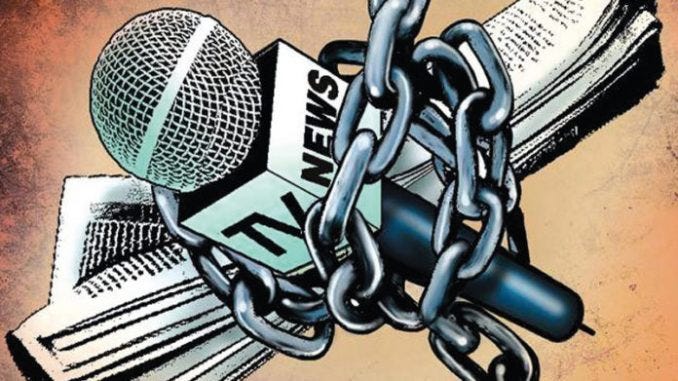
Image Source: nyaaya.org
Introduction
In Indian mythology, Narada Muni is remembered as the eternal messenger, carrying stories and truths across realms—sometimes provoking unease, but always ensuring that no event or voice went unnoticed. The press in a democracy plays a similar role: it is the modern Narada, transmitting facts, questioning authority, and facilitating dialogue among citizens.
The press refers to institutions and platforms that collect, publish, and circulate news and opinions, while journalism is the professional practice of gathering, verifying, and presenting this information. In essence, journalism is the method, and the press is the medium. Over time, the word media has expanded to cover print, radio, television, and digital platforms, reflecting the widening forms of communication in society.
The Indian press has a long and contested journey. From the early colonial controls and nationalist publications to the constitutional recognition of free expression in the Romesh Thappar case (1950), its path has been shaped by constant negotiation between authority and dissent. Dark phases like the Emergency, followed by the liberalisation era and today’s digital transformations, highlight both its resilience and vulnerability. As the fourth pillar of democracy, the press remains a fragile but indispensable force in ensuring transparency, accountability, and public participation.
Historical Evolution of the Press and Journalism in India
Ancient India
-
Ashoka’s inscriptions (3rd century BCE): Rock and pillar edicts used to spread policies, ethics, and royal orders – early form of state communication.
-
Town criers & drummers: Oral announcements in marketplaces, temples, and gatherings.
-
Court poets & chroniclers: Preserved events, victories, and social narratives in semi-journalistic forms (e.g., bardic traditions).
Medieval India
-
Delhi Sultanate & Mughal era: Appointment of Waqai-navis (news writers) to report political, social, and military events.
-
Akhbarat (manuscript newsletters): Circulated among provincial governors and nobles.
-
Court historians (e.g., Abul Fazl): Official chroniclers who shaped narratives of rulers.
-
Regional kingdoms: Heralds and scribes (e.g., in Maratha/Vijayanagara kingdoms) spread decrees and battle reports.
Colonial Period
-
Arrival of printing press (16th century): Brought by Portuguese missionaries.
-
First newspaper (1780): Bengal Gazette by James Augustus Hicky, critical of East India Company officials.
-
Press restrictions: Censorship of Press Act (1799), Licensing Regulations (1823), Vernacular Press Act (1878).
-
Rise of nationalist press: Amrita Bazar Patrika, The Hindu, Tilak’s Kesari, Gandhi’s Young India and Harijan became tools of anti-colonial mobilisation.
Post-Independence
-
Constitutional protection: Article 19(1)(a) ensured freedom of speech and expression, interpreted to include press freedom.
-
Landmark case: Romesh Thappar v. State of Madras (1950) upheld press freedom.
-
Emergency (1975–77): Censorship and suppression of critical reporting marked a low point.
-
Expansion: Growth of regional newspapers and rise of investigative journalism in the 1980s–90s.
Contemporary & Digital Era
-
Television revolution (1990s): 24×7 news channels emerged after liberalisation.
-
Online journalism: News portals, independent websites, and blogs reshaped information flow.
-
Citizen journalists: Ordinary people documenting events via smartphones and social media.
-
Challenges: Misinformation, fake news, corporate concentration, and state regulation (e.g., IT Act, new media rules).
Types of Press and Journalism in India
1. Types of Press
-
Print Media – Newspapers, journals, pamphlets, periodicals; still highly influential in both rural and urban India.
-
Broadcast Media – Radio (e.g., All India Radio), television networks for mass communication.
-
Digital Media – Online news portals, mobile apps, YouTube channels, podcasts.
-
Community Media – Local newsletters, community FM radio, vernacular publications.
-
Citizen-Driven Platforms – Blogs, social media posts, grassroots real-time reporting by citizens.
-
Alternative Media – Small, independent publications/platforms countering mainstream narratives.
2. Types of Journalism
A. Historical Forms
-
Royal/Official Journalism – Edicts, inscriptions, temple records, court chroniclers for state communication.
-
Religious Journalism – Scriptural interpretations, propagation of philosophical/religious debates.
-
Reformist Journalism – Writings against social evils like Sati, untouchability, child marriage (e.g., Raja Ram Mohan Roy, Ishwar Chandra Vidyasagar).
-
Nationalist Journalism – Press mobilizing people against colonial rule (Kesari, Young India, Amrita Bazar Patrika).
B. Modern & Contemporary Forms
-
Investigative Journalism – Exposing scams, corruption, hidden truths (e.g., Bofors, 2G, Tehelka).
-
Development Journalism – Coverage of education, health, rural economy, sustainable development.
-
Advocacy Journalism – Championing rights (women, environment, LGBTQ+).
-
Business & Financial Journalism – Reporting on stock markets, economy, corporate governance.
-
Political Journalism – Elections, governance, public policy debates, parliamentary coverage.
-
Cultural & Literary Journalism – Reviews of books, films, art, heritage.
-
Commercial/Entertainment Journalism – Lifestyle, celebrity culture, sports, infotainment.
-
War & Conflict Journalism – Wars, insurgencies, terrorism, border security issues.
-
Science & Tech Journalism – Space, digital economy, health research, new innovations.
-
Citizen Journalism – News captured and shared by common people through mobiles/social media.
-
Data Journalism – Infographics, statistical storytelling, evidence-based reporting.
Events of Press Suppression in India
Colonial Era
-
1799 – Censorship of Press Act (Lord Wellesley): All newspapers required prior government approval before publication.
-
1823 – Licensing Regulations: Strict licensing imposed; editors faced fines/imprisonment for “objectionable” writings.
-
1878 – Vernacular Press Act: Targeted Indian-language newspapers; empowered colonial authorities to confiscate printing presses critical of British policies.
-
1908 onwards – Nationalist suppression: Bal Gangadhar Tilak’s Kesari and Maratha faced sedition charges; Gandhi’s Young India and Harijan were censored.
Post-Independence
-
1950s – Early censorship attempts: Despite Romesh Thappar case upholding press freedom, governments occasionally banned publications citing public order.
-
1975–1977 – Emergency:
-
Newspapers required pre-censorship clearance before publishing.
-
Critical publications shut down or heavily edited (Indian Express, Statesman resisted censorship).
-
Over 7,000 journalists arrested or intimidated.
-
Foreign correspondents expelled.
-
-
1980s–1990s – Periodic crackdowns:
-
Reporting on Punjab insurgency and Kashmir conflict often censored.
-
Doordarshan functioned as government mouthpiece.
-
-
1990s–2000s – Defamation & legal harassment:
-
Investigative journalists exposing corruption and corporate scams faced defamation suits and financial pressures.
-
Tehelka’s “Operation West End” (2001) triggered a crackdown on sting journalism.
-
Contemporary Era
-
2010s – Digital media under scrutiny:
-
Social media monitoring intensified; several journalists booked under sedition and IT Act.
-
-
2016 – Kashmir unrest: Local press curbed, internet shutdowns silenced regional media.
-
2019–present:
-
FIRs and arrests of journalists critical of government policies (e.g., in Uttar Pradesh, Delhi, Jammu & Kashmir).
-
Raids on media houses (Newsclick, BBC offices in India).
-
Introduction of the Bharatiya Nyaya Sanhita (BNS) Section 152 provisions fueling debates on chilling effect.
-
Internet shutdowns (India remains world leader in frequency of shutdowns).
Constitutional and Legal Framework
1. Constitutional Provisions
-
Article 19(1)(a) – Guarantees Freedom of Speech and Expression → includes freedom of the press (though not mentioned explicitly).
-
Article 19(2) – Reasonable restrictions on press freedom in the interests of:
-
Sovereignty and integrity of India
-
Security of the state
-
Friendly relations with foreign states
-
Public order
-
Decency and morality
-
Contempt of court
-
Defamation
-
Incitement to an offence
-
-
Article 361A (44th Amendment, 1978) – Protection of publications of parliamentary proceedings.
-
Right to Information (RTI) Act, 2005 – Empowers journalists and citizens to access government information.
-
Article 32 & 226 – Courts safeguard freedom of press via writ jurisdiction.
2. Legal Framework and Statutes
-
Press and Registration of Books Act, 1867 – Regulates printing presses and newspapers.
-
Indian Penal Code (IPC), 1860 –
-
Sections 124A (Sedition – now read down by SC in 2022),
-
Sections 153A & 295A (hate speech, religious sentiments),
-
Section 499–500 (Defamation).
-
-
Official Secrets Act, 1923 – Restricts publication of classified government information.
-
Contempt of Courts Act, 1971 – Limits press freedom when reporting sub judice matters.
-
Press Council of India Act, 1978 – Establishes Press Council of India to preserve freedom of press and maintain ethics.
-
Cable Television Networks Regulation Act, 1995 – Governs TV news content.
-
Information Technology Act, 2000 (with 2008 amendments) – Regulates digital media, cyber content, and imposes restrictions (e.g., Sec. 66A – struck down in Shreya Singhal v. Union of India, 2015).
-
Cinematograph Act, 1952 – Though film-based, affects journalistic documentaries and political cinema.
-
Whistle Blowers Protection Act, 2014 – Indirectly supports investigative journalism.
-
Digital Personal Data Protection Act, 2023 – Regulates personal data collection/usage by digital media.
3. Institutions and Regulatory Mechanisms
-
Press Council of India (PCI) – Quasi-judicial body that warns/censures press but lacks punitive powers.
-
Prasar Bharati Act, 1990 – Autonomous broadcasting corporation (Doordarshan, AIR).
-
Broadcasting Content Complaints Council (BCCC) – For private TV channels.
-
News Broadcasters & Digital Association (NBDA) – Industry-led regulator for ethical journalism.
Related Judicial Cases
1. Early Foundations
-
Romesh Thappar v. State of Madras (1950)
-
SC struck down Madras government’s ban on Cross Roads magazine.
-
Held: Freedom of the press is part of freedom of speech and expression under Article 19(1)(a).
-
-
Brij Bhushan v. State of Delhi (1950)
-
Preventive pre-censorship of newspapers held unconstitutional.
-
Laid foundation against “prior restraint” on the press.
-
2. Defining Scope and Limits
-
Bennett Coleman & Co. v. Union of India (1973)
-
Challenged newsprint policy limiting newspaper page numbers.
-
SC: Policy violated freedom of the press → Govt. cannot restrict circulation or growth.
-
-
Indian Express Newspapers v. Union of India (1985)
-
Court recognized press as the “fourth estate of democracy.”
-
Economic regulations (like import duties on newsprint) must not cripple press freedom.
-
-
Sakal Papers v. Union of India (1962)
-
Daily newspapers (Price & Page Act) fixing number of pages vs. price declared void.
-
SC: Freedom of circulation is part of freedom of speech.
-
3. Censorship & Emergency Era
-
K.A. Abbas v. Union of India (1970)
-
On pre-censorship of films. SC upheld reasonable censorship in public interest but stressed it should not be arbitrary.
-
-
ADM Jabalpur v. Shivkant Shukla (1976 – Habeas Corpus Case)
-
During Emergency, press freedom severely curtailed.
-
Widely criticized; later overruled (2017, Puttaswamy case).
-
4. Modern Cases on Digital & Investigative Journalism
-
Prabha Dutt v. Union of India (1982)
-
Journalists’ right to interview prisoners recognized.
-
-
PUCL v. Union of India (1997) – Telephone Tapping Case
-
SC upheld privacy as part of free expression → safeguard against surveillance.
-
-
Sahara India Real Estate Corp. v. SEBI (2012)
-
SC allowed “postponement orders” to balance free press with fair trial rights.
-
-
Shreya Singhal v. Union of India (2015)
-
Struck down IT Act Section 66A (curbs on online speech). Strengthened digital freedom.
-
-
Arnab Ranjan Goswami v. Union of India (2020)
-
Reaffirmed protection of journalistic freedom but within limits of law & public order.
Emerging Technologies in the Press & Journalism Sector
1. Digital & Social Media Platforms
-
News Apps & Portals – Instant updates via apps like Inshorts, Scroll, The Wire.
-
Social Media Integration – X (Twitter), Instagram, WhatsApp as key distributors.
-
Live-streaming Tools – YouTube, Facebook Live for real-time citizen reporting.
2. Artificial Intelligence (AI) & Automation
-
Automated News Writing – AI-driven tools (Reuters Lynx Insight, AP Wordsmith).
-
AI Anchors – Experiments in China & India with AI news presenters.
-
Personalised News Feeds – Algorithms curate user-specific stories → echo chamber risk.
-
AI Fact-Checking – Tools to detect misinformation, fake photos, deepfakes.
3. Data & Infographics
-
Data Journalism – Use of big/open data for investigative work.
-
Interactive Infographics – Dashboards, GIS maps for visual storytelling.
-
Predictive Analytics – Election polls, economic forecasts.
4. Blockchain & Web3
-
Content Authentication – Preventing tampering of photos/videos.
-
Decentralised Platforms – Funding independent journalists without corporate control.
5. Virtual & Augmented Reality (VR/AR)
-
Immersive Storytelling – VR documentaries on wars, disasters, climate change.
-
AR-enhanced Apps – Overlay of election results, sports stats, real-time visuals.
6. Drone & Satellite Reporting
-
Drone Journalism – Coverage of floods, protests, war zones.
-
Satellite Imagery – Verifying govt. claims, tracking deforestation/mining.
7. Cybersecurity & Encryption
-
Secure Communication – Signal, ProtonMail for whistleblowers.
-
Cybersecurity in Newsrooms – Defending against spyware/hacking (e.g., Pegasus).
8. Generative AI & Deepfake Concerns
-
Synthetic Content – Fake videos/voices threaten credibility.
-
Detection Tools – AI-based forensic tools to expose deepfakes.
9. Cloud & Collaborative Tools
-
Cloud Storage – Shared data tools (Google Docs, Slack) for projects like Panama Papers.
-
Remote Broadcasting – Internet-based studios replacing satellite vans.
Government Efforts: Initiatives & Schemes
-
Journalist Welfare & Accreditation Schemes
-
Journalist Welfare Scheme provides financial support during death, disability, or illness.
-
Pension schemes offer monthly pensions for senior journalists above 58 years.
-
Accredited journalists enjoy benefits such as concessional travel and healthcare coverage.
-
-
Media Capacity Building & Ethical Standards
-
Press Information Bureau (PIB) shares authentic government updates through briefings and releases.
-
Fact Check Unit curbs fake news related to government policies.
-
Indian Institute of Mass Communication (IIMC) and state press academies run training programs for journalists.
-
-
Community & Digital Media Support
-
Community Radio Support Scheme funds grassroots radio stations.
-
Digital literacy and broadband expansion programs encourage the growth of online journalism.
-
Independent content creation is encouraged through dedicated funds and institutes.
-
-
Creative Economy & Content Promotion
-
New India Samachar magazine highlights government achievements and schemes.
-
Institutes like IICT promote training in new media and broadcasting.
-
Support for independent creators strengthens diverse content ecosystems.
-
-
Security & Protection of Journalists
-
Union Home Ministry issues advisories to states/UTs to safeguard working journalists, especially those covering sensitive issues.
-
Some states such as Maharashtra and Chhattisgarh have proposed Journalist Protection Acts with provisions for fast-track trials of assault cases.
-
Cybercrime cells and helplines tackle online abuse, harassment, and threats faced by journalists.
-
Discussions are ongoing for a comprehensive national law on journalist protection.
-
Emergency helplines and grievance redressal mechanisms are being developed to ensure quick response to threats.
Challenges
-
Political & Legal Pressures
-
Frequent use of sedition, UAPA, and defamation laws against journalists.
-
Threat of censorship, especially on digital platforms.
-
Weak legal protection mechanisms for press freedom.
-
-
Physical & Digital Safety Threats
-
Rising attacks, intimidation, and harassment of journalists on ground.
-
Online trolling, cyberbullying, and targeted misinformation campaigns.
-
Lack of robust journalist protection law at the national level.
-
-
Economic & Structural Issues
-
Declining advertising revenue in print media.
-
Over-dependence on government ads in regional press.
-
Increasing monopolization and corporate ownership of media houses.
-
Closure of many small and independent publications.
-
-
Ethical & Professional Concerns
-
Paid news, sensationalism, and fake news eroding credibility.
-
TRP-driven reporting overshadowing serious issues like health, education, and environment.
-
Lack of adequate training and professional upskilling in digital journalism.
-
-
Technological Challenges
-
Rapid digital disruption leaving traditional media struggling to adapt.
-
Spread of deepfakes and AI-generated misinformation.
-
Limited access to advanced data journalism tools in regional outlets.
-
-
Social & Cultural Factors
-
Threats to vernacular journalism, despite wide reach in rural areas.
-
Gender-based harassment of women journalists, both online and offline.
-
Difficulty in balancing press freedom with responsibility in sensitive issues like communal reporting.
Way Forward
-
Strengthen Legal Protections – Enact clear laws to protect journalists from harassment, arbitrary arrests, and misuse of sedition, defamation, or security provisions.
-
Enhance Media Independence – Encourage pluralism in ownership, safeguard editorial freedom, and reduce corporate or political influence on reporting.
-
Digital Infrastructure and Innovation – Support secure digital platforms, citizen journalism, and data-driven reporting while combating misinformation and cyber threats.
-
Training and Capacity Building – Provide continuous professional development for journalists on investigative reporting, ethics, cybersecurity, and digital literacy.
-
Protection and Safety Measures – Establish special mechanisms to protect journalists facing physical threats, harassment, or attacks, including legal and police support.
-
Transparency and Accountability – Ensure government interactions with media are transparent, and develop independent regulatory frameworks to monitor media practices without censorship.
-
Public Awareness and Media Literacy – Promote critical consumption of news, fact-checking practices, and citizen participation in holding both media and authorities accountable.
-
Global Learning – Adopt best practices from countries with strong press freedom rankings, and avoid pitfalls observed in nations with restricted media environments.
Lessons from Global Press Freedom
The 2025 World Press Freedom Index highlights global trends in media independence, transparency, and journalist safety. Comparing countries with strong and weak press freedom provides insights into measures that can strengthen journalism and democratic discourse.
Countries Performing Well
-
Norway (Rank 1) – Strengthening independent media regulatory bodies can help ensure impartial oversight and protect press freedom.
-
Estonia (Rank 2) – Promoting robust digital infrastructure and safeguarding online journalism can enhance transparency and reliability.
-
Netherlands (Rank 3) – Encouraging pluralism in media ownership could reduce corporate or political concentration in the press.
-
Sweden (Rank 4) – Developing comprehensive protections against harassment and threats would reinforce journalist security.
-
Finland (Rank 5) – Streamlining laws to prevent misuse of sedition, defamation, or security provisions can safeguard freedom of expression.
-
Denmark (Rank 6) – Increasing transparency in media regulation and government-media interactions would strengthen credibility and accountability.
-
United States (Rank 57) – Ensuring the financial independence of media outlets could reduce undue influence on reporting.
Countries Performing Poorly
-
China (Rank 172) – Preventing state control and political influence over media is crucial to maintaining independent journalism.
-
Turkey (Rank 159) – Limiting misuse of legal provisions to intimidate or silence journalists is necessary to protect press freedom.
-
Mexico (Rank 124) – Implementing stricter protection mechanisms and ensuring swift justice for crimes against journalists is vital.
-
Philippines (Rank 138) – Strengthening law enforcement and support systems for journalists covering sensitive issues can improve safety and reduce threats.
Conclusion
India's press freedom ranking in the 2025 World Press Freedom Index stands at 151st out of 180 countries, reflecting a decline from 159th in the previous year. This positions India in the "very serious" category, indicating significant challenges to media independence and safety. Factors contributing to this ranking include increasing violence against journalists, concentrated media ownership, and political pressures that hinder journalistic autonomy.
In response to these concerns, several organizations have issued recommendations to bolster press freedom in India. Reporters Without Borders (RSF) has urged political parties to adopt a 10-point press freedom program, emphasizing the need to defend the right to reliable news and protect journalists. The Committee to Protect Journalists (CPJ) has called for greater transparency and due process in how Indian authorities handle social media restrictions, highlighting the importance of safeguarding online platforms for free expression. Additionally, the Press Council of India has recommended evolving guidelines for the media, police, and other stakeholders to ensure ethical reporting and the protection of journalists. Implementing these recommendations is crucial for India to improve its press freedom standing and uphold democratic values.
Comments
Post a Comment