Introduction
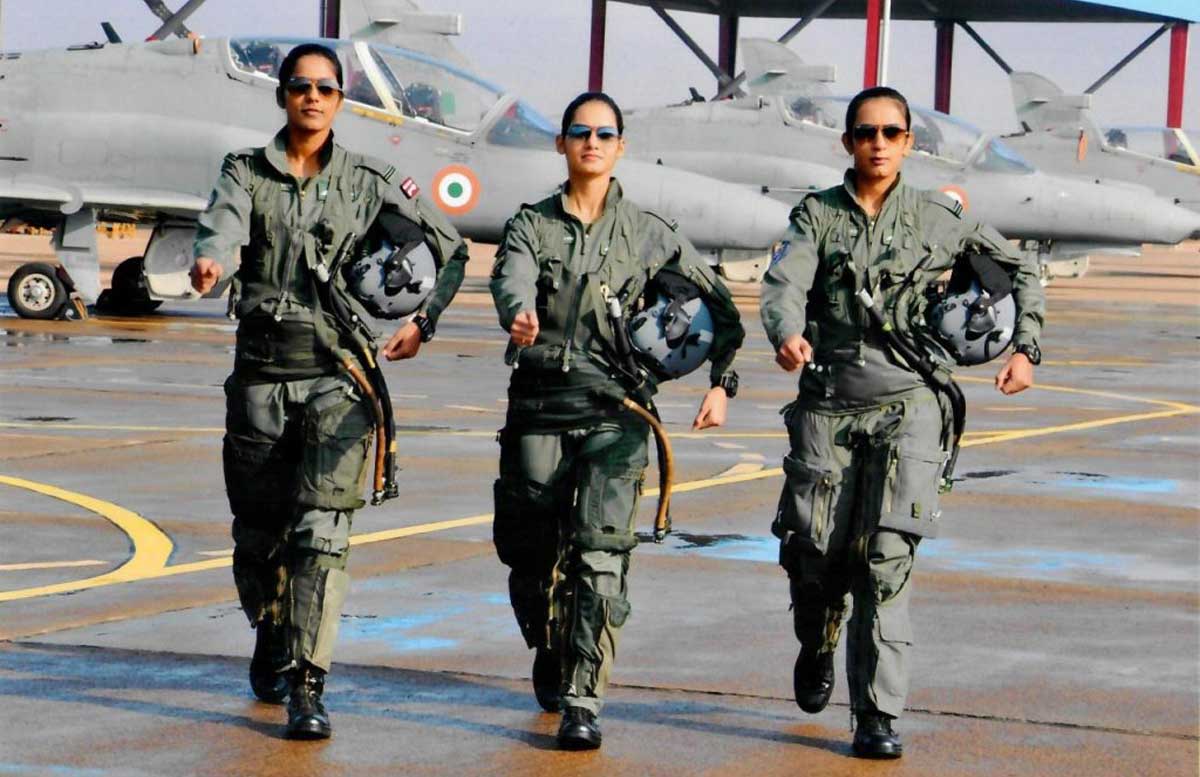
Over the years, India’s armed forces have taken gradual steps toward increasing the participation of women across the Army, Navy, and Air Force. Recent policy changes have led to expanded entry options and access to new branches, including some operational roles. As a result, the overall number of women in uniform has grown—though the pace and scope of inclusion still vary significantly across services.
In a recent meeting of the Parliamentary Consultative Committee on Defence, Defence Minister Rajnath Singh reaffirmed the government’s commitment to improving women’s representation. The discussion highlighted the need to sustain momentum and address existing gaps in recruitment, deployment, and leadership roles.
This article explores both the progress made and the areas where further inclusion is necessary—drawing on recent milestones like Operation Sindhoor, where women officers played lead roles in critical missions, to assess how gender inclusion is evolving in India’s defence forces.
Evolution of Women’s Participation in the Indian Armed Forces
The participation of women in India’s armed forces has grown from auxiliary roles during colonial times to active operational duties in modern times. This evolution reflects a combination of social change, legal interventions, and institutional reforms.
-
Pre-Independence Era:
-
Women served in the Indian Military Nursing Service since 1888, providing critical medical care during British campaigns.
-
During World War II, women joined the Women’s Auxiliary Corps (India) and the Indian Women’s Royal Naval Service, serving in clerical, communication, and logistical roles.
-
Under Netaji Subhas Chandra Bose, the Rani of Jhansi Regiment was formed in the Indian National Army (INA) — an all-women combat unit that became a symbol of courage and resistance.
-
-
Post-Independence to Early Reform (1947–1990s):
-
Women's roles remained restricted to the Army Medical Corps, Military Nursing Service, and Dental Corps for several decades.
-
-
Entry into Non-Medical Roles (1990s–2010s):
-
1992: Women were first inducted into non-medical branches of the Army such as the Education Corps and Signals.
-
2010: The Indian Air Force (IAF) inducted women into ground combat support roles and pilot streams for transport aircraft and helicopters.
-
-
Breaking Barriers (2015–2020):
-
2015: The IAF launched a pilot program for women fighter pilots.
-
2016: The first batch of women fighter pilots — Avani Chaturvedi, Mohana Singh, and Bhawana Kanth — were commissioned.
-
2020: In a landmark judgment in Secretary, Ministry of Defence v. Babita Puniya & Ors., the Supreme Court directed the extension of Permanent Commission (PC) to women in over 10 combat-support arms of the Indian Army.
-
Institutionalization and Mainstreaming (2020s):
-
2021: The Armed Forces began adopting gender-neutral assignment policies. The Navy allowed women officers on warships.
-
2022: The National Defence Academy (NDA) admitted 19 women cadets in its first-ever batch, breaking a long-standing gender barrier in officer training.
-
2024–25: Women Agniveers demonstrated increasing visibility:
-
Participated in the Republic Day Parade 2024 as part of the historic All-Women Tri-Services Contingent.
-
Took part in the Army Day Parade 2025 in Pune, highlighting their operational integration.
-
-
Statistical Data and Trends (As of 2025)
A. Women’s Representation in Armed Forces (2025)
Indian Army
-
Over 1,750 women officers are currently serving, including 150+ in combat arms like Artillery and Engineers—roles previously restricted to men.
-
Around 100 women personnel are serving in Junior Commissioned Officer (JCO) and Other Ranks (OR) positions, following recent policy openings.
Women comprise 6.85% of the Army’s total workforce, as per Ministry of Defence (MoD) data.
Indian Navy
-
The Navy has over 750 women officers, with 40+ deployed on warships and 10+ serving aboard submarines, marking a historic expansion of women in seagoing roles.
-
Women now constitute 25% of the Navy’s engineering cadre, a significant achievement in a technical domain.
Overall, women make up 6% of the Navy’s workforce.
Indian Air Force (IAF)
-
The IAF has around 1,700 women officers, accounting for approximately 20% of its total officer strength.
-
Over 18 women fighter pilots are operational, flying advanced jets like Rafale and Sukhoi Su-30MKI, a role only opened in 2016.
Women form 13.4% of the IAF workforce—the highest among all three services.
Agniveer Scheme
-
Since the rollout of the Agnipath scheme in 2022, more than 2,100 women Agniveers have been recruited across the three services.
-
Women Agniveers are seeing significant representation in combat-support and technical roles, breaking traditional barriers in short-service engagement.
B. Recruitment and Training Progress
National Defence Academy (NDA)
-
Over 100 women cadets have been inducted into the NDA since it began admitting women in 2022.
-
The 2024 intake alone included 35 women cadets, comprising 15% of total admissions, indicating a steady rise.
Officers’ Training Academy (OTA)
-
The OTA has seen a 30% increase in women cadets between 2021 and 2025, underlining growing gender parity in officer commissioning streams.
Technical Branches
-
The Indian Navy reports that 25% of its engineering branch is now made up of women officers, showing major strides in STEM-related military careers.
-
In the IAF, 15% of aerospace and avionics streams are occupied by women officers, reflecting expanding opportunities in air technical operations.
C. Career Advancement and Leadership Roles
Permanent Commission (PC)
-
In the aftermath of the 2021 Supreme Court verdict, Permanent Commission has been granted to women in 12 combat-support arms, such as Signals, Intelligence, and Engineers.
-
Since the ruling, over 220 women officers have been granted Permanent Commission, providing long-term career security.
Promotions and Command Roles
-
Indian Army: In a landmark step in 2025, 8 women officers were promoted to the rank of Colonel, enabling them to command units for the first time in several branches.
-
Indian Navy: In 2024, the first woman pilot was promoted to the rank of Lieutenant Commander, paving the way for leadership in operational roles.
-
Indian Air Force: More than 5 women officers currently command transport squadrons, indicating growing trust in women’s leadership in high-responsibility aviation roles.
Achievements and Role Models
I. Role Models
🔹 Pre-Independence Era
-
Captain Lakshmi Sahgal (1943): Commander of the Rani Jhansi Regiment, Indian National Army — led an all-women combat unit under Netaji Subhas Chandra Bose.
🔹 Post-Independence – 1990s
-
Punita Arora (1990s): First woman to become a Lieutenant General in the Indian Army and Vice Admiral in the Navy (through Armed Forces Medical Services).
-
Padmavathy Bandopadhyay (Late 1990s): First woman Air Marshal in the IAF; also first woman to conduct research at the North Pole for the DRDO.
🔹 2000–2015
-
Flight Lt. Gunjan Saxena (1999): First woman IAF officer to fly into combat zones during the Kargil War.
-
Flight Lt. Harita Kaur Deol (1994): First Indian woman pilot to fly solo in the IAF (at age 22), paving the way for combat roles.
🔹 2016–2020
-
Avani Chaturvedi, Bhawana Kanth, and Mohana Singh (2016): First three women fighter pilots in the IAF.
-
Avani Chaturvedi (2018): First Indian woman to fly a fighter jet solo (MiG-21 Bison).
-
🔹 2021–2025
-
Captain Abhilasha Barak (2022): First woman combat aviator in the Indian Army (Army Aviation Corps).
-
Lt. Shivangi (2022): First woman pilot in the Indian Navy; deployed on Dornier surveillance aircraft.
-
Group Captain Shaliza Dhami (2023): First woman to command a frontline combat unit (Western Sector) in the IAF.
-
Lieutenant Commander Prerna Deosthalee (2024): Among the first Indian women deployed on submarines.
-
Col. Geeta Rana (2024): First woman to command a combat unit in the Corps of Electronics and Mechanical Engineers (EME).
-
Col. Ponung Doming (2019, promoted 2023): First woman officer from Arunachal Pradesh to become a Colonel in the Indian Army.
Colonel Sofiya Qureshi (2024) and Wing Commander Vyomika Singh (2024): Led the Operation Sindoor briefing—setting a benchmark for leadership and becoming inspirations for women aiming to join the armed forces.
II. Achievements
🔹 Pre-Independence
-
Rani Jhansi Regiment – INA (1943–45):
An all-women combat regiment under Captain Lakshmi Sahgal actively participated in the Burma campaign alongside Japanese forces during WWII.
🔹 1990s–2000s
-
Kargil War – Operation Vijay (1999):
-
Flight Lt. Gunjan Saxena and Flight Lt. Srividya Rajan conducted casualty evacuation, reconnaissance, and supply missions in hostile zones near Kargil using Cheetah helicopters.
-
-
Antarctica Expeditions (1997–2000):
-
Women officers from the Armed Forces Medical Services (AFMS) and DRDO participated in multiple research and survival expeditions to Antarctica.
-
🔹 2010–2019
-
All-Women UN Peacekeeping Contingent – Congo (2019):
-
An all-women Indian Formed Police Unit (FPU) deployed for peacekeeping in DR Congo, under the UN mission MONUSCO.
-
-
Navy's All-Women Sailing Expedition – INSV Tarini (2017–18):
-
Navika Sagar Parikrama: Six women naval officers completed a circumnavigation of the globe in 254 days on the Indian Navy Sailing Vessel (INSV) Tarini.
-
-
Mountaineering Missions (2011–2018):
-
Multiple all-women expeditions by the Army and Air Force scaled Mount Everest and other Himalayan peaks, including:
-
2011: First all-women Army Everest expedition.
-
2018: All-women Air Force Everest mission.
-
-
🔹 2020–2025
-
Operation Sindhu Sudarshan – 2021:
-
Women officers deployed in Rajasthan as part of the largest Army combat exercise in Western Command.
-
-
Republic Day Parade Firsts:
-
2021: Flight Lt. Bhawana Kanth became the first woman fighter pilot to participate in the R-Day flypast.
-
2022: Lieutenant Commander Aanchal Sharma led the Navy's R-Day tableau.
-
2023: Captain Shikha Sharma led an all-women Army contingent in the parade.
-
-
Submarine Deployment (2023–2024):
-
For the first time, Indian Navy deployed women officers, including Lt Cdr Prerna Deosthalee, on submarines during joint naval exercises and patrols.
-
-
Siachen Medical Deployment (2022–2023):
-
First batch of women doctors and medical officers posted at forward medical posts in Siachen Glacier, world’s highest battlefield.
-
-
Air Operations in LAC and Northern Borders (2020–2024):
-
Women IAF pilots, including fighter and transport aviators, undertook sorties in tense zones along the LAC in Eastern Ladakh.
-
-
Garud Commando Airlifts (2024):
-
Women officers in IAF’s special forces aviation units executed airlift and combat support missions in the Northeast and J&K.
Government Efforts to Promote Women in Armed Forces
I. Legal & Constitutional Backing
-
Supreme Court in Secretary, Ministry of Defence vs. Babita Puniya & Others (2020) upheld women’s right to Permanent Commission and command roles in the Army, invoking Articles 14, 15, and 16 of the Constitution that guarantee equality, non-discrimination, and equal opportunity in public employment respectively.
-
In Kush Kalra vs. Union of India (2021), the Court directed the inclusion of women in the National Defence Academy (NDA), marking a constitutional shift from exclusion to full participation.
-
The Armed Forces Tribunal Act, 2007 has enabled women officers to seek legal remedies against discriminatory service conditions, strengthening institutional accountability.
-
The Government of India has aligned policies with CEDAW (Convention on the Elimination of All Forms of Discrimination Against Women), to which India is a signatory since 1993, reinforcing gender-sensitive reforms across ministries, including defence.
II. Permanent Commission & Career Growth
Permanent Commission (PC) refers to a long-term career in the armed forces, allowing officers to serve until the age of retirement, with eligibility for promotions, pensions, and command roles. It contrasts with Short Service Commission (SSC), which is typically for 10–14 years without guaranteed extension or pension benefits.
Indian Army
-
Permanent Commission (PC) granted in 12 combat-support arms beyond medical streams (e.g., Engineers, Signals, Artillery).
-
Gender-neutral environment established across all arms/services.
-
Special PC screening boards conducted; results declassified.
-
Women eligible for Colonel (Select Grade); by 2025, 8 women officers achieved this rank.
-
Waivers granted for missed career courses during PC transition.
Twelve branches in the Army are open to women officers.
Indian Navy
-
PC expanded to include Naval Aviation, Logistics, and more.
-
In 2023, the first woman took command of a warship (INS Trinkat).
-
By 2025, women formed 25% of the Navy’s engineering cadre.
All branches are open for women officers except submarines.
Indian Air Force (IAF)
-
PC granted in all branches: Fighter, Transport, and Helicopter.
-
Over 18 women fighter pilots fully operational as of 2025.
-
Women now command transport and heliborne squadrons.
All branches of the Air Force are open for women officers.
III. Recruitment & Training
National Defence Academy (NDA)
-
Supreme Court verdict (2021) enabled women’s entry.
-
Batch 1 (July 2022): 19 cadets; Batch 4 (Jan 2024): 35+ cadets.
-
Gender-neutral physical standards and training introduced.
Indian Army
-
NDA intake: 19 women every 6 months (10 for Army).
-
Women inducted as pilots in the Army Aviation Corps.
-
All Sainik Schools opened to girls from academic year 2021–22.
Indian Navy
-
NDA intake increased from 3 to 12 women per batch (from Jan 2024).
-
INA opened for women through the 10+2 B.Tech entry scheme.
-
Women Agniveers inducted since Batch 1, with equal training and retention norms.
Indian Air Force
-
NDA intake: 6 women cadets per course for PC stream.
-
NCC Special Entry for Flying SSC opened to women since 2017.
-
Infrastructure being upgraded to accommodate women airmen.
Tri-Services (Agniveer Scheme)
-
Agnipath Scheme launched in 2022 includes women recruits.
-
Over 2,100 women inducted across Army, Navy, and IAF.
-
Women serve in:
• Army: Mechanical, Electronics, Artillery Spotters
• Navy: Naval Aviators
• IAF: Weapon Systems Operators
IV. Role Expansion & Combat Participation
Indian Army
-
Women serve in the Corps of Military Police; target: 1,700 recruits (100/year since 2019).
-
Women lead Bomb Disposal Units from 2023 onwards.
Indian Navy
-
All branches and cadres (except submarines) opened to women since June 2023.
-
Women serve aboard warships as Specialist Naval Air Operations Officers.
-
First woman joined Remotely Piloted Aircraft (RPA) operations in March 2021.
Indian Air Force
-
Women fighter pilots inducted experimentally in 2015; permanent scheme in place since 2022.
-
No restrictions across fighter, transport, or helicopter roles.
V. Work-Life Balance & Institutional Support
Indian Navy
-
Policies include spouse co-location and compassionate postings.
-
Maternity and child care leave policies enhanced and combined.
Indian Air Force
-
DISHA Cell conducts outreach and mentorship for aspiring women officers.
-
Infrastructure for women airmen is gradually being upgraded.
Tri-Services
-
In 2023, maternity, child care, and adoption leave benefits extended to all women personnel, including those below officer rank.
VI. High-Visibility & Leadership Roles
-
Women now command units across Army, Navy, and Air Force.
-
They have led transport and helicopter squadrons, bomb disposal units, and naval operations.
-
Featured in high-profile events such as the Republic Day Parade (2024).
-
In 2025, an all-women tri-services sailing expedition was held from India to Seychelles.
-
Indian women officers deployed in United Nations peacekeeping missions and appointed to foreign and diplomatic assignments.
Significance of Women in the Armed Forces
The inclusion of women in the armed forces holds multifaceted significance—strategic, societal, ethical, and symbolic. Their participation not only enhances operational readiness but also advances national goals of gender equality and inclusive development.
1. Operational and Strategic Advantage
-
Talent Pool Expansion: Women bring a wider talent base into a highly skilled and competitive profession. This is vital in technologically intensive and intelligence-driven modern warfare.
-
Specialized Skills: Women have excelled in domains such as cyber warfare, UAV operations, intelligence, and medicine—sectors critical to future defence.
-
Force Multiplier: Inclusion strengthens combat support and technical arms, especially through schemes like Agniveer, enabling efficient manpower utilization.
2. Promotion of Gender Equality
-
Symbolic Equity: Deployment in leadership and high-visibility roles (e.g., parade contingents, warship commands) sends a strong message about equal opportunity.
-
Breaking Stereotypes: Women’s success in physically and mentally demanding roles challenges entrenched patriarchal norms.
-
Institutional Change Catalyst: Their inclusion has driven infrastructure reform, HR policy evolution, and institutional sensitivity to gender concerns.
3. Inspirational and Societal Impact
-
Role Models: Women officers serve as inspiration for girls across India, especially from rural and semi-urban areas.
-
Encouraging STEM Participation: Women in technical roles (engineering cadre, pilots, navigators) motivate greater participation in STEM fields.
-
Boosts Recruitment Across Forces: Success stories normalize women’s presence in the military, improving outreach and recruitment for defence services.
4. Alignment with Constitutional and International Commitments
-
Article 14 & 15 of Indian Constitution: Guarantees equality and non-discrimination—fulfilled by extending career rights and opportunities in the armed forces.
-
CEDAW (UN Convention on Elimination of Discrimination Against Women): India’s international obligations are met through non-discriminatory defence policies.
-
UN Peacekeeping Mandates: Women’s participation boosts India’s credibility as a contributor to gender-sensitive peacekeeping missions.
5. Strengthening Soft Power and Diplomacy
-
Global Recognition: India’s deployment of women in UN missions, warship commands, and diplomatic roles strengthens its soft power image.
-
Defence Diplomacy: Women officers in training exchanges, joint exercises, and defence attaché roles project India’s progressive stance on military inclusion.
Challenges and Structural Barriers
Despite growing representation and policy reforms, women in the Indian Armed Forces continue to face deep-rooted structural, institutional, and societal challenges. These hurdles impact recruitment, career progression, operational deployment, and workplace equality.
1. Restrictive Career Progression
-
Limited Command Positions: Most women officers are confined to Short Service Commissions (SSC) with restricted access to command roles—limiting promotion beyond a certain rank.
-
Delayed Permanent Commission (PC): While PC was extended post-2020 Supreme Court verdict, implementation has been uneven and met with administrative resistance in some branches.
-
Exclusion from Combat Arms: Despite recent inclusions, core combat roles in infantry, armoured corps, and artillery remain largely closed to women.
2. Operational and Infrastructure Constraints
-
Inadequate Infrastructure: Lack of gender-sensitive facilities (e.g., separate accommodations, toilets) at forward posts and training institutions restricts deployments.
-
Training Parity Gaps: Perception of “lower standards” in physical training and entry criteria fuels bias and undermines confidence in women officers' capabilities.
3. Cultural and Institutional Bias
-
Masculine Work Culture: Armed forces have historically been male-dominated, fostering deep-seated cultural resistance to gender integration.
-
Perceived Operational Risk: Concerns about women’s vulnerability in warzones and captivity are often overstated and used to deny opportunities.
-
Stereotyping and Tokenism: Women are often seen as symbolic representatives rather than integral team members, reducing their operational credibility.
4. Legal and Policy Ambiguity
-
Lack of Uniform Policy: Different services (Army, Navy, Air Force) have varying policies on roles, commissions, and maternity provisions, leading to inequality.
-
Absence of Gender-Sensitive Redressal Mechanisms: Existing grievance systems often lack trust and fail to address sexual harassment or workplace discrimination adequately.
5. Societal Pressures and Dual Burden
-
Work-Life Balance: Women officers face unique challenges balancing personal responsibilities, especially in the absence of adequate parental leave or spousal support policies.
-
Social Stigma: Societal notions of femininity and family roles often discourage women from choosing or sustaining military careers.
6. Slow Policy Evolution
-
Reactive Reforms: Many gender-inclusive reforms have emerged only after court rulings or public pressure, not through proactive institutional policy.
-
Resistance to Change: Bureaucratic delays, lack of gender audits, and non-representation in policymaking bodies stall reform momentum.
Global Comparison and Best Practices
✳️ Full Combat Integration
-
United States: In 2015, all combat roles were opened to women. Since 2016, women have been inducted into infantry, armored units, and elite training programs like the Ranger School, with gender-neutral standards being enforced.
-
United Kingdom: In 2016, the UK removed restrictions on women in frontline combat units. By 2018, all roles across the Army, Navy, and RAF were opened to women.
-
Israel: Following a 2000 court ruling, the Israeli Defence Forces progressively expanded women’s participation. As of 2021, about 90% of IDF roles are open to women, including dedicated mixed-gender infantry battalions.
🛡️ Gender-Neutral Recruitment & Training
-
Countries like Canada and Norway have adopted fully gender-neutral standards. Norway introduced universal conscription for both men and women in 2015, reinforcing equality in armed service.
⚙️ Institutional Support & Career Structures
-
Australia and France provide structural support for women’s military careers through flexible postings, extended parental leave, and equal promotion pathways.
-
Germany began full inclusion in 2001, with gender advisors and integrated policy mechanisms to ensure balanced representation and combat readiness.
🌐 Peacekeeping & International Representation
-
Nations such as Ghana, Bangladesh, and Rwanda have led women-inclusive UN peacekeeping deployments, demonstrating leadership in global security missions.
-
Indian women officers have also served in UN missions, building on this legacy of international contribution.
🏅 Internal Review & Accountability Mechanisms
-
NATO member states conduct gender audits to monitor inclusion, retention, and leadership pipelines for women in the military.
-
South Africa operates a Gender Mainstreaming Directorate that embeds inclusion in defense planning, training, and deployment practices.
Way Forward
🔹 Institutional Reforms and Structural Support
-
Establish a Tri-Services Gender Advisory Board under the Ministry of Defence to recommend reforms and monitor gender inclusion.
-
Mandate gender audits in academies and services to assess inclusivity, infrastructure, and policy gaps.
-
Incorporate gender-sensitization modules in training curricula at NDA, OTA, IMA, INA, and AFA.
🔹 Policy Enhancements and Legal Backing
-
Ensure universal implementation of the Supreme Court's directions on Permanent Commission and command roles for women.
-
Legislate policies supporting gender-neutral opportunity, ensuring career growth beyond token representation.
-
Institutionalize dual-service couple policies for co-location and family stability.
🔹 Expanding Operational Roles
-
Gradually extend women's inclusion in combat arms, especially Infantry and Armoured Corps, through pilot schemes and trials.
-
Adopt role-specific physical benchmarks, replacing blanket gender-based standards.
🔹 Welfare, Family, and Life Support Systems
-
Provide creche facilities, flexible postings, and enhanced maternity/paternity leave to support family life.
-
Institutionalize support for work-life balance without penalizing career progression for motherhood.
🔹 Career Advancement and Leadership Pipeline
-
Create clear pathways for women to rise to command, staff, and strategic positions across the three services.
-
Facilitate mentorship programs led by senior women officers and veterans to guide younger recruits.
🔹 Targeted Recruitment and Awareness
-
Launch outreach programs in schools, rural areas, and Tier-II/III towns to break sociocultural barriers and encourage applications.
-
Offer preparatory scholarships and coaching for women aspiring to enter NDA, CDS, or technical streams.
🔹 Skill Building and Post-Retirement Opportunities
-
Partner with DRDO, Ministry of Skill Development, and corporate firms to ensure skilling and second-career support.
-
Provide financial and mentorship assistance for startups and entrepreneurship post-service.
🔹 International Cooperation and Exchanges
-
Facilitate international exchange programs with countries like USA, Israel, and France where women serve in combat.
-
Increase Indian women’s deployment in UN Peacekeeping Operations, especially in roles involving local community engagement.
🔹 Mental Health and Psychosocial Support
-
Expand access to mental health counselling, especially in high-stress or remote postings.
-
Promote peer support networks and safe grievance redressal mechanisms within units.
Conclusion
The legacy of women warriors in India dates back centuries—most notably to Rani Lakshmibai of Jhansi, who fought with unmatched courage during the 1857 revolt. Her fearless stand against colonial power remains a timeless reminder that bravery is not defined by gender, but by resolve, purpose, and patriotism.
Today’s women in uniform carry forward that legacy with pride and excellence. Whether flying fighter jets, commanding combat units, or serving in high-altitude operations like Siachen, they symbolize the evolving face of India’s defence forces and reflect the nation’s broader strides toward gender equality.
However, the journey is far from complete. Institutional barriers, cultural stereotypes, and unequal access to leadership roles still challenge the full integration of women into the military mainstream.
To truly empower women in defence, inclusion must go beyond symbolic representation. It must become systemic, sustained, and supported by robust reforms in policy, infrastructure, and mindset.
A military that fully embraces its daughters will not only fight stronger—but stand taller as a force rooted in equality, excellence, and national pride.
Comments
Post a Comment