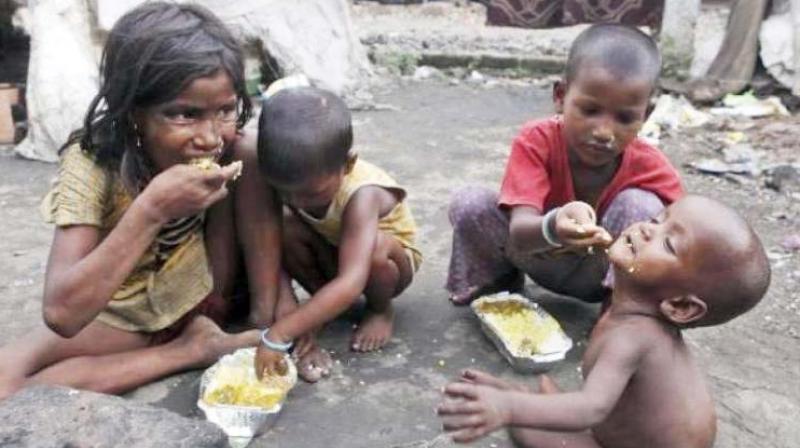
Image Source: asianage.com
Introduction
Malnutrition remains one of India’s foremost public health and developmental concerns, with implications for human capital, productivity, and social equity. Despite sustained economic growth and multiple nutrition programmes, the overall pace of improvement has been limited and uneven. Recent reports from Madhya Pradesh, where several child deaths due to severe undernutrition have been documented, have brought the issue back into national focus and highlighted the continuing vulnerabilities in certain regions.
Data indicates that large numbers of children continue to be admitted to Nutrition Rehabilitation Centres, and many districts remain in the high-risk category for underweight prevalence. Rising budgetary allocations and targeted interventions coexist with gaps in service delivery and monitoring. The persistence of malnutrition has direct consequences for India’s ability to fully realise its demographic dividend, making it not only a health priority but also a development challenge requiring sustained attention.
Understanding Malnutrition
Malnutrition is a multidimensional challenge that goes beyond food scarcity to encompass health, social, and developmental aspects. It represents an imbalance between the body’s nutritional needs and actual intake or absorption. In India, it has remained a persistent concern across decades, despite targeted programmes and economic growth.
Key Features of Malnutrition
-
Broad definition: Refers to deficiencies, excesses, or imbalances in energy and nutrient intake.
-
Not limited to hunger: It includes visible undernutrition as well as hidden forms such as micronutrient deficiencies and overnutrition.
-
Spectrum of outcomes: Leads to impaired growth, reduced immunity, cognitive delays, higher risk of infections, and non-communicable diseases.
-
Population groups most affected: Infants, young children, adolescent girls, pregnant and lactating women, and marginalized communities.
Historical Perspective in India
-
Colonial period: Famines during British rule (e.g., Bengal Famine of 1943) highlighted large-scale hunger and starvation, with little institutional framework to address nutrition.
-
Early post-independence (1950s–1970s): Focus was on food security through increased agricultural production (e.g., Green Revolution). Nutrition was largely equated with calorie sufficiency.
-
1970s–1990s: Realisation that calorie intake alone did not resolve malnutrition. National programmes such as the Integrated Child Development Services (ICDS, 1975) were launched to provide supplementary nutrition, health check-ups, and preschool education.
-
Post-2000s: Greater attention to micronutrient deficiencies, maternal health, and school meals (e.g., Mid-Day Meal Scheme expansion). Policies started addressing anaemia, iodine deficiency, and vitamin supplementation.
-
Recent decade: Shift towards a comprehensive life-cycle approach with POSHAN Abhiyaan (2018) aiming for convergence of schemes, use of technology (Poshan Tracker), and behaviour change communication. Despite this, progress has been slow, especially in high-burden states.
Contemporary Relevance
-
Shift in patterns: While undernutrition remains widespread in rural and tribal regions, urban areas are witnessing rising obesity and diet-related health disorders.
-
Double burden: India today faces the coexistence of both undernutrition and overnutrition, making malnutrition a dual challenge of deprivation and excess.
-
Policy priority: Sustainable Development Goals (SDGs) — particularly SDG 2 (Zero Hunger) and SDG 3 (Good Health and Well-being) — underscore the need to address malnutrition comprehensively.
Types of Malnutrition
Malnutrition manifests in multiple forms depending on the nature, severity, and duration of nutritional imbalance. Broadly, it can be classified into the following categories:
1. Stunting (Low height-for-age)
-
Definition: Reflects chronic undernutrition, resulting from prolonged periods of inadequate nutrition and frequent infections.
-
Key features:
-
Children appear too short for their age.
-
Often begins in the prenatal stage due to poor maternal health and continues into early childhood.
-
-
Implications:
-
Irreversible physical and cognitive damage if not addressed within the first 1,000 days of life (conception to 2 years).
-
Associated with lower school achievement, reduced economic productivity, and increased risk of chronic diseases in adulthood.
-
2. Wasting (Low weight-for-height)
-
Definition: Represents acute undernutrition, usually resulting from sudden food shortage or disease.
-
Key features:
-
Children appear extremely thin for their height.
-
May occur seasonally during food insecurity or after illness.
-
-
Implications:
-
Strongly associated with increased risk of mortality, especially among under-five children.
-
Requires urgent interventions through therapeutic feeding and medical support.
-
3. Underweight (Low weight-for-age)
-
Definition: A composite indicator capturing elements of both stunting and wasting.
-
Key features:
-
Child appears smaller and lighter compared to age-mates.
-
Often used in large-scale surveys to measure child malnutrition.
-
-
Implications:
-
While useful as a summary indicator, it cannot distinguish between chronic and acute malnutrition.
-
Associated with poor immunity and higher vulnerability to disease.
-
4. Micronutrient Deficiencies (Hidden Hunger)
-
Definition: Lack of essential vitamins and minerals required in small quantities for growth, immunity, and metabolism.
-
Examples:
-
Anaemia (Iron deficiency): Leads to fatigue, poor concentration, and maternal mortality risks.
-
Vitamin A deficiency: Impairs vision, increases vulnerability to infections.
-
Iodine deficiency: Causes goitre, cognitive impairment, and developmental delays.
-
Zinc deficiency: Contributes to stunting and impaired immunity.
-
-
Implications:
-
Often invisible but widespread, affecting productivity and health.
-
National programmes like Iron and Folic Acid supplementation, Universal Salt Iodisation, and Vitamin A supplementation target these deficiencies.
-
5. Overnutrition (Excess energy intake)
-
Definition: Consumption of more calories than required, often combined with low physical activity.
-
Key features:
-
Rising incidence in urban and peri-urban areas due to lifestyle and dietary changes.
-
Linked to consumption of energy-dense, nutrient-poor processed foods.
-
-
Implications:
-
Leads to overweight and obesity.
-
Increases the risk of non-communicable diseases such as type-2 diabetes, hypertension, cardiovascular diseases, and certain cancers.
-
Represents a growing challenge in India, creating a double burden of malnutrition alongside undernutrition.
-
6. Protein-Energy Malnutrition (PEM) (Cross-cutting category)
-
Definition: Severe form of undernutrition caused by inadequate intake of both protein and calories.
-
Manifestations:
-
Marasmus: Extreme wasting, with muscle and fat loss, leaving a child emaciated.
-
Kwashiorkor: Characterised by oedema, swelling of the belly, hair changes, and skin lesions despite adequate calorie intake.
-
-
Implications:
-
Life-threatening if untreated.
-
Still seen in pockets of extreme poverty and humanitarian crises.
-
7. Other Emerging Forms
-
Diet-related NCDs in children and youth: Early onset of obesity, diabetes, and hypertension due to sedentary lifestyle and poor diets.
-
“Hidden hunger” coexisting with obesity: Overweight individuals who still suffer from micronutrient deficiencies due to poor diet quality.
-
Elderly malnutrition: Increasingly visible in ageing populations, often due to poor absorption, inadequate diet diversity, or neglect.
Current Scenario
At the Global Level
-
Stunting (2024): around 23.2% of children under five (150 million) are stunted.
-
Wasting: about 42.8 million children are too thin for their height.
-
Overweight: around 5.5% of under-fives are overweight globally.
-
Hunger (2024): 673 million people (8.2% of the world’s population) experienced hunger.
-
Obesity: adult obesity increased globally to 16% in 2022 (up from 12% in 2012).
-
Overall malnutrition (2024): 685.6 million people were malnourished.
-
Severe child food poverty (2022): 27% of children under five lived in severe food poverty, concentrated in South Asia and Sub-Saharan Africa.
At the Indian Level
Overall Indicators
-
Nearly 25% of the world’s undernourished live in India.
-
India ranked 105 out of 127 countries in the Global Hunger Index (2024).
Stunting
-
34.7% of children under five are stunted, above the Southern Asia average (21.8%).
-
Trend: NFHS-4 (2015–16): 38.4% → NFHS-5 (2019–21): 35.5% → POSHAN Tracker (June 2025): 37%.
-
State-wise stunting (June 2025, larger States):
-
Uttar Pradesh – 48.8%
-
Jharkhand – 43.2%
-
Assam – 42.9%
-
Bihar – 42.6%
-
Madhya Pradesh – 42.1%
-
Haryana – 23.4%
-
Himachal Pradesh – 19.7%
-
Andhra Pradesh – 18.4%
-
Punjab – 17.1%
-
Tamil Nadu – 14.2%
-
Wasting & Underweight
-
Out of 51 million wasted children worldwide, 20 million are in India (≈40% of global total).
-
17.3% of children under five are wasted, nearly double the regional average (8.9%).
Anaemia
-
Over 53% of women of reproductive age are anaemic.
-
67% of children under five are anaemic (NFHS-5, 2019–21).
Breastfeeding & Infant Nutrition
-
Exclusive breastfeeding (first six months): 64%.
-
Only 11% of children (6–23 months) receive a minimum acceptable diet.
Other Nutrition & Health Indicators
-
Teenage pregnancy (15–19 years who have begun childbearing): 6.8%.
-
Caesarean deliveries: 22%.
-
Households with no toilet facility: 24%.
Measurement of Malnutrition in India and Its Significance
Methods of Measurement
-
National Family Health Survey (NFHS): Conducted every few years, it provides nationally representative data on nutrition, health, and population.
-
POSHAN Tracker: Real-time monitoring system tracking service delivery and nutrition indicators across Anganwadi Centres.
-
Global Hunger Index (GHI): Composite index using stunting, wasting, underweight, and child mortality data to rank countries.
-
National Nutrition Monitoring Bureau (NNMB): Provides dietary intake and nutrition deficiency surveys (though limited in recent years).
-
Sample Registration System (SRS): Monitors infant and maternal mortality, indirectly reflecting nutrition levels.
-
Comprehensive National Nutrition Survey (CNNS, 2016–18): First nationally representative nutrition survey for children and adolescents (0–19 years).
-
Other Sources:
-
Ministry of Women and Child Development reports (Poshan Abhiyaan).
-
Health Management Information System (HMIS).
-
WHO–UNICEF Joint Estimates for global comparability.
-
Indicators Used
-
Anthropometric Indicators:
-
Stunting – height-for-age.
-
Wasting – weight-for-height.
-
Underweight – weight-for-age.
-
Overweight/obesity – weight relative to height/age.
-
-
Micronutrient Deficiency Indicators: Prevalence of anaemia, vitamin A deficiency, iodine deficiency.
-
Dietary and Feeding Indicators:
-
Exclusive breastfeeding rates.
-
Minimum dietary diversity.
-
Minimum acceptable diet.
-
-
Composite Indices:
-
Global Hunger Index.
-
State Nutrition Profiles under POSHAN Abhiyaan.
-
Significance of Measurement
-
Policy Formulation: Helps in designing targeted schemes such as Poshan Abhiyaan, Mid-Day Meal Scheme, ICDS, Anaemia Mukt Bharat.
-
Resource Allocation: Assists Union and State governments in prioritising high-burden districts (Aspirational Districts Programme, Poshan 2.0).
-
Monitoring Progress: Enables tracking of national and global commitments such as SDG 2 (Zero Hunger) and National Nutrition Mission targets.
-
Equity Assessment: Highlights disparities across states, districts, socio-economic groups, and gender.
-
International Comparisons: Places India’s progress in a global context, drawing attention to areas of lag and best practices elsewhere.
-
Public Accountability: Informs civil society, academia, and media to evaluate government performance and hold policymakers accountable.
Causes of Malnutrition
The persistence of malnourishment in India is linked to multiple interrelated factors:
1. Health and Maternal-Child Factors
-
Maternal health: Teenage pregnancies, anaemia in women, poor maternal diet, and inadequate antenatal care. Nearly half of stunted children are already small at birth.
-
Poor infant and child feeding practices: Only 64% of infants under six months are exclusively breastfed. Caesarean deliveries (22% in 2021) often disrupt early breastfeeding.
-
Dietary inadequacies: Carbohydrate-heavy meals dominate, while protein and micronutrient-rich foods remain unaffordable. Only 11% of children aged 6–23 months meet the minimum acceptable diet.
-
Healthcare gaps: Inadequate immunisation, poor management of diarrhoea and pneumonia, and limited access to primary healthcare worsen nutritional outcomes.
-
Intergenerational cycle of malnutrition: Malnourished mothers give birth to low-birth-weight babies, perpetuating a vicious cycle.
2. Socio-Economic and Cultural Determinants
-
Poverty and inequality: Children from poor or uneducated households are more vulnerable — 46% of children of mothers with no schooling are stunted compared to 26% among educated mothers.
-
Social factors: Early marriages, lack of awareness, gender inequality, and inadequate healthcare access.
-
Cultural practices and food taboos: Restriction of certain nutritious foods for women during pregnancy or for children due to traditional beliefs limits dietary diversity.
-
Urbanisation and dietary transition: Growing dependence on calorie-dense but nutrient-poor processed foods is increasing hidden hunger and obesity.
-
Seasonal unemployment and migration: Agricultural labourers and migrant workers face food insecurity during lean seasons, directly affecting children.
3. Sanitation, Hygiene, and Environmental Stress
-
Sanitation and hygiene: 19% of households still practice open defecation (2019–21), contaminating water and causing recurrent infections.
-
Climate change and environmental stress: Droughts, floods, and heat waves reduce crop yields and food affordability.
-
Unsafe drinking water and poor WASH services: Lead to diarrhoeal diseases and nutrient loss.
4. Agricultural and Food System-Related Factors
-
Agricultural practices: Focus on cereals due to MSP procurement; inadequate production and consumption of pulses, fruits, and vegetables.
-
Food insecurity at household level: Despite being a major food producer, over 195 million Indians remain undernourished (FAO estimates).
-
Public distribution inefficiencies: Leakages, poor targeting, and irregular supply in PDS and ICDS reduce nutritional support.
5. Governance and Policy Challenges
-
Inadequate governance and implementation: Weak monitoring of nutrition schemes, lack of convergence between departments (health, education, WCD, water), and corruption reduce impact.
-
Fragmented policy approach: Nutrition often treated in isolation rather than through integrated health, agriculture, and social protection systems.
Government Initiatives to Address Malnutrition in India
1. National Food Security Measures
-
National Food Security Act (NFSA), 2013 – Legal entitlement to subsidized foodgrains for beneficiaries.
-
Pradhan Mantri Garib Kalyan Anna Yojana (PMGKAY) – Free food grains to all NFSA beneficiaries.
-
Antyodaya Anna Yojana (AAY) – Targets the poorest households, including vulnerable women.
-
Buffer Stock of Foodgrains – Central pool to ensure continuous food supply and price stability.
2. Community and Child-Centric Nutrition
-
Integrated Child Development Services (ICDS), 1975 – Supplementary nutrition, health, immunization, and preschool education through Anganwadi Centres.
-
Anganwadi Services – Take-Home Rations and health monitoring for children (0–6 years), pregnant and lactating women.
-
Scheme for Adolescent Girls (SAG) – Nutrition and health interventions for adolescent girls.
3. Maternal and Infant Nutrition Support
-
Pradhan Mantri Matru Vandana Yojana (PMMVY) – Cash incentive to improve maternal nutrition and compensate wage loss.
-
POSHAN Abhiyaan (National Nutrition Mission, 2018) – Convergence mission to reduce stunting, undernutrition, anaemia, and low birth weight.
-
Anaemia Mukt Bharat (2018) – Iron-folic acid supplementation, deworming, testing, and counselling.
-
Mission Indradhanush (2014 onwards) – Universal immunization to reduce disease-related malnutrition.
4. School-Based Nutrition
-
Mid-Day Meal Scheme (1995), now PM-POSHAN (2021) – Hot cooked meals in government schools.
5. Food Fortification and Price Stabilization
-
Rice Fortification Initiative – Distribution of fortified rice through PDS, ICDS, and PM-POSHAN.
-
Price Stabilization Fund (PSF) – Maintains buffer stocks of essential commodities.
-
‘Bharat’ Series Subsidized Foods – Affordable atta, rice, and pulses for poor households.
6. System Strengthening and Monitoring
-
Mission POSHAN 2.0 (2021) – Converges nutrition schemes with focus on first 1,000 days of life.
-
Poshan Tracker (2021 onwards) – ICT-based real-time monitoring of beneficiaries.
-
Ayushman Bharat – Health and Wellness Centres – Nutrition counselling and preventive care.
-
Eat Right India (FSSAI) – Advocacy for healthy diets, fortification, and reduced junk food.
Impact of Government Initiatives
-
Food Security Expansion
-
NFSA legally covers ~81 crore people (75% rural, 50% urban).
-
PMGKAY provides free food grains to 81.35 crore beneficiaries, extended for 5 years from Jan 2024.
-
AAY directly benefits 8.92 crore of the poorest individuals, including 2 crore women.
-
Foodgrain buffer stock stands at 608.75 LMT, above the required 411.20 LMT, ensuring national food security.
-
-
Community & Child Nutrition
-
ICDS operates through 14+ lakh Anganwadi Centres across India.
-
Anganwadi services cover children (0–6 years), pregnant women, lactating mothers, and ensure Take-Home Rations.
-
-
Maternal and Infant Nutrition
-
PMMVY provides a ₹5,000 incentive to pregnant and lactating women.
-
POSHAN Abhiyaan targets reducing stunting to 25% and anaemia by 3% annually.
-
Anaemia Mukt Bharat works with a target of 3% annual anaemia reduction.
-
Mission Indradhanush expanded to cover hard-to-reach areas with universal immunization.
-
-
School-Based Nutrition
-
PM-POSHAN (Mid-Day Meal) benefits 11.8 crore children in 11.2 lakh schools (2023–24).
-
Scheme outlay of ₹1.30 lakh crore (2021–26) supports children’s nutrition and education.
-
-
Food Fortification & Price Stabilization
-
406 LMT of fortified rice distributed through PDS, ICDS, and schools (2019–24).
-
Goal of 100% fortified rice distribution by 2024.
-
Onion buffer stock increased from 1 LMT (2020–21) to 7 LMT (2023–24) to stabilize prices.
-
Bharat Foods launched at subsidized rates (atta ₹27.50/kg, rice ₹29/kg, pulses ₹55–60/kg).
-
-
System Strengthening & Monitoring
-
Mission POSHAN 2.0 enhances outreach with focus on first 1,000 days.
-
Poshan Tracker monitors ~10 crore beneficiaries for transparency and accountability.
-
Health and Wellness Centres deliver nutrition counselling to local communities.
-
Eat Right India campaigns reached millions through awareness drives on balanced diets.
Challenges and Emerging Issues
Despite extensive schemes and large-scale investments, malnutrition in India remains a persistent and complex challenge.
1. Limited Nutritional Outcomes
-
Stunting decline is slow — from 38.4% (2016) to 36% (2022–23), far short of the 25% target under Mission 25 by 2022.
-
Wasting remains stagnant at 19%, above global emergency levels (15%).
-
Anaemia is worsening — 57% of women and 67% of children are anaemic (NFHS-5), reversing earlier gains.
-
Persistent high levels of undernutrition despite decades of targeted policies.
2. Inequities in Access and Outcomes
-
Regional disparities — States like Bihar, Jharkhand, and Uttar Pradesh lag far behind southern states.
-
Socio-economic divide — Children of uneducated mothers are nearly twice as likely to be stunted.
-
Gender inequality — Women’s poor nutrition during adolescence, pregnancy, and lactation has intergenerational effects.
-
Tribal and marginalized groups face higher malnutrition due to poor healthcare access and exclusion.
3. Quality of Diet and Services
-
Low diet diversity — Only 11% of children (6–23 months) meet minimum acceptable diet.
-
Cultural and dietary practices often favor cereals over proteins, reducing nutritional quality.
-
Food supplementation schemes frequently provide calorie-heavy but protein/micronutrient-deficient meals.
-
Anganwadi services suffer from irregular Take-Home Ration supply and quality concerns.
4. Systemic & Implementation Issues
-
Leakages in PDS and poor coverage of migrants and excluded groups.
-
Infrastructure gaps — Over 20% of Anganwadi Centres lack toilets, and 40% lack drinking water.
-
Monitoring challenges — Poshan Tracker excludes households without smartphones/internet.
-
Coordination failures among health, education, and food ministries.
-
Last-mile delivery gaps in ICDS, PM Poshan (Midday Meal), and Anaemia Mukt Bharat initiatives.
5. Emerging Risks
-
Urban malnutrition is rising with junk food dependence and sedentary lifestyles.
-
Double burden of malnutrition — coexistence of undernutrition with overweight/obesity.
-
Climate change threatens food diversity, crop yields, and increases food inflation, worsening household food insecurity.
-
Cultural shifts toward processed foods and away from traditional nutrient-rich diets.
-
Pandemic after-effects — COVID-19 disrupted immunization, ICDS services, and household nutrition security.
Way Forward
• Focus on nutrition-sensitive interventions — dietary diversity, micronutrient supplementation, and fortified foods to address hidden hunger.
• Integrate maternal health and adolescent nutrition into all programmes, with emphasis on delaying early pregnancies and ensuring antenatal care.
• Expand access to nutrient-rich foods such as eggs, milk, pulses, and vegetables in Anganwadi and school feeding schemes to improve protein and micronutrient intake.
• Strengthen sanitation, clean water, and healthcare infrastructure to break the infection–malnutrition cycle.
• Leverage digital tools and community monitoring (e.g., Poshan Tracker, social audits) to improve accountability and coverage of schemes.
• Promote women’s education and empowerment to break the intergenerational cycle of stunting and anaemia.
• Strengthen implementation of fortification policies (rice, salt, edible oils, milk) to reach the most vulnerable at scale.
• Enhance convergence of schemes (ICDS, PM Poshan, Jal Jeevan Mission, Swachh Bharat) with clear accountability at the district and block levels.
• Address regional disparities by focusing on lagging states like Bihar, Jharkhand, and Uttar Pradesh through targeted interventions and higher investments.
• Strengthen frontline workers (ASHA, Anganwadi, ANMs) through better training, incentives, and timely remuneration.
• Encourage community participation and behaviour change through campaigns on breastfeeding, dietary diversity, and hygiene practices.
• Invest in urban nutrition strategies to counter rising dependence on ultra-processed/junk foods and obesity risks.
• Build resilience against climate change by promoting climate-smart agriculture, millet cultivation, and crop diversification to ensure food security.
• Strengthen monitoring & evaluation with real-time data and independent audits to ensure schemes reach intended beneficiaries.
Global Best Practices
• Brazil – Zero Hunger (Fome Zero) Programme
– Integrated food security strategy combining school meals, conditional cash transfers (Bolsa Família), and local food production support.
– Emphasis on community kitchens, public procurement from small farmers, and strong political commitment.
• Peru – Targeted Nutrition Interventions
– Achieved rapid decline in stunting through decentralised action, results-based financing, and focus on high-burden districts.
– Community health worker model for monitoring child growth and counselling mothers.
• Bangladesh – Community-Based Nutrition Models
– Women’s groups and peer counsellors trained to promote exclusive breastfeeding, complementary feeding, and hygiene practices.
– Integration of nutrition into health and family planning services improved outreach.
• Thailand – Multi-sectoral Nutrition Approach
– Community-driven nutrition planning, school lunch programmes, and village health volunteers.
– Early childhood interventions reduced undernutrition and child mortality.
• Ethiopia – Productive Safety Net Programme (PSNP)
– Combines food/cash transfers with public works and livelihood diversification.
– Focus on resilience-building in drought-prone regions.
• Mexico – Conditional Cash Transfers (Oportunidades/Prospera)
– Linked cash transfers to school attendance, health check-ups, and nutrition workshops.
– Significant improvements in maternal and child health outcomes.
• Rwanda – Integrated Child Development Policy
– Village-level nutrition committees, kitchen gardens, and emphasis on early childhood development.
– Community-based insurance schemes improved healthcare access.
• Vietnam – Nutrition-Sensitive Agriculture & School Meals
– Diversified diets through homestead food production and promotion of micronutrient-rich crops.
– Universal school meal programmes with local food sourcing.
Conclusion
Malnutrition in India remains a complex challenge, rooted in deprivation and governance gaps. High rates of stunting, wasting, underweight, and anaemia persist, reflecting weaknesses in maternal health, child feeding practices, sanitation, and socio-economic conditions. Awareness and coverage have improved, but uneven implementation continues to limit progress. As Mahatma Gandhi said, “It is health that is real wealth and not pieces of gold and silver,” emphasizing the importance of nutrition and well-being for national development.
Global bodies like UNICEF and WHO recommend integrated strategies combining food security, nutrition, and social protection, alongside community engagement and robust monitoring. Emphasis is placed on dietary diversity, reduction of ultra-processed foods, improved sanitation, and education. Adopting these approaches across policy, healthcare, and community sectors is essential for sustainable reductions in malnutrition and for improving overall health and development outcomes.
Comments
Post a Comment