
Introduction
India is the world’s third-largest carbon emitter, and the transport sector plays a significant role in this trajectory. It contributes nearly 10% of India’s total greenhouse gas (GHG) emissions (excluding land-use and forestry) and about 12–14% of energy-related CO₂ emissions, making it a key target for decarbonisation. Vehicular emissions are also a major cause of deteriorating air quality in Indian cities, many of which rank among the most polluted globally. Reducing transport emissions is therefore not just an environmental imperative but also a public health and economic necessity.
To address this challenge, India has adopted a multi-pronged approach that includes promoting ethanol blending, expanding electric mobility, tightening emission norms, and introducing a vehicle scrappage policy to phase out older vehicles. These initiatives reflect the government’s attempt to balance environmental goals with economic growth and energy security. At the same time, questions remain about their effectiveness, long-term sustainability, and impact on consumers and farmers. As India experiments with different technological pathways, from biofuels to electric vehicles, its vehicle policy is still evolving. The following sections will examine these strategies in detail, highlighting their significance, challenges, and the road ahead.
Vehicle Policy in India
Vehicle policy in India is primarily shaped by the Union Government, with major responsibility lying with the:
-
Ministry of Road Transport and Highways (MoRTH): Drafts and enforces vehicle emission and fuel efficiency norms under the Motor Vehicles Act.
-
Ministry of Environment, Forest and Climate Change (MoEFCC): Frames environmental standards (through the CPCB) under the Environment Protection Act, 1986.
-
NITI Aayog: Provides policy direction for electric mobility, ethanol blending, and alternative fuels.
-
Ministry of Petroleum and Natural Gas (MoPNG): Oversees fuel quality and ethanol blending targets.
-
State Governments & Transport Departments: Implement and enforce vehicle rules, registration, and scrappage at the local level.
Evolution of Vehicle Policy in India
India’s vehicle emission control framework has evolved in phases, responding to changing economic, environmental, and social needs:
-
Post-Independence (1947–1980s):
-
Focus on building an indigenous automobile industry under the License Raj.
-
Policy concerns were limited to production and regulation; emissions were not a priority.
-
Low vehicle ownership meant limited attention to urban air quality.
-
-
Initial Emission Norms (1990s):
-
First emission standards introduced in 1991 (petrol vehicles) and 1992 (diesel vehicles).
-
Growing urban air pollution led to judicial interventions — the Supreme Court mandated CNG use in Delhi’s buses and autos (1998–2001).
-
Public transport and fuel-switching policies began to gain traction.
-
-
Bharat Stage (BS) Norms (2000 onwards):
-
Adoption of BS norms in 2000, modelled on Euro standards.
-
BS-II (2005), BS-III (2010), BS-IV (2017).
-
Landmark move: skipping BS-V to directly implement BS-VI in April 2020, cutting particulate matter and NOx emissions drastically.
-
-
Corporate Average Fuel Efficiency (CAFE) Norms (2017 onwards):
-
Introduced to improve fleet-level fuel efficiency of automakers.
-
Aimed at reducing carbon intensity and fuel consumption in line with global practices.
-
-
Ethanol Blending Programme (2003 onwards):
-
Initially targeted 5–10% blending of ethanol with petrol.
-
Scaling up after 2014 with government incentives.
-
Blending rose from 1.5% in 2014 to 20% (E20) in 2025, achieved five years ahead of target.
-
Supports farmers, reduces crude oil imports, and contributes to emission reduction.
-
-
Promotion of Electric Mobility (2013 onwards):
-
National Electric Mobility Mission Plan (NEMMP) 2020 launched in 2013.
-
FAME (Faster Adoption and Manufacturing of EVs) Scheme launched in 2015, expanded into FAME-II.
-
Provides purchase subsidies, charging infrastructure, and manufacturing incentives.
-
Government target: 30% EV sales by 2030 (7.6% achieved in 2024).
-
-
Vehicle Scrappage Policy (2021):
-
Encourages scrapping of vehicles older than 15–20 years.
-
Incentives offered to purchase new, cleaner vehicles.
-
Aims to reduce air pollution and stimulate automobile demand.
-
-
Recent Developments (2020s):
-
Push for alternative fuels like CNG, LNG, and hydrogen fuel-cell vehicles.
-
National Green Hydrogen Mission (2023): pilot projects for hydrogen buses and trucks.
-
Diplomacy to secure Rare Earth Elements (REEs) from China for EV production.
-
Integration of emission reduction goals with India’s climate commitments under the Paris Agreement.
Types of Vehicle Technology to Curb Emission
-
Ethanol-blended petrol (E20) – A low-carbon fuel substitute to reduce fossil fuel dependence.
Hybrid and Electric Vehicles (EVs) – Seen as long-term solutions for deep decarbonisation.
Compressed Natural Gas (CNG) and LNG vehicles – Widely used in urban transport and logistics.
-
Hydrogen fuel cell vehicles (FCEVs) – Still nascent in India, but pilot projects are underway.
Ethanol-Blended Petrol (E20) in India
Mechanism
-
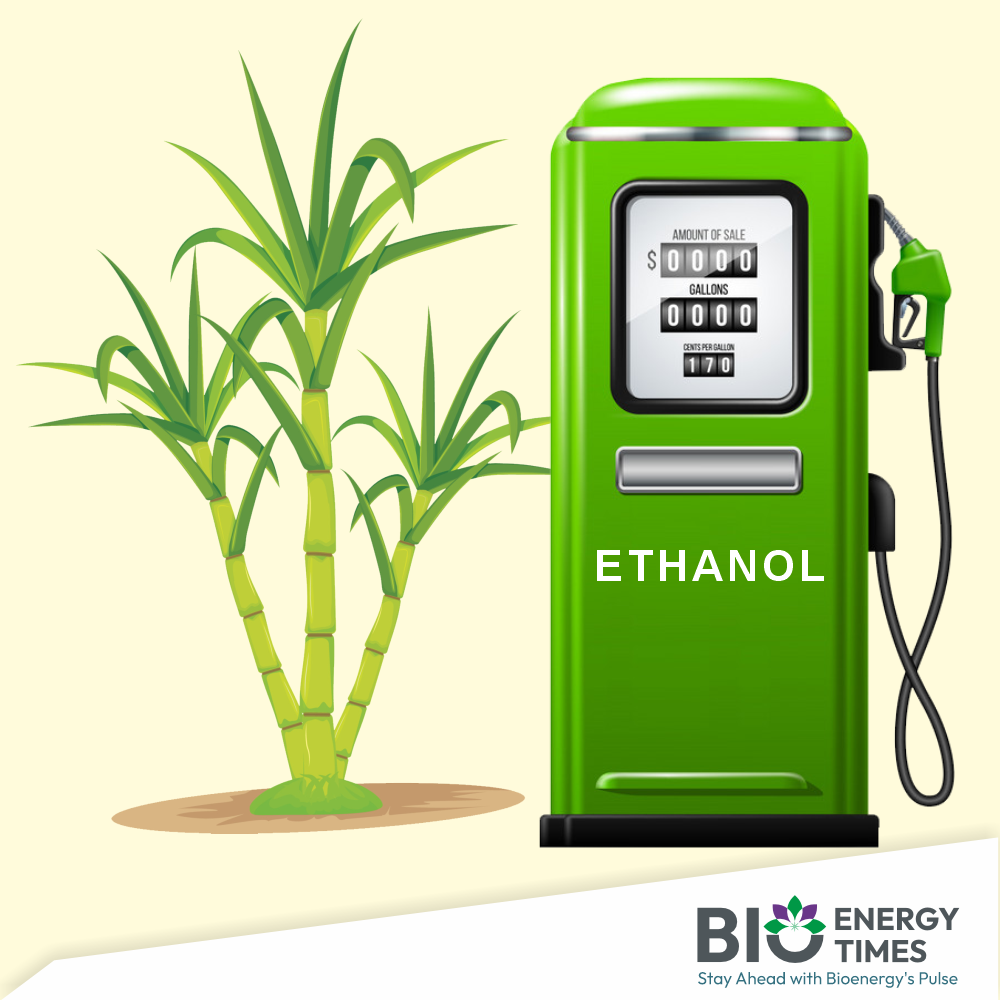
Ethanol, a biofuel derived mainly from sugarcane, maize, surplus rice (via FCI), damaged grains, and agricultural residues, is blended with petrol.
-
Being an oxygenated fuel, ethanol enables more complete combustion, reducing CO, HC, and PM emissions.
-
E20 indicates petrol containing 20% ethanol and 80% gasoline.
Benefits & Positive Impact
1. Energy Security & Forex Savings
-
Reduces crude oil imports.
-
Saved ₹1.13 lakh crore (till Dec 2024) and substituted 193 lakh MT crude oil.
-
Strengthens Atmanirbhar Bharat.
2. Farmers’ Welfare & Rural Economy
-
Provides remunerative and stable prices for ethanol suppliers.
-
Ensures timely payments to farmers through FRP and price revisions.
-
Creates rural jobs in farming, collection, and ethanol processing.
3. Environmental Benefits
-
Reduces CO₂ and GHG emissions significantly since 2014–15.
-
Encourages use of cleaner, alternative fuels.
-
Contributes to India’s climate goals.
4. Industrial & Economic Growth
-
Attracts investment in distilleries, bio-refineries, logistics, and storage.
-
Encourages both greenfield and brownfield ethanol plants.
-
Generates employment and boosts agriculture-linked industries.
5. Automobile Industry & Technology
-
Vehicles manufactured from 2023 onwards are E20-compatible.
-
Push for flex-fuel vehicles (E20, E100) fosters auto innovation.
Government Policies & Efforts
-
National Policy on Biofuels (2018, amended 2022): Advanced the 20% blending target from 2030 to 2025.
-
Fair and Remunerative Price (FRP): Ensures farmer welfare.
-
Financial Incentives: Support for ethanol distilleries (greenfield & brownfield).
-
Feedstock Diversification: Use of maize, surplus rice, damaged grains, and agri-residues to reduce pressure on sugarcane.
-
Automobile Standards: Mandatory E20-compatible vehicle labeling from 2023.
-
Public Awareness Campaigns: By MoPNG and NITI Aayog.
-
Long Term Off-take Agreements (LTOAs): For Dedicated Ethanol Plants (DEPs).
-
Price Revision (ESY 2024–25):
-
CCEA approved hike in ex-mill price of ethanol from C Heavy Molasses (CHM):
-
₹56.58 → ₹57.97/litre (+3%).
-
-
GST & transport charges reimbursed separately.
-
Ensures adequate ethanol supply to meet blending targets while supporting farmers.
Current Status (2025)
-
20% blending achieved nationwide, 5 years ahead of schedule.
-
Ethanol supply rose from 38 crore litres (2013–14) to 707 crore litres (2023–24).
-
Production capacity expanded to 1713 crore litres/year.
-
About 9% of sugar production diverted to ethanol.
-
E20 petrol available nationwide; EV adoption (~7.6% of new sales in 2024) growing but ethanol remains immediate decarbonization option.
Challenges & Negative Impact
-
Mileage Drop: Slight reduction in vehicle fuel efficiency.
-
Corruption Concerns: Misallocation and inefficiencies reported in ethanol programmes.
-
Water Stress: Sugarcane cultivation is highly water-intensive.
-
Food vs Fuel Debate: Using FCI rice/maize risks food security and price stability.
-
Compatibility Issues: Older vehicles may face wear and tear.
-
Global Trade Pressure: U.S. raised concerns on India’s ethanol import restrictions.
-
Future Uncertainty: Need for alternative feedstocks and balancing ethanol with EV adoption.
Roadmap Ahead
-
18% blending target for ESY 2024–25.
-
20% blending target for ESY 2025–26 (advanced from 2030).
-
Conversion of single-feed to multi-feed distilleries.
-
Wider rollout of E20, E100, and flex-fuel vehicles.
-
Continued support to ethanol sector for energy independence and clean mobility.
Hybrid and Electric Vehicles (EVs)
Image Source: aranca.com
Mechanism
-
Electric Vehicles (EVs): Run entirely on batteries charged from the electricity grid. They have no tailpipe, so they eliminate direct emissions and cut dependence on petrol/diesel.
-
Hybrid Vehicles: Use a mix of a conventional engine (ICE) and an electric motor. This reduces overall fuel consumption and emissions while still working with existing fuel infrastructure. They also require fewer rare earth materials than full EVs.
-
Rare Earth Dependence: EVs need key minerals like lithium, cobalt, nickel, and rare earth magnets for batteries and motors. Most of these are imported from China, creating a supply chain vulnerability.
Benefits & Positive Impact
-
Environmental Gains
-
EVs eliminate tailpipe emissions, cutting urban air pollution.
-
When powered by renewable energy, EVs significantly reduce lifecycle CO₂ emissions.
-
-
Energy Security
-
Reduces dependence on imported crude oil.
-
Hybrids provide immediate efficiency gains while EV infrastructure scales up.
-
-
Industrial & Technological Growth
-
Pushes innovation in battery technology, charging infrastructure, and vehicle design.
-
Encourages domestic value chains for auto and energy sectors.
-
-
Consumer Benefits
-
Lower running costs (fuel + maintenance).
-
Hybrids offer transition convenience, working with existing fuel infrastructure.
-
Government Policies & Efforts
The Government of India has launched several schemes to accelerate EV adoption and strengthen the ecosystem:
-
FAME India Scheme (Faster Adoption and Manufacturing of Electric/Hybrid Vehicles): Provides demand incentives for EV buyers and supports charging infrastructure.
-
PLI Scheme for Automobile and Auto Components: Encourages domestic EV manufacturing.
-
PLI Scheme for Advanced Chemistry Cells (ACC): Promotes indigenous battery production.
-
Battery Swapping Policy & Charging Infrastructure Development: Aims to ease charging bottlenecks and ensure interoperability.
-
Green Urban Mobility Initiatives: Integrates EVs into public transport systems.
-
SPMEPCI Scheme (2024): Requires a minimum ₹4,150 crore investment; offers reduced import duty for five years, linked to local value addition in EV production.
-
FAME II Scheme (Faster Adoption and Manufacturing of Electric Vehicles): Subsidies for EV purchases, charging infrastructure.
-
Tax Incentives: GST on EVs reduced to 5%; income tax deduction on EV loans.
-
State EV Policies: Maharashtra, Delhi, Karnataka, Tamil Nadu, etc., offering local subsidies and charging infrastructure support.
-
Diplomatic Engagements: India negotiating with China on REE supplies (e.g., germanium, magnets).
Current Status (2025)
-
Adoption & Market Growth: EV sales surged from 50,000 (2016) → 2.08 million (2024); total stock 5.45 million. EVs now account for 7.6% of new vehicle sales and ~9% of total stock.
-
Segment Trends: Two-wheelers & three-wheelers dominate; electric buses & passenger cars are steadily rising. Hybrids gaining traction as a bridge technology.
-
Charging Infrastructure: 29,277 public charging stations installed; new charging & battery swapping guidelines (2024–25) issued.
-
Industry Challenges: Dependence on rare earth imports (2,270 tonnes in 2023–24) creating supply risks; e.g., Maruti Suzuki delayed e-Vitara production. Other automakers also affected.
-
Global Standing: India is among the fastest-growing EV markets globally.
Challenges & Negative Impact
-
High Costs
-
EVs remain more expensive than petrol/diesel vehicles despite subsidies.
-
-
Infrastructure Lag
-
Charging network limited to metros; rural and highways underserved.
-
-
Supply Chain Risks
-
Heavy dependence on imported REEs (China dominates lithium, cobalt, rare earth magnets).
-
Export curbs by China disrupt Indian EV manufacturing.
-
-
Consumer Concerns
-
Range anxiety, long charging times, and resale uncertainty.
-
Roadmap Ahead
-
Adoption: Reach 30% EV sales by 2030 (~16M units annually).
-
Manufacturing: Boost domestic EV, battery & REE supply chains via PLI/SPMEPCI and recycling.
-
Infrastructure: Rapid rollout of charging & battery swapping nationwide, incl. rural areas.
-
Sustainability: Focus on battery recycling, second-life use & hybrids as bridge tech.
-
Vision: Create jobs, strengthen Make in India, and build a self-reliant EV ecosystem for Net Zero 2070.
Way Forward
Ethanol Blending
-
Balanced Fuel Strategy: Avoid overdependence on sugarcane; promote 2G ethanol, waste-to-fuel technologies, and alternative feedstocks.
-
Consumer Incentives: Offer tax rebates on E10/E20, as suggested by NITI Aayog, to offset efficiency losses.
-
Infrastructure Expansion: Strengthen production and distribution systems to ensure consistent supply.
-
Public Awareness & Transparency: Educate consumers on benefits and vehicle compatibility; ensure petroleum PSU windfalls translate into consumer benefits.
Electric Vehicles (EVs)
-
Accelerated Adoption: Promote domestic REE exploration, recycling, and alternative chemistries to reduce import dependence.
-
Infrastructure & Incentives: Expand nationwide charging networks, battery swapping facilities, and strengthen FAME/PLI schemes to drive uptake.
-
Hybrid Vehicles: Support hybrids as a transitional technology until the EV ecosystem matures.
-
Research & Development: Invest in indigenous battery technologies, charging solutions, and EV design.
-
Public Transport Electrification: Electrify buses and shared mobility systems to reduce urban pollution.
-
Employment & Skill Development: Create jobs and train personnel to strengthen India’s EV ecosystem.
-
Integrated Strategy: Treat ethanol and EV policies as complementary pathways for transport decarbonisation, aligning with Net Zero 2070 goals.
Global Best Practices
Ethanol Blending
-
Brazil: Long-standing success with sugarcane ethanol; flexible-fuel vehicles can run on any ethanol-gasoline mix, providing adaptability and reducing oil dependence.
-
United States: Focus on corn-based ethanol and biofuel diversification, supported by policy incentives under the Renewable Fuel Standard. Investments in second-generation (2G) ethanol minimize reliance on food crops.
-
European Union: Encourages biofuel adoption alongside stringent emission norms and carbon pricing. Also invests in alternative fuels such as hydrogen to reduce greenhouse gas emissions.
Electric Vehicles (EVs)
-
China: Aggressive EV adoption strategy backed by large-scale domestic battery manufacturing, extensive charging infrastructure, and strong government incentives.
-
Norway: Over 50% of new car sales are EVs, driven by tax exemptions, toll and ferry waivers, and free public parking.
-
United States & European Union: Provide substantial EV subsidies, tax incentives, emission regulations, and infrastructure support to accelerate EV adoption and promote clean mobility.
Conclusion
India’s transport sector is at a critical juncture, balancing short-term measures like ethanol blending with long-term strategies centered on electric mobility. Ethanol has delivered significant economic benefits, strengthened farmer incomes, and reduced crude oil imports. However, challenges such as water stress, food security concerns, and consumer resistance highlight the need for diversified feedstocks and balanced fuel policies. Electric mobility, though currently slower in adoption due to high costs, infrastructure gaps, and REE dependence, promises far greater emissions reductions and sustainable urban air quality improvement. A phased approach using hybrids as transitional technology, expanding domestic manufacturing, and promoting charging infrastructure is essential.
An integrated strategy that combines ethanol and EV policies, supported by global best practices and domestic incentives, will enable India to advance toward cleaner, energy-secure, and resilient transport. Achieving 30% EV sales by 2030, promoting advanced biofuels, and building a self-reliant EV ecosystem will be crucial for meeting the country’s Net Zero 2070 commitment.
Comments
Post a Comment