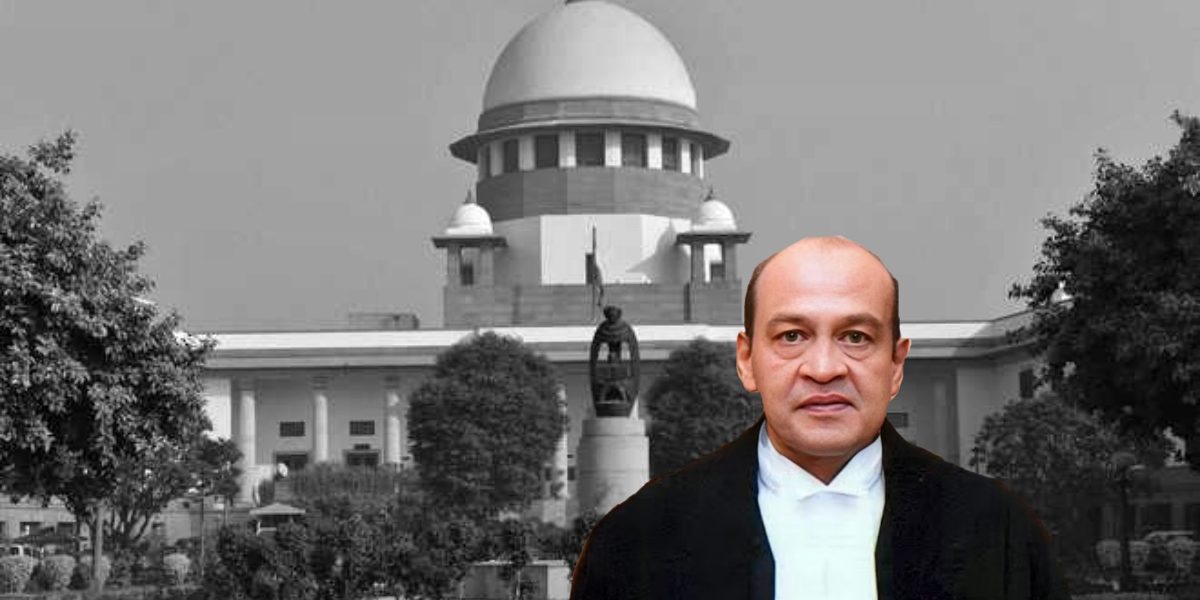
Credit: The Wire
Introduction
Union Parliamentary Affairs Minister Kiren Rijiju recently announced that over 100 Members of Parliament (MPs) have signed a notice seeking the removal of Justice Yashwant Varma of the Allahabad High Court. This development marks a significant moment in India’s judicial history, as initiating impeachment proceedings against sitting judges remains a rare and serious step.
The judiciary in India is held in high regard for being the guardian of the Constitution and the last resort for justice. However, the constitutional mechanism for the removal of judges, though seldom used, serves as a reminder that no public authority is above accountability. The current move has sparked debate on judicial ethics, political will, and institutional transparency. The current developments involving Justices Yashwant Varma and Shekhar Yadav bring this rarely-used provision into sharp focus.
🔺𝗔𝗿𝘁𝗶𝗰𝗹𝗲 124(4) outlines 𝗽𝗿𝗼𝗰𝗲𝘀𝘀 for 𝗿𝗲𝗺𝗼𝘃𝗶𝗻𝗴 a 𝗦𝘂𝗽𝗿𝗲𝗺𝗲 𝗖𝗼𝘂𝗿𝘁 𝗷𝘂𝗱𝗴𝗲, 𝗔𝗿𝘁𝗶𝗰𝗹𝗲 218 𝗲𝘅𝘁𝗲𝗻𝗱𝘀 this same procedure to 𝗛𝗶𝗴𝗵 𝗖𝗼𝘂𝗿𝘁 𝗷𝘂𝗱𝗴𝗲𝘀.
𝗡𝗢 𝗷𝘂𝗱𝗴𝗲 has 𝗯𝗲𝗲𝗻 𝗶𝗺𝗽𝗲𝗮𝗰𝗵𝗲𝗱 in 𝗜𝗻𝗱𝗶𝗮 𝘁𝗶𝗹𝗹 𝗱𝗮𝘁𝗲.
Body
🏛️ Indian Judicial System (Integrated Judicial Structure)
🔹 General Features
-
India follows a single, integrated judicial system.
-
Enforces both Central and State laws through a unified system of courts.
-
This system is inspired by the Government of India Act, 1935.
-
Judiciary is structured in three tiers:
-
Supreme Court (Top)
-
High Courts (Middle)
-
Subordinate Courts (Bottom)
-
⚖️ Structure of the Higher Judiciary in India
🏛️ Supreme Court of India
-
Inaugurated on January 28, 1950.
-
Succeeded the Federal Court of India (established under the Government of India Act, 1935).
-
Replaced the British Privy Council as the highest appellate authority in India.
🔹 Functions
-
Serves as:
-
The highest constitutional court.
-
The guardian of fundamental rights.
-
The final court of appeal in civil, criminal, and constitutional matters.
-
🔹 Constitutional Provisions
-
Articles 124 to 147 in Part V of the Constitution deal with:
-
Organisation
-
Independence
-
Jurisdiction
-
Powers
-
Procedures
-
-
Parliament is empowered to regulate these aspects by law.
🏔️ High Courts in India
🔹 Position and Role
-
Function below the Supreme Court and above subordinate courts.
-
Each state has a High Court, which supervises all lower courts within its jurisdiction.
-
Acts as the highest judicial authority within a state.
🔹 Historical Background
-
1862: High Courts established in Calcutta, Bombay, and Madras.
-
1866: Fourth High Court set up in Allahabad.
-
Over time, each British Indian province got its own High Court.
-
Post-1950: Provincial High Courts became the High Courts for the corresponding Indian states.
🔹 Constitutional Provisions
-
The Constitution originally provided for a High Court in each state.
-
The Seventh Constitutional Amendment Act, 1956 empowered Parliament to:
-
Establish a common High Court for:
-
Two or more states, or
-
Two or more states and a Union Territory
-
-
-
Territorial jurisdiction:
-
A High Court = co-terminus with its state.
-
A common High Court = co-terminus with the concerned states/UTs.
-
📌 Present Status (as of 2019)
-
Total High Courts: 25
-
High Courts with jurisdiction over more than one state: 3
-
Union Territories:
-
Delhi has its own High Court (since 1966).
-
Jammu & Kashmir and Ladakh share a common High Court.
-
Other Union Territories fall under the jurisdiction of various state High Courts.
-
-
Parliament can:
-
Extend the jurisdiction of any High Court to any Union Territory.
-
Exclude the jurisdiction of any High Court from any Union Territory.
-
⚖️ Composition and Appointment of Judges in the Indian Judiciary
🔹 Supreme Court of India
🧩 Composition
-
Presently consists of 34 judges:
-
1 Chief Justice of India (CJI)
-
33 other judges
-
-
Strength increased through the Supreme Court (Number of Judges) Amendment Act, 2019.
-
Historical increases:
-
1950: 8 judges (1 CJI + 7)
-
1956: 10 judges
-
1960: 13 judges
-
1977: 17 judges
-
1986: 25 judges
-
2008: 30 judges
-
2019: 34 judges
-
👤 Appointment Process
-
Appointed by the President of India.
-
Chief Justice of India:
-
Appointed by the President after consultation with Supreme Court and High Court judges as deemed necessary.
-
-
Other Judges:
-
Appointed by the President after mandatory consultation with the CJI and other judges of the Supreme Court and High Courts, if necessary.
-
🧑⚖️ Interpretation of ‘Consultation’
-
First Judges Case (1982): Consultation ≠ Concurrence.
-
Second Judges Case (1993):
-
Reversed earlier view; consultation = concurrence.
-
President is bound by the CJI's recommendation, who must consult two senior-most judges.
-
-
Third Judges Case (1998):
-
Introduced the Collegium system.
-
CJI must consult a collegium of four senior-most judges.
-
If two judges dissent, the recommendation should not be sent.
-
Recommendations made without following this process are not binding on the government.
-
📜 Fourth Judges Case (2015) and NJAC
-
99th Constitutional Amendment Act, 2014 and NJAC Act, 2014:
-
Aimed to replace the Collegium system with the National Judicial Appointments Commission.
-
-
Supreme Court verdict (2015):
-
Declared both Acts unconstitutional and void.
-
Revived the Collegium system.
-
Reason: NJAC violated judicial independence.
-
🏛️ Appointment of Chief Justice of India
-
1950–1973: Followed seniority convention—senior-most judge appointed as CJI.
-
1973: A.N. Ray appointed CJI, superseding 3 senior judges.
-
1977: M.U. Beg appointed CJI, superseding senior-most judge.
-
Second Judges Case (1993):
-
Ruled that senior-most judge alone should be appointed as CJI.
-
Curbed executive discretion.
-
🔹 High Courts of India
🧩 Composition
-
Each High Court consists of:
-
1 Chief Justice
-
Other judges as deemed necessary by the President.
-
-
The Constitution does not fix the number of judges.
-
Strength is decided by the President based on workload.
👤 Appointment Process
-
Appointed by the President of India.
-
Chief Justice of a High Court:
-
Appointed after consultation with the CJI and Governor of the concerned state.
-
-
Other Judges:
-
Appointed after consultation with the CJI, Governor, and Chief Justice of the concerned High Court.
-
-
For a common High Court (two or more states):
-
Governors of all concerned states are consulted.
-
🧑⚖️ Judicial Interpretation
-
Second Judges Case (1993):
-
Appointment must conform with the opinion of the CJI.
-
-
Third Judges Case (1998):
-
CJI must consult a collegium of two senior-most Supreme Court judges.
-
The sole opinion of the CJI is not sufficient.
-
📜 Fourth Judges Case (2015) and NJAC
-
Same as for the Supreme Court:
-
NJAC provisions declared unconstitutional.
-
Collegium system reinstated for High Court appointments as well.
-
Ensured judicial independence.
-
⚖️ Tenure, Removal, and Transfer of Judges (Supreme Court & High Court)
🕒 Tenure of Judges
-
Supreme Court Judges:
-
Hold office until 65 years of age.
-
May resign by writing to the President.
-
May be removed by the President on Parliament's recommendation.
-
Age disputes are decided by authority/method defined by Parliament.
-
-
High Court Judges:
-
Hold office until 62 years of age.
-
May resign by writing to the President.
-
May be removed by the President on Parliament's recommendation.
-
Vacate office upon:
-
Appointment to the Supreme Court.
-
Transfer to another High Court.
-
-
Age disputes are decided by the President, after consultation with the Chief Justice of India.
-
🧾 Removal of Judges (Impeachment Process – Same for SC & HC)
-
Can be removed by an order of the President after an address by Parliament in the same session.
-
Address must be supported by a special majority in both Houses:
-
Majority of total membership, and
-
Majority of not less than two-thirds of members present and voting.
-
-
Grounds for removal:
-
Proved misbehaviour, or
-
Incapacity.
-
🔍 Judges (Inquiry) Act, 1968 – Procedure:
-
Motion for removal:
-
Signed by 100 LS members or 50 RS members.
-
-
Speaker/Chairman may admit or reject the motion.
-
If admitted, a 3-member committee is formed:
-
One Supreme Court Chief Justice/Judge.
-
One High Court Chief Justice.
-
One distinguished jurist.
-
-
If the committee finds the judge guilty, the House can consider the motion.
-
If passed by special majority in both Houses, an address is sent to the President.
-
The President issues the removal order.
🔹 No Supreme Court or High Court judge has been successfully impeached so far.
🔹 Justice V. Ramaswami was the first SC judge to face impeachment (1991–1993), but the motion failed in Lok Sabha due to abstention by the ruling party.
🔁 Transfer of High Court Judges
-
President may transfer a judge from one High Court to another after consulting the Chief Justice of India (CJI).
-
Transferred judges are entitled to a compensatory allowance, decided by Parliament.
⚖️ Judicial Interpretations:
-
1977: SC ruled transfers should occur only in public interest, not as punishment.
-
1994: Judicial review of transfers is allowed, but only the transferred judge can challenge it.
-
Third Judges Case (1998):
-
CJI must consult:
-
Collegium of 4 senior-most SC judges.
-
Chief Justices of both the High Courts involved (sending & receiving).
-
-
Sole opinion of the CJI is not sufficient for "consultation".
📌 Case Studies: Ongoing Impeachment Motions
⚖️ Justice Yashwant Varma (Allahabad High Court)
-
Allegation: Half-burnt currency notes were found at his outhouse after a fire in March.
-
A three-judge panel, appointed by former CJI Sanjiv Khanna, indicted him.
-
The CJI recommended his removal to the President and Prime Minister after Justice Varma refused to resign.
-
Justice Varma was repatriated to the Allahabad High Court and kept away from judicial duties.
-
He has protested his innocence and approached the Supreme Court challenging the committee’s findings.
-
As per Mr. Rijiju, more than 100 MPs have already signed the motion, fulfilling the Lok Sabha threshold for tabling it.
⚖️ Justice Shekhar Yadav (Allahabad High Court)
-
A pending impeachment motion exists against Justice Yadav for alleged communal remarks.
-
Raised by John Brittas (CPI-M) and P. Sandosh Kumar (CPI) in Rajya Sabha.
-
Described as a test of Parliament’s secular commitment.
Conclusion
The process of removing a High Court judge is constitutionally robust, designed to protect judicial independence while ensuring accountability. The current motion against Justice Yashwant Varma, backed by over 100 MPs, marks a rare invocation of this mechanism and signals Parliament’s willingness to act on serious allegations. Simultaneously, the pending motion against Justice Shekhar Yadav raises important questions about the judiciary's role in upholding secular values.
These developments underscore the need for greater transparency, timely action, and institutional responsibility in addressing judicial misconduct. As Parliament and the judiciary navigate these motions, their response will reflect the strength of India’s democratic and constitutional framework.
Comments
Post a Comment