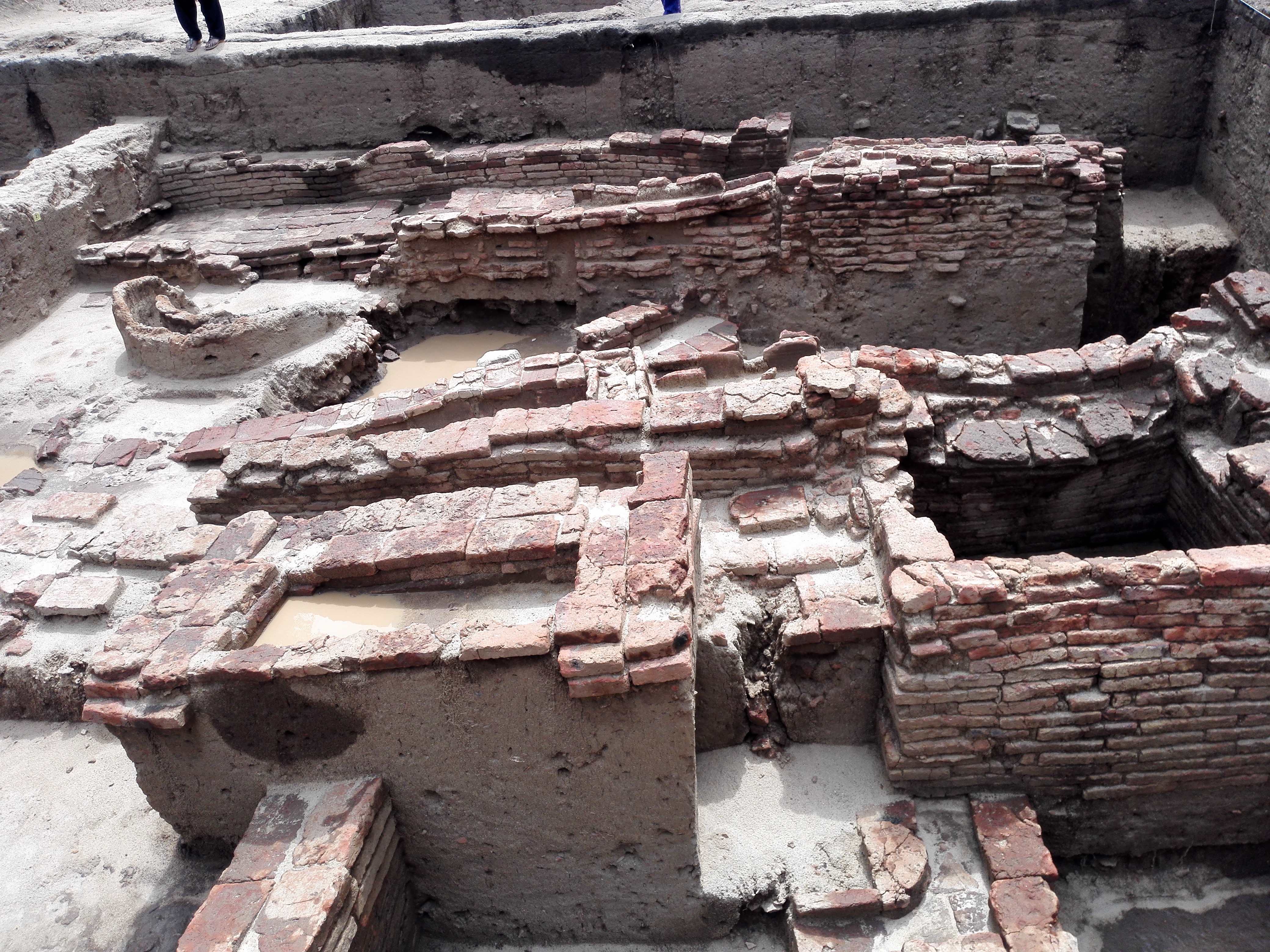
Context: Recently a site is excavated by ASI in Tamil Nadu for its linkage with Urban Settlements in the Sangam Age. The Keezhadi excavation site is located near Madurai in Tamil Nadu, along the Vaigai River. It is a major urban Sangam-era settlement, estimated to date between the 5th century BCE and the 3rd century CE.
Urban Settlements in India
The Indus Valley Civilization (IVC), also known as the Harappan Civilization, was one of the world’s earliest urban civilizations, flourishing around 2500–1750 BCE. Spanning parts of modern-day India and Pakistan, it is noted for its advanced town planning, engineering precision, and eco-sensitive architecture, showcasing a sophisticated urban lifestyle well ahead of its time.

Period & Name
-
Time Period: 2500 BCE – 1750 BCE (Mature phase).
-
Also known as Harappan Civilization.
-
Pre-Harappan: c. 3300–2600 BCE (e.g., Kot Diji)
-
Post-Harappan: c. 1750–1300 BCE
Geography & Extent
-
Largest Bronze Age civilization by area (~13 lakh sq. km).
-
Spanned India (Gujarat, Haryana, Punjab, Rajasthan) and Pakistan.
-
North: Manda (Jammu)
-
South: Daimabad (Maharashtra)
-
East: Alamgirpur (Uttar Pradesh)
-
West: Sutkagendor (Baluchistan, near Iran border)
Key Urban Features
-
Well-planned cities: Grid pattern with straight streets.
-
Division: Citadel (administrative/religious) and Lower Town (residential).
-
Advanced drainage system: Covered drains, soak pits, inspection holes.
-
Granaries, warehouses, public baths (e.g., Great Bath in Mohenjo-daro).
-
Standardized weights & measures, brick sizes.
-
Use of baked and sun-dried bricks.
-
Presence of craft quarters, bead-making shops.
Major Excavated Sites (with States)
-
Harappa – Punjab (Pakistan): First discovered (1921); granary, cemetery.
-
Mohenjo-daro – Sindh (Pakistan): Great Bath, Pashupati seal, bronze dancing girl.
-
Dholavira – Gujarat: Water reservoirs, stone architecture, 3-part city layout.
-
Kalibangan – Rajasthan: Ploughed field, fire altars.
-
Lothal – Gujarat: Dockyard, bead factory.
-
Rakhigarhi – Haryana: Largest IVC site in India (excavations ongoing).
-
Banawali – Haryana: Both pre-Harappan and mature Harappan layers.
-
Chanhudaro – Sindh (Pakistan): Only city without citadel; bead-making.
-
Sutkagendor, Surkotada, Daimabad – Frontier settlements.
Economy & Trade
-
Agriculture: Wheat, barley, dates, cotton (evidence of earliest cotton use).
-
Domesticated animals: Humped bull, buffalo, dog; no evidence of horse in mature phase.
-
Trade: Inland & maritime; items like beads, lapis lazuli, ivory.
-
Foreign trade: Mesopotamia (Meluhha), Oman, Bahrain.
Script & Seals
-
Undeciphered script: Pictographic, short inscriptions.
-
Seals: Square/rectangular; often with animal motifs (unicorn, bull).
-
Used possibly for trade, identification, ritual.
Religion & Culture
-
Mother goddess figurines, proto-Shiva/Pashupati seal.
-
Fire altars (Kalibangan, Lothal).
-
No temples or definite religious structures.
-
Burials: Mostly in north-south orientation; evidence of multiple burial types.
Decline Theories
-
Gradual decline after 1900 BCE.
-
Likely causes: climate change, drying of rivers (Sarasvati), flooding, decline of trade, possible tectonic activity.
-
No evidence of large-scale war or external invasion in mature phase.
Significance & Relevance
-
Earliest urban planning in South Asia.
-
Decentralized political system (no central ruler found).
-
Eco-sensitive architecture and waste management model.
-
UNESCO Sites: Mohenjo-daro and Dholavira.
-
Dholavira added in 2021 as India’s first IVC UNESCO World Heritage Site.
-
Relevance today: Urban waste, climate resilience, sustainable design.
Conclusion
The urban settlements of the IVC stand as a testament to early human ingenuity in city planning, sanitation, and sustainability. Their legacy informs not only India’s ancient past but also offers valuable insights into modern urban challenges like waste management, climate resilience, and decentralized governance. For aspirants of history and policy alike, the Harappan model remains both relevant and inspiring.
Comments
Post a Comment